Europe’s electronics industry has a PCB problem, not just a chip problem, told us Nicolas Chevalier, director of French technology transfer center, Cisteme (read our article here). In this full interview, he discusses the key challenges facing France’s electronics sector and the role technology transfer can play in addressing them.
Can you introduce Cisteme and its mission?
Nicolas Chevalier: “Our role is to help industrial companies develop innovative products quickly. We focus on purely technical technology maturation. We are not an organization that manages licenses or anything of that kind. Our job is really to remove technological barriers by applying knowledge derived from the state of the art in research. We currently have just over 50 employees. We are strongly rooted in the Nouvelle-Aquitaine region, with locations in Limoges, Brive, Poitiers and Bordeaux.”
What are your core areas of expertise?
Nicolas Chevalier: “We have the expertise to develop microwave electronics, telecommunications and radar systems. We also have the expertise and facilities required for certification and support with CE marking. Cisteme handles around 140 projects a year for 80 different companies.”
Why would companies come to you?
Nicolas Chevalier: “Industrial companies come to us to develop components when they need to overcome technological gaps or address issues relating to component ownership and sovereignty. For example, some of our partners currently buy components abroad, in the United States for instance. To purchase these components, they have to explain what application they are intended for and which industrial customer they are serving. This means that the American supplier could potentially enter their market directly one day, and become a competitor. These companies therefore ask us to redevelop components. We can also take the opportunity to add extra features and give them a competitive advantage.”
When companies come to you for support, have they already demonstrated that their technology is feasible, or not necessarily? At what stage do they approach you?
Nicolas Chevalier: “Sometimes they come to us very early. If we consider that the technology is not yet at the state of the art, we can work on research projects. Alternatively, we may determine that we already have the in-house capabilities needed to remove the technological barriers. In that case, we do the work ourselves. Companies can therefore come to us at a very early stage with a specific technological problem, and we know how to address those barriers. We then carry out design, simulation and measurement. We do not manufacture products ourselves; instead, we arrange for them to be manufactured through our network of partners, depending on the field involved. For silicon components, for example, we try to work with French or European partners. We then arrange production. We can re-enter the process to test and measure the components, after which the customer takes the product and has a network through which it can be manufactured.”
When you say that you remove technological barriers, what does that mean concretely?
Nicolas Chevalier: “Our organization is structured so that each team has experts working on research projects to build up expertise in-house. When a company brings us a problem, the barrier is rarely linked to one technology alone; it is usually a specific need. Our role is to identify and combine the right technologies to overcome it. We have a technical background and may already have carried out similar work. Sometimes, for example, we can work transfer an approach from defense to healthcare because the same technological principles are used in both fields.”
So companies come to you for expertise they may not have themselves, in order to save time?
Nicolas Chevalier: “The people with expertise comparable to ours are generally found in large companies. The companies that come to us often develop electronics but need RF expertise. This is a highly specialized and valuable field, so they prefer to rely on experts like us.”
You mainly work with SMEs, correct?
Nicolas Chevalier: “Small businesses, SMEs and mid-sized companies account for 70% of our activity.”
Given the companies you support in moving from prototypes to industrial products, where does the process usually get stuck?
Nicolas Chevalier: “A project can fail very early. A company may have what it considers an incredible idea, but when it realizes how much development will cost, it cannot raise enough money. At that point, the problem is not technological; it is financial.”
Can the problem also be that components are available, but not fully or immediately available when needed?
Nicolas Chevalier: “That can happen to some extent. We have the expertise to recreate certain components, which can partly solve that problem. But then we immediately run into a cost issue. That is where a project can get stuck. In our experience, the problems are more often financial or market-related than genuinely technological. That is what we often see: difficulties securing investment or finding the right investors, particularly in mid-market segments or sectors that are not currently in the spotlight. Defense is a little easier at the moment to raise funds and develop major projects.”
You are less involved in financing itself, though?
Nicolas Chevalier: “We can find suitable funding for small budgets to support the early stages of projects and the associated research. We can also help reassure investors by removing technological barriers and demonstrating that the project is likely to result in something viable. We have already helped at very early fundraising stages, providing validation that can help a company move on to the next step.”
Turning to semiconductors and sovereignty: the supply chain does not currently feel secure. Based on the companies you support in this area, which parts of the value chain are the biggest bottlenecks or the most underestimated? How do you help remove those barriers?
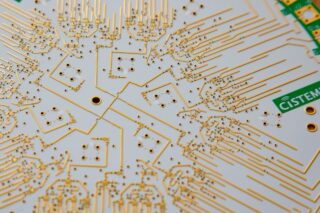
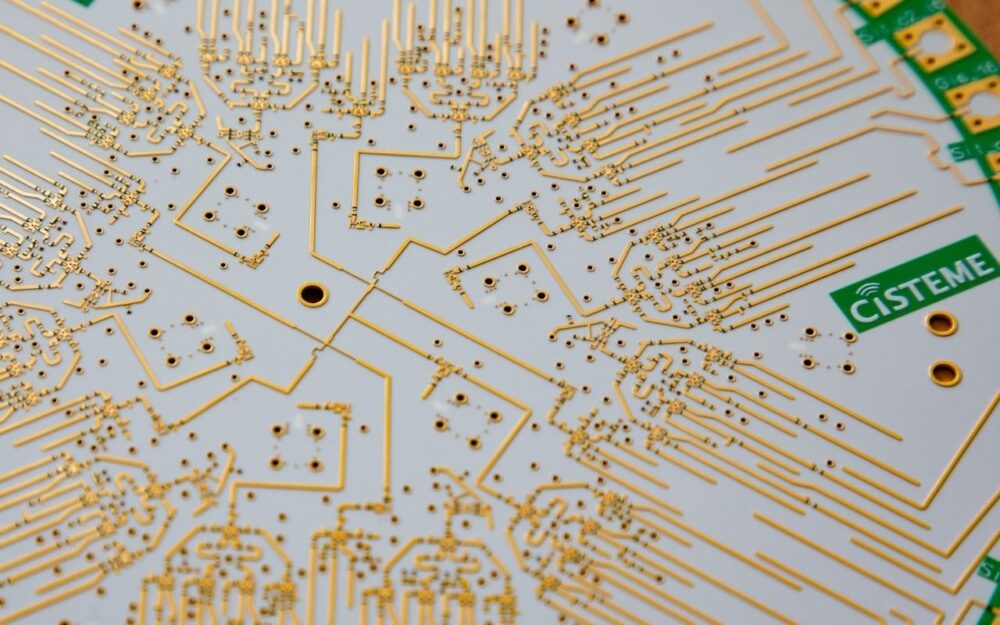
Nicolas Chevalier: “This is still a relatively small part of our activity. Industrial companies are facing semiconductor-related issues, and we can see the French government launching major programs to support different areas. But we are increasingly seeing difficulties with PCBs [printed circuit boards] which are separate from the semiconductor itself. The real concern is that manufacturing a component is good, but if we cannot mount it on a circuit board, things are going to become difficult. We are starting to see shortages and difficulties in this area. This worries me almost more than the difficulties with semiconductors themselves. There is a real question to address in national strategy: how do we support the electronics industry as a whole?”
Are you involved in any specific discussions on these issues?
Nicolas Chevalier: “We are currently trying to position ourselves to contribute to that work. The electronics industry federation considers it important to look beyond semiconductors alone. It sees technology transfer centers like ours as the right lever for discussing these issues.”
Are you seeing more small businesses and SMEs coming from the defense sector?
Nicolas Chevalier: “We are indeed being approached more and more from all sides by companies that are in a hurry. There are also startups that have raised substantial funding and have the resources to move quickly. It is not only about sovereignty: companies want to design new systems, and above all, systems over which they have full control. That is a positive development. Radar is one example: there may be opportunities to design and manufacture fully sovereign systems, including small radars needed for defense applications.”
Beyond radar, are there other emerging technologies, skills or areas of expertise that you see developing particularly quickly?
Nicolas Chevalier: “Embedded AI is one. AI is spreading across many fields, but in embedded applications it can help overcome major technological gaps in radar systems that may have been difficult to bridge in the past.”
What about miniaturization?
Nicolas Chevalier: “Miniaturization is very much part of our established expertise. Our specialty is integration, including moving to higher frequencies and making systems smaller. That has been part of our day-to-day work for a long time; it is not new. Embedded AI is new, however. Cybersecurity is another issue, because the more intelligent a system becomes, the more difficult it is to secure. These are all challenges we have to address.”
And what about quantum technologies?
Nicolas Chevalier: “We are also beginning to see quantum-related topics emerge. In Nouvelle-Aquitaine, the Naquidis Center has been established around quantum technologies. We are looking at how RF expertise can support quantum technologies and work on subjects such as quantum radar. One of the questions is how quantum technologies could enable systems that are much faster, more efficient and able to process much more information.”
Are you setting up new teams to work on these emerging areas, such as quantum technologies?
Nicolas Chevalier: “Yes. Quantum technology is a very recent area for us, and we have been building up our capabilities for about two years. Cybersecurity is also a longer-term trend, but we are accelerating our work in that area. To accelerate progress, we carry out targeted internal development work so that we can establish scientific credibility and then bring the results to industrial companies.”
How long does it take to develop a process that has been tested, qualified and is ready for industrial companies to integrate?
Nicolas Chevalier: “From beginning to end, roughly two years. Our development projects generally last between six and 18 months when an industrial partner asks us to develop something.”
Have you quantified how much time or money this six-to-18-month partnership saves the company?
Nicolas Chevalier: “I cannot give a figure for the cost savings; it depends on the project. The savings can be substantial, because otherwise the company would have to build and manage a team working in an area it does not know. It is as if the company were outsourcing its R&D without having to train a team.”
How is your funding divided?
Nicolas Chevalier: “We receive some funding from the state, but it amounts to only a few tens of thousands of euros. The regional authority provides several hundred thousand euros to support our technological development and help us build capabilities upstream. In return, we support development in the region. The rest comes from private funding for services or collaborative projects that we try to develop with our partners.”
How do you charge the companies that come to you for support?
Nicolas Chevalier: “We provide a service: we issue a quote and invoice for the time we spend supporting them and the resources we deploy.”
Looking five or ten years ahead, which electronic technologies do you consider most strategic for French industry?
Nicolas Chevalier: “One clear priority is technology that is difficult to manufacture. As I mentioned, we are moving toward higher frequencies. Telecommunications systems need to reach farther, operate faster and carry much more data. There are major challenges here, both in defense and in industry, because demand for high-volume data transmission is growing. I would therefore say that we need to build up our ability to manufacture very-high-frequency telecommunications systems. Integration and component manufacturing are difficult. We saw this with 5G, which involved very high frequencies. Some capabilities exist, but they are not yet supported by a sufficiently industrial approach. We need to achieve industrial-scale production for very-high-frequency technologies. That means frequencies above 100 GHz.”

Read also another French expert’s point of view
Of the €550 million announced by the French government for advanced technologies, where and how would you invest the money? Which areas need greater support?
Nicolas Chevalier: “The plans seem to be focused heavily on semiconductors. I think there should be a balance. Semiconductors are critical and represent a major industrial market. But there is a significant risk that we may not be able to do anything with the components we produce. We need to equip French industry at every level, including PCB manufacturing. There is also an environmental dimension. We, at Cisteme, are working on bio-based substrates for electronics. PCB manufacturing capabilities could help address both environmental objectives and the need for industrial production. We also need to consider system assembly. With the needs that are beginning to emerge, we do not yet know exactly what they will mean in terms of electronics demand, or how we will be able to keep pace. Semiconductors would be crucial if we could be sure that we had the resources needed. The dependency may not be territorial in the same way as the dependency associated with semiconductor manufacturing; it may instead be a dependency on raw materials.”
Can you be more specific?
Nicolas Chevalier: “Our understanding is that PCB manufacturing could face raw-material problems that affect the continued production of conventional FR-4 boards. If you have the component but cannot put it on an electronic board, that is worrying. We therefore need to accelerate the development of new types of substrates and bring them to industrial maturity. This will require a great deal of money, but in my view it is just as critical today as the semiconductor side of the industry. And once you have made the PCB, the next issue is assembly.”
Do you feel that the challenges are becoming more complex? What obstacles do you see today that may not have existed ten or fifteen years ago?
Nicolas Chevalier: “I feel that we are not looking at the problem as a whole. As a result, organizations like ours, which can provide solutions, are poorly funded. At the same time, the industrial companies we work with are also facing difficulties. A great deal of funding has been provided to large groups that were expected to deliver certain results, but those results have not really materialized. That is part of the problem today. Knowledge may be developed within large companies, but it does not necessarily benefit the smaller industrial ecosystem. And that smaller ecosystem is essential to all of this.”
The smaller companies you work with every day: are they aligned with the industrial needs behind the reindustrialization effort that everyone is hoping for?
Nicolas Chevalier: “They are aligned with those needs, but they are worried. Their areas of work are not always listened to, and they fear they may no longer be able to innovate because the industrial capacity to manufacture their products will not be available.”
To sum up, when we talk about reindustrialization, French sovereignty and French innovation, we seem to be at a critical and worrying point. Do you see the situation as pessimistic, or is there still room to continue innovating?
Nicolas Chevalier: “My concern is what I mentioned earlier: the lack of an overall strategy. I feel that we are addressing one part of the problem, but not the whole thing. We are not looking at it comprehensively. On the positive side, over the past three to four years I have seen a genuine desire to do things nationally, to work locally, rebuild collaborations and develop things in France. That is important, because there were times when the main priority was simply to make money. This change in mindset is extremely motivating for us. Something is getting underway; now it needs to be supported by an overall strategy.”