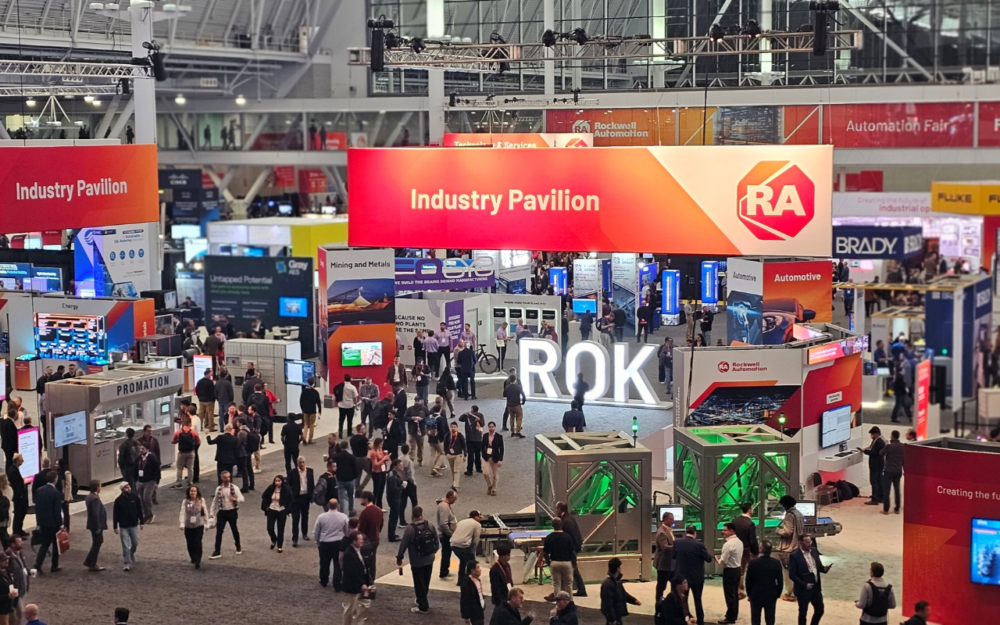

DirectIndustry is at Automation Fair in Boston this week, Rockwell Automation’s flagship annual event, to explore the latest trends shaping industrial automation. The American leader used the opening day to outline its new vision for the factory of the future. At the center of that strategy: FactoryTalk Conductor. This newly introduced AI orchestration platform is designed to connect agents, engineering tools and industrial workflows.
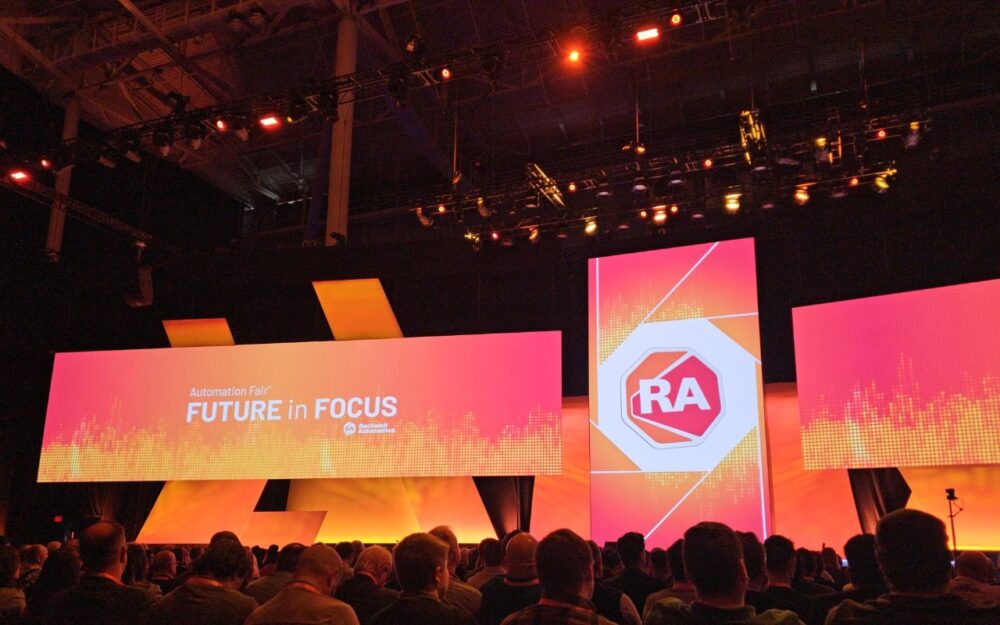
At its 35th Automation Fair, which is expected to welcome around 13,000 participants, Rockwell Automation has a new message: Focus in the Future. And judging by the opening keynote, the future it has in mind is increasingly autonomous, AI-driven and interconnected.
Status: It’s Complicated
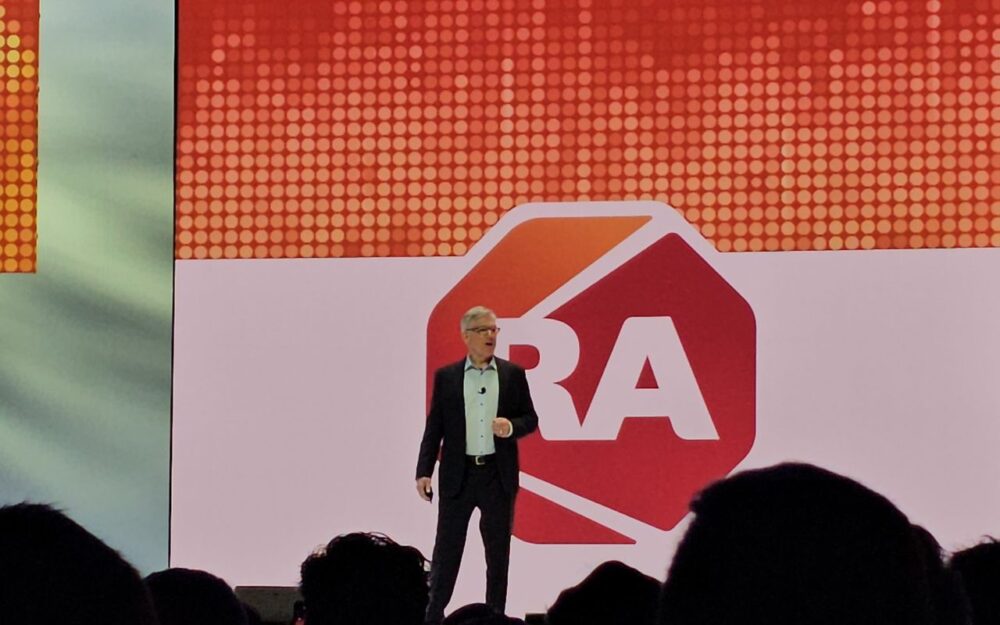
For CEO Blake Moret, the challenge facing manufacturers is above all about managing growing complexity while making industrial operations more agile, sustainable and efficient. And it is hard to disagree with him. Complexity has indeed become a defining feature of our times, from an increasingly uncertain geopolitical landscape to the rapid pace of technological change.
This year’s Automation Fair has offered a few reminders of that reality beyond the factory floor. Disruptions to air travel following the FAA ground stop on Friday made it difficult for some attendees, including fellow journalists, to reach Boston. A Microsoft outage added complications for those relying on Outlook to make last-minute arrangements. And the wider turbulence surrounding Nvidia has provided yet another reminder of how quickly the technology landscape can shift. In short, as Moret suggests, navigating complexity is a challenge shared by just about everyone:
“Our biggest challenge and opportunity is to simplify that complexity […] in a way that allows operators to interface more easily with the technology, to be able to have systems that can be designed with a lower amount of risk, that can be commissioned faster, that can operate more effectively, with less unplanned, downtime. ”
AI, he believes, will play a central role in that transformation. The company’s longer-term ambition is indeed to move towards production environments where equipment operates autonomously, integrates seamlessly into orchestrated systems and learns continuously from the data it generates. And this materializes in their new product offering.
FactoryTalk Conductor: Towards Industrial Orchestration
The main software announcement of the day was FactoryTalk Conductor. This new AI orchestration platform is a step beyond conventional AI copilots.
Rather than assisting users with isolated tasks, the platform coordinates multiple AI agents, software applications and engineering workflows. Users can describe a task in natural language, and FactoryTalkConductor will identify and coordinate the tools and agents needed to complete it.
Initially, FactoryTalk Conductor will connect four key Rockwell software environments: Studio 5000 Logix Designer, Logix Echo, Emulate3D and FactoryTalk Optix. The objective is to streamline activities across system design, development, simulation and testing.
Matheus Bulho is Senior Vice President of Software & Control at Rockwell Automation. For him, the platform’s main differentiator is the industrial expertise built into its agents:
“What’s most special about FactoryTalk Conductor is the knowledge and the decades of expertise that will be encapsulated in the form of skills that are training these agents.”
This means agents will be trained to work with specific Rockwell products and engineering libraries. Customers will also have the possibility to create their own agents and integrate their own domain expertise.
“It’s like you’re getting a virtual worker who works for you. Experts who know Logix Designer better than anybody else, experts who know Optix, experts who know Emulate3D, and so on. Not only are you getting experts who know the products inside out, you’re also getting agents that are experts in building systems. Agents that are trained on entire libraries, agents that understand how a point I/O system is characterized. They can help deploy across automation systems. That’s the ultimate idea.”
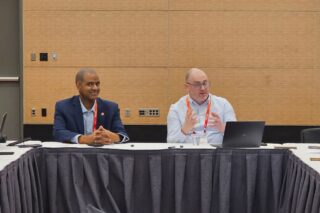
In a press conference later in the day, James Glasson, VP of Global Industry Automotive at Rockwell Automation, commented on the launch:
“This is about taking siloed engineering efforts out of the hands of a small group of people and democratizing them across the organization. Anybody can take advantage of that project workload to create simulations, convert a simulation into an emulation by leveraging Emulate3D and linking it with Logix Echo, which is a software-based PLC. You can write that code, apply it to the model, and turn a simulation into an emulation. Now you have your digital model of the process, and you can then agentically link it to FactoryTalk Optix to create the user HMI screens and maintenance HMI screens. You can do all of this through agentic workflows. We’re talking about a dramatic acceleration of design and development.”
Edgar Faler, Industry analyst at the Center for Automotive Research offered a perspective on the platform’s potential impact for automotive manufacturers:
“When we were conducting research into the implementation of automation and AI, we began to see a digital divide emerging between suppliers and automakers that have already adopted these technologies and those that have not. For some suppliers, we are seeing twice the labor productivity among those that have implemented automation and AI. My assumption is that this new platform could help them extend that lead even further, building on the competitive advantage they have already gained.”
The platform will also offer flexibility in the choice of AI models. Manufacturers will be able to connect to external LLM providers such as OpenAI or Anthropic, use services hosted through FactoryTalk Hub, or deploy open-weight models locally to address data privacy, governance and cost considerations.
Rockwell plans to extend FactoryTalkConductor beyond engineering and design into operations and maintenance. It will also integrate it with other platforms in its portfolio, including Plex and Fiix. The company says commercial availability is expected in the first quarter of 2027.