
Semiconductor manufacturing has become a strategic priority in Europe. But what if the missing links in the continent’s electronics sovereignty was beyond the chips? We spoke with Nicolas Chevalier, director of French technology transfer center Cisteme, whose mission is to support industrial companies develop innovative products in strategic sectors. He explains how less visible manufacturing stages could determine whether chip investments translate into competitive industrial products.
Semiconductor manufacturing has become a strategic priority for Europe. But producing chips is only one step in the process of building an industrial electronics ecosystem.
Europe’s Semiconductor Ambitions Face a Broader Manufacturing Challenge
Nicolas Chevalier is the director of Cisteme. This French technology transfer center works with companies to develop innovative products using expertise derived from research. Its role is to address technical obstacles, carry out design, simulation and measurement, and help manufacturers reach a stage where their products (for example microwave electronics, telecommunications and radar systems), can be produced industrially.
The organization has a team of more than 50 people across several locations in France’s Nouvelle-Aquitaine region. According to Chevalier, around 70% of its activity involves very small businesses, SMEs and mid-sized companies.
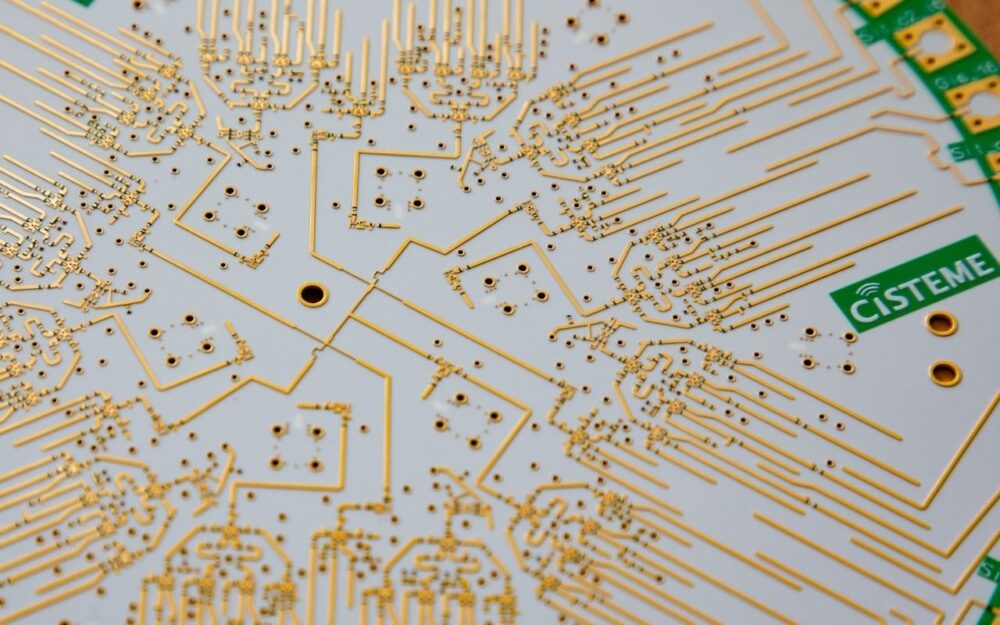
Mr. Chevalier explains that before a semiconductor can become part of a radar, telecommunications system or industrial device, it must be integrated into a wider electronic architecture. Printed circuit boards (PCBs), substrate materials, assembly capabilities and specialized engineering expertise are all essential steps to that process. And for him, this broader manufacturing chain deserves greater attention:
“The real concern is that manufacturing a component is all well and good, but if we cannot mount it on a circuit board, things are going to become difficult.”
Chevalier explains that Cisteme is seeing growing difficulties around PCBs, alongside the challenges associated with semiconductors themselves. He argues that industrial strategy must account for the entire electronics value chain rather than concentrating primarily on chip production. This means access to materials, the ability to integrate components into functioning systems and the availability of industrial partners capable of producing them at competitive prices and volumes.
PCB Substrates: A Less Visible Vulnerability
One of the challenges Chevalier highlights refers to the materials used to manufacture printed circuit boards. For him, there are potential constraints involving the raw materials required to continue producing conventional FR-4 PCBs. And he warns that these dependencies may become as strategically significant as those associated with semiconductors. Indeed, how can electronic systems remain manufacturable if critical materials or PCB production capabilities become constrained?
Chevalier believes that developing alternative substrates and taking them beyond the research stage should be part of the response. Cisteme, for example, is working on bio-based substrates for electronics. This approach intends to address both environmental concerns and the need for industrial production.
However, moving from an emerging material to a viable manufacturing solution requires more than demonstrating technical feasibility. Materials must be developed and validated for their intended applications, while production processes and industrial capacity must be able to support their adoption. For Chevalier, this is precisely where public investment needs to look beyond semiconductor fabrication.
He also identifies system assembly as another potential bottleneck. Even if Europe strengthens its capabilities in chip manufacturing and PCB production, it must still ensure that these components can be assembled into complete electronic systems.
The implication is clear: semiconductor sovereignty cannot be assessed in isolation from the manufacturing infrastructure required to turn chips into usable products.