


This is Part 2 of DirectIndustry’s special reporting series Japan’s New Industrial Frontier. Travelling from Tokyo to Osaka, DirectIndustry investigates why Japanese industrial companies are increasingly treating Europe not simply as a market to sell into, but as a benchmark shaping engineering decisions, industrial standards and long-term technological development.
Dante Swift and Anna Igonina contributed to this report.

Time to leave Tokyo. Still accompanied by my colleagues Dante Swift and Anna Igonina, I board the Shinkansen at Tokyo Station for the two-and-a-half-hour journey to Osaka. There is just enough time to grab an ekiben, Japan’s famous railway bento box. Mine contains a pork tonkatsu sandwich.
Outside the window, as the Nozomi hurtles across Honshu at nearly 300 km/h, Mount Fuji plays hide-and-seek behind the thick clouds of Japan’s rainy season. As I knew it would. The country’s most sacred volcano reveals itself only on its own terms.
Osaka is Japan’s culinary capital. People come here for okonomiyaki and takoyaki, the city’s iconic bite-sized balls of batter filled with octopus, served piping hot and topped with bonito flakes and savory sauce. But we have come for something rather different.
After meeting companies developing batteries, precision micromotors and measurement technologies, we are now heading into another pillar of Japanese manufacturing: industrial automation.
Muscle Corporation: Growing Toward Europe
We are expected at the headquarters of Muscle Corporation, a Japanese manufacturer of integrated servo motors and motion control systems.
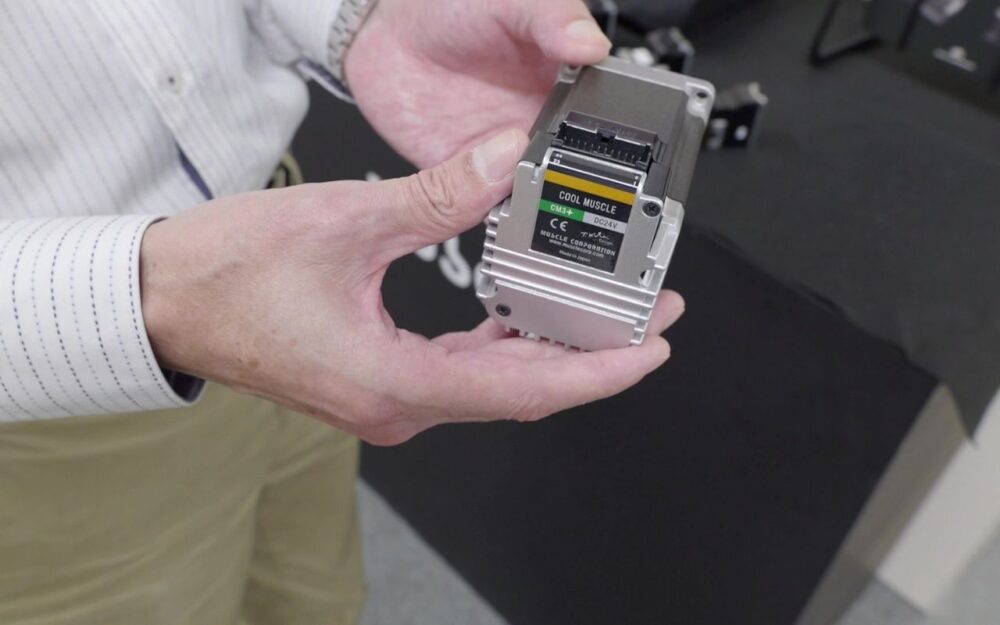
Founded nearly four decades ago, the company originally developed motion-control components for Japanese industrial machinery, particularly embroidery sewing machines. Over time, it progressively integrated its technology into a compact servo system combining the motor, drive, controller and CPU in a single unit.
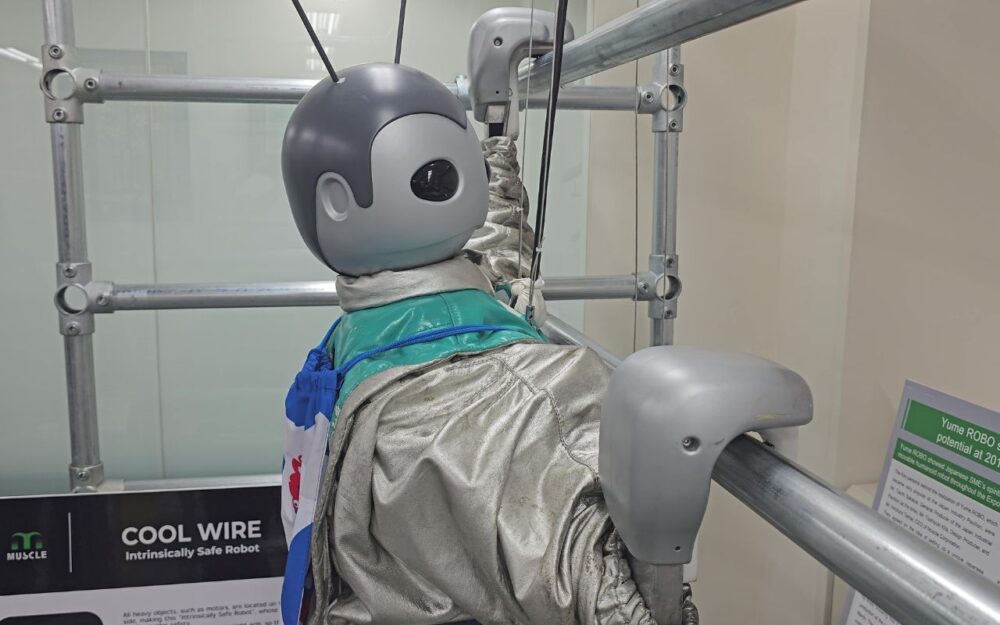
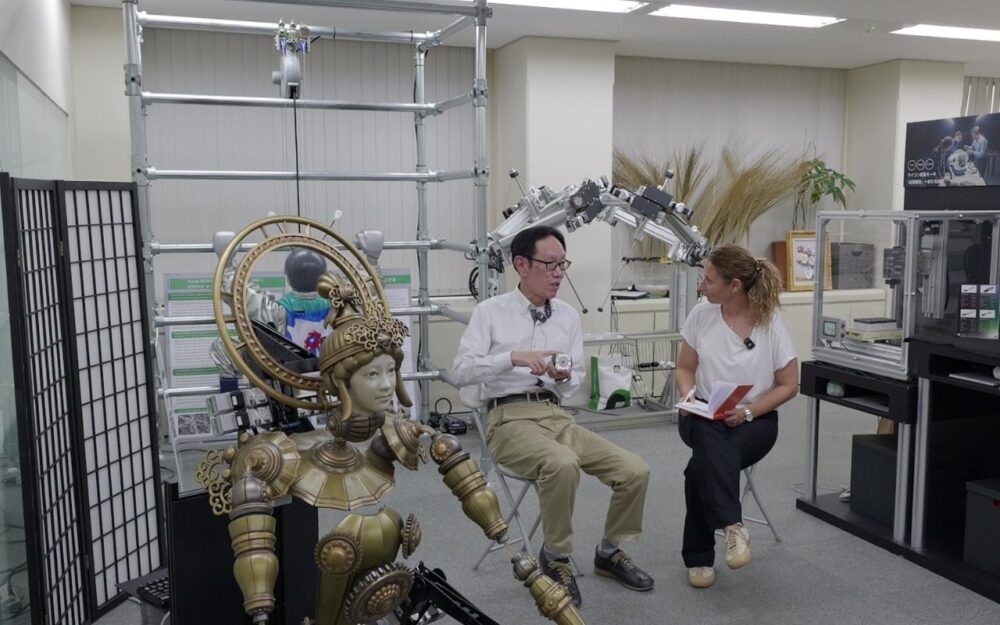
Koichiro Morioka, Motion Control Business Development Director, welcomes us inside the company’s facilities. Standing beside their “Buddha Robot” and the “Yume ROBO” (developed for the Japanese Pavilion at the 2010 Shanghai World Expo), he demonstrates what makes the company’s technology different (read the full interview here):
“Usually, conventional servo motors require a controller, a driver and sensors, and you have to wire all those different components. But our product integrates everything inside the motor, so you don’t need external cabling. Everything is completed in one package. Our motor also has a CPU inside, so you can program it and store the program directly in the motor. Then you can activate it by a signal or a simple command. In that case you don’t need any external controller, and the motor keeps working precisely.”
The company operates in one of the fastest-growing industrial markets. Indeed, demand for motion-control technologies continues to expand with factory automation, robotics, semiconductor manufacturing and, increasingly, mobility systems designed for ageing societies. And once again, Europe quickly enters the conversation:
“The global motion control market is growing, it is currently valued at around 19 billion US dollars and is expected to reach 25 billion by 2030. And what customers need is automation. For automation they need servo motors. Europe is one of the growing markets for sure, and European industries are innovation-driven. Innovation is always required, and to make innovation, people need this kind of motor.”
Unlike companies looking for rapid export growth, Muscle Corporation describes Europe as a place where technologies mature through industrial collaboration:
“For us, the European market is not only somewhere where we sell products. In the next five to ten years, we want collaborative development and technology exchange with local companies. We want to grow together with local partners in the European market. That’s our goal.”
Europe is also shaping the product itself. The company closely monitors European regulation and incorporates them into their engineering roadmap:
“We regularly check changes in European regulations. You could say it creates additional work, but it is necessary to protect people and the environment. We are ready to adapt and flexible enough to evolve alongside these laws and standards.”
For Muscle Corporation, Europe therefore serves three purposes simultaneously: a growing market, a source of industrial partnerships and a regulatory benchmark that directly influences product development.
Hasegawa: Entering Europe Through Standards
Barely enough time to finish an onigiri with pickled plum from a FamilyMart, and we are already on our way to another interview. A few kilometres outside Osaka, another manufacturer is grappling with the same European challenge, but from an entirely different perspective. Hasegawa‘s business revolves around electrical safety, and here, the gateway to Europe has a name: IEC standards.
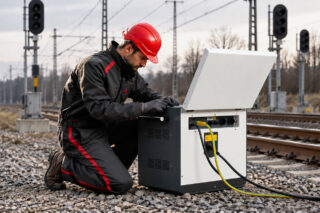
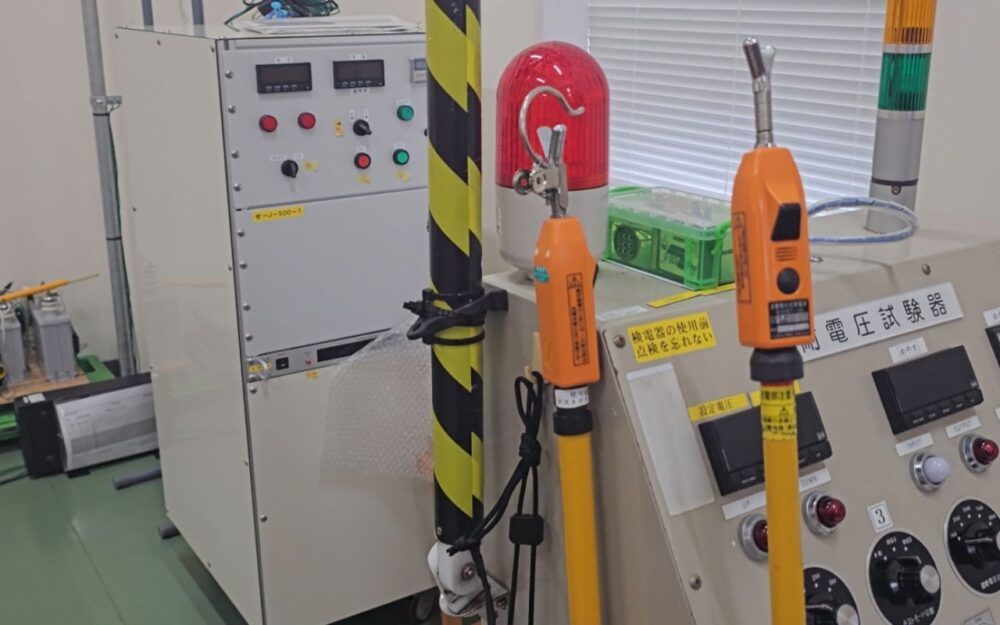
Founded in 1925, Hasegawa has built its reputation manufacturing voltage detectors used by power utilities, railway operators and construction companies, industries where reliability is measured in human safety rather than productivity.
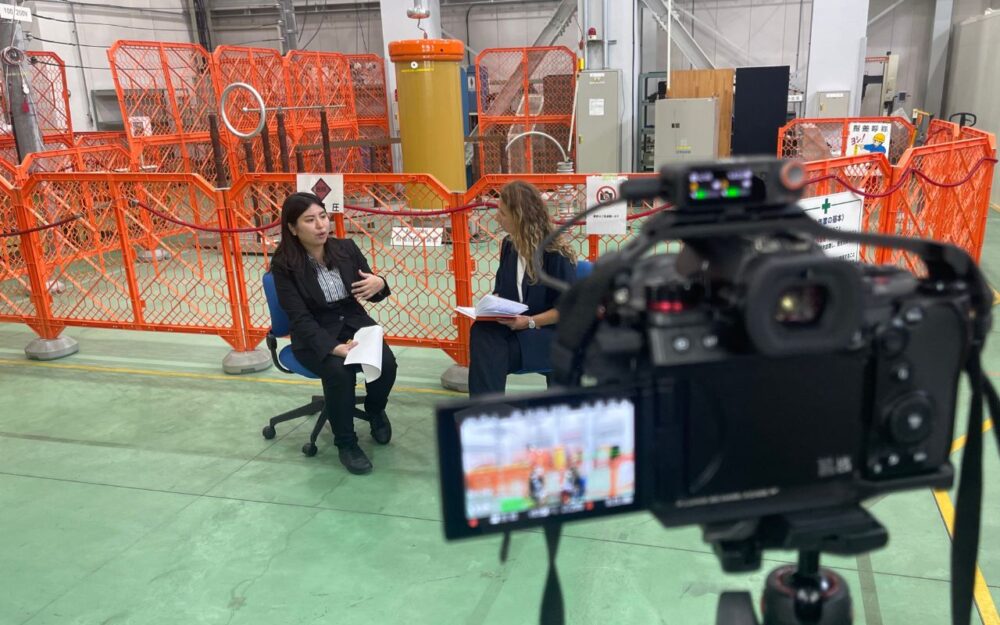
Ayaka Maeda, International Sales Manager, welcomes us inside the factory, where voltage detectors are assembled, tested and prepared for shipment (read the full interview here). She explains that the company’s biggest change is not technological, but geographical. The company has recently turned its attention to Europe for the first time:
“We recently started looking at Europe. We tried other regions before, like Asia, India and the Middle East, but last year we focused on Europe because there are many strong companies there.”
Her reasoning reflects a broader shift in global industrial economics. Rising freight costs through the Middle East have made exports to some traditional markets more expensive, while low-cost Asian competitors continue to put pressure on prices. Europe, by contrast, offers a different equation.
“Asian suppliers often compete on price, but they cannot always maintain consistent quality. European manufacturers offer very high quality, but their prices are also high. We believe Hasegawa can position itself between these two extremes by offering Japanese quality at a more competitive price.”
Whereas FDK and Takiron viewed Europe primarily as a source of technological standards and engineering credibility, Hasegawa also sees a commercial opportunity created by changing cost structures and shifting global supply chains.
Yet entering Europe still requires clearing a demanding technical hurdle. The company has had to develop an entirely new range of IEC-compliant products, adapting not only its voltage detectors but also its testing procedures, certification process and documentation.
“We did not yet have IEC-standard products, but recently we started manufacturing IEC-compliant products. So we are trying to enter the European market.”
The strategy also involves repositioning the company itself. In Japan, Hasegawa mainly supplies utilities and railway operators. In Europe, it intends to begin by targeting industrial manufacturers before expanding into other sectors.
The challenge is significant. Electrical safety standards differ considerably between Japan and Europe. They require changes not only to products but also to testing procedures and certification processes. For a company that already holds a leading position in Japan, this represents a strategic expansion. But Ayaka Maeda believes the company’s long industrial experience can become a competitive advantage:
“Entering the European market is a big step for Hasegawa. We have spent almost 100 years working closely with Japanese railway companies, power companies and industrial users. We go directly on site to understand how our products are used. Now we want to bring that expertise to Europe. We think it is a great opportunity for European customers to discover Japanese industrial quality.”
The company plans to make its first European push through trade fairs such as A+A in Germany while continuing to adapt its products to local technical requirements.
Looking Ahead: From Factory Floors to National Strategy
Osaka confirms what Tokyo first suggested. Whether producing motion-control systems or electrical safety equipment, manufacturers are redesigning products with Europe already in mind. Standards, certification and technical requirements are no longer obstacles to overcome after development; they are becoming part of the development process itself.
So, the real question is no longer whether Japanese manufacturers are looking toward Europe. It is why. Europe accounts for only a fraction of Japan’s exports. It is neither the country’s largest market nor its primary destination for overseas investment. So why does it occupy such a strategic place in the thinking of so many industrial companies?
To understand that apparent paradox, we need to step back from the factory floor and examine the economic and geopolitical forces reshaping Japan’s industrial strategy.
In Part 3: Why Europe? The Economic Forces Behind Japan’s Industrial Pivot