

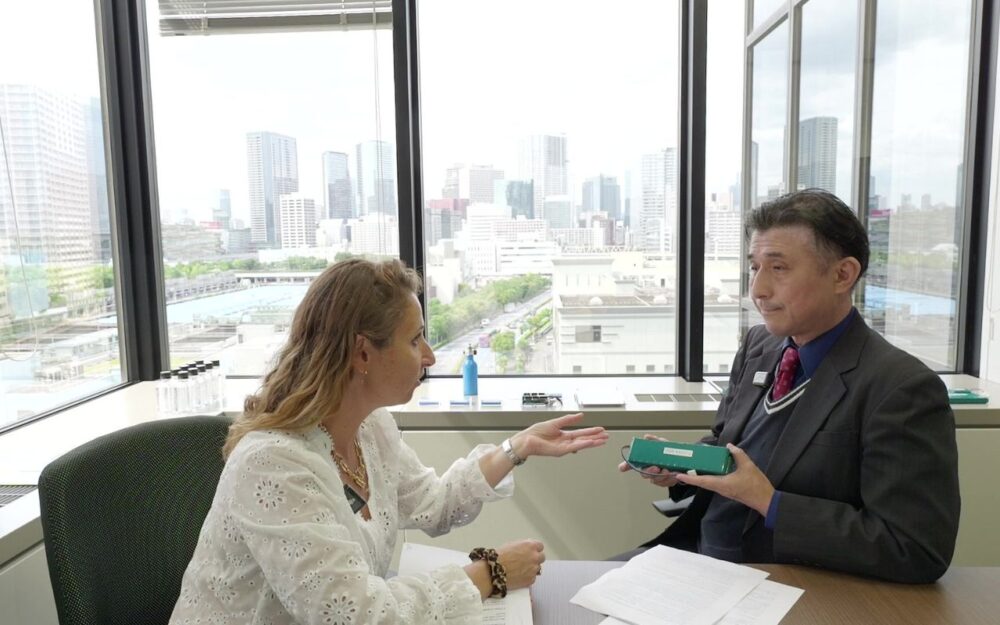

During a reporting trip across Japan, from Tokyo to Osaka, DirectIndustry met with industrial companies and institutions to explore a structural question: why is Europe becoming increasingly central in Japanese industrial strategy? In this first conversation, Ichiro Torii, Manager Business Development at FDK Corporation, a manufacturer of batteries and electronic components, explains how Europe has become both a regulatory reference point and a strategic growth opportunity for the company.
Across robotics, precision engineering and energy systems, a clear pattern emerged. Europe is no longer viewed only as an export market, but as a regulatory, technological and industrial framework that increasingly shapes product design itself.
This series of interviews capture the perspectives of engineers and executives on what Europe represents today, from a market to a regulatory framework and, increasingly, a space for industrial collaboration. Each episode focuses on a different layer of this transformation.
For this first episode, we met Ichiro Torii, Manager Business Development at FDK Corporation. The company’s trajectory reflects the evolution of Japan’s post-war electronics and battery industry, from early manganese dry batteries in the 1950s to today’s advanced energy storage systems and electronic modules.
How would you describe your company’s key product innovations and technological differentiators today?
Ichiro Torii: “Let me begin with a brief introduction to FDK. This year marks our 76th anniversary. Since starting with manganese dry batteries in 1950, we have continuously evolved our business into electronic materials, power systems, and advanced battery technologies. Over decades, we have built a strong foundation by integrating electrochemistry, materials science, and simulation technologies (CAE).
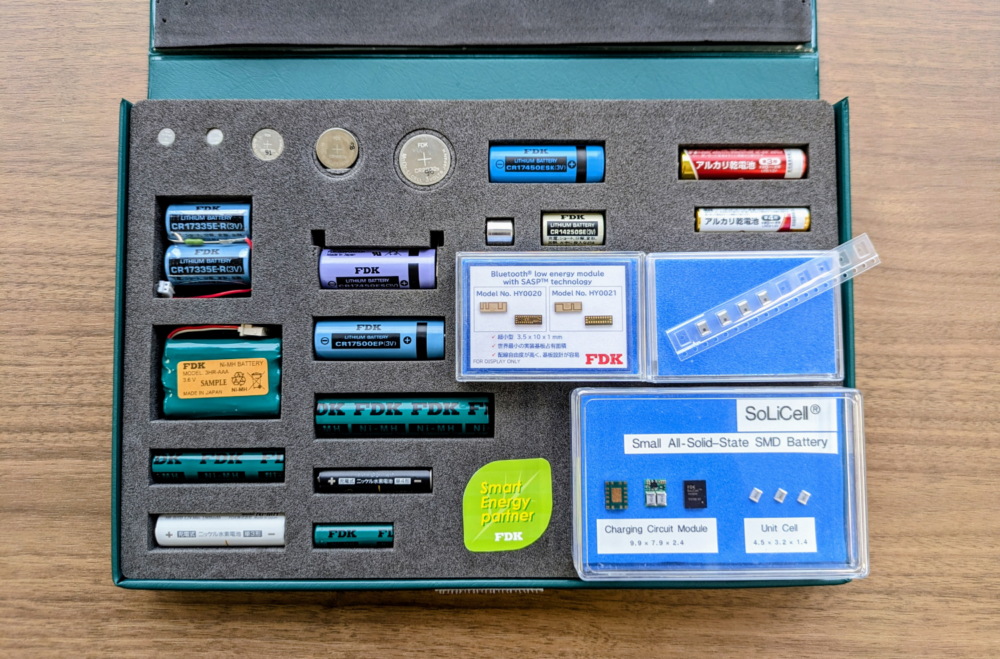
Today, FDK is a comprehensive manufacturer of batteries and electronic components, offering nickel-metal hydride (NiMH) batteries, lithium batteries, alkaline batteries, next-generation all-solid-state batteries, and advanced electronic modules. FDK’s products are defined by exceptional reliability and a strong commitment to environmental responsibility. Manufactured in Japan under rigorous quality standards and strict process control, our batteries are widely used in mission-critical applications such as automotive systems and social infrastructure, where failure is not an option.
One of our core products is the nickel-metal hydride battery. Our key innovation lies in advanced materials engineering. By applying a highly conductive cobalt oxide coating to the nickel hydroxide positive electrode, we ensure stable capacity even under demanding conditions such as long-term storage and over-discharge. At the same time, we are actively exploring cobalt alternatives to further enhance sustainability.
On the negative electrode side, we pioneered the adoption of superlattice hydrogen-absorbing alloys, significantly improving performance across a wide temperature range, including high-temperature charging and low-temperature discharge.
As a result, our NiMH batteries have become a trusted solution for mission-critical systems, particularly in automotive and infrastructure applications requiring long-term stability and reliability.
Another differentiating capability is predictive lifetime management.
Our proprietary battery management system enables monthly-level lifetime prediction based on internal battery parameters. This allows customers to transition from time-based maintenance to condition-based maintenance—an increasingly important requirement in infrastructure systems.”
The cylindrical lithium batteries represent another key product line.
Ichiro Torii: “These are high-performance primary batteries designed for environments where charging is not feasible, such as remote or off-grid locations. Our differentiation lies in our proprietary laser sealing technology, which ensures precise hermetic sealing and delivers outstanding reliability and long operational life. In addition, the use of stainless-steel housings enables superior durability in harsh outdoor environments.
This combination of technologies allows our lithium batteries to maintain performance over 10 to 20 years, making them ideally suited for infrastructure applications such as smart metering and residential safety systems.
Looking ahead, we are driving innovation in next-generation products. One of the most promising is our all-solid-state battery, “SoLiCell.” This chip-type lithium-ion battery integrates our battery expertise with multilayer and sintering technologies developed in our electronics business. With all-solid construction, it eliminates risks such as leakage and thermal runaway, while enabling surface mounting (SMT), compact system integration, and stable operation in high-temperature environments exceeding 100°C.
In addition, we offer one of the world’s smallest Bluetooth Low Energy modules. By leveraging Toshiba’s SASP technology, which integrates the antenna directly onto the resin package, we significantly reduce the required mounting area—by approximately 50% compared to conventional designs. This enables seamless integration into compact devices such as wearables and IoT sensors. As an all-in-one module, it allows immediate wireless connectivity simply by connecting a sensor and a power source. It also works in strong synergy with our advanced battery technologies.
We are also developing new solutions such as nickel-zinc batteries, which have the potential to replace lead-acid batteries in various applications.”
What makes your products or technologies distinct compared with other international competitors?
Ichiro Torii: “FDK’s battery business originates from the legacy of Sanyo, the first company in the world to commercialize both NiMH and lithium battery technologies.
This heritage gives us unparalleled depth of expertise, long-term operational experience, and highly refined manufacturing processes.
As a result, we consistently deliver products with exceptional reliability, which has earned strong global recognition and positioned us among the world’s leading manufacturers in terms of production scale.”
Why is Europe strategically important for your company?
Ichiro Torii: “Europe is a globally influential market that defines standards in reliability, environmental compliance and product quality. Companies in this region demand high performance, highly reliable components especially for applications related to infrastructure, mobility and sustainability.
FDK’s strengths in reliability and environmental responsibility are therefore highly aligned with European market expectations, making Europe a strategically critical region for our growth. At the same time, we recognize that our brand presence in Europe remains limited and we are committed to strengthening our engagement in this market.”
What are you bringing to this market?
Ichiro Torii: “We are bringing high-reliability, environmentally responsible battery solutions that are fully aligned with Europe’s strict regulatory and sustainability requirements.
For example, we are actively promoting PFAS-free nickel-metal hydride batteries. In addition, our products address one of the key environmental concerns in Europe: the ReHS Directive and the EU Battery Regulation (2023/1542).
Beyond supplying components, we provide engineering support to ensure optimal battery performance within customer systems, recognizing that batteries are critical components that directly impact overall product functionality.”
What do you expect from Europe?
Ichiro Torii: “Europe is leading the way in areas such as environmental impact reduction, regulation of hazardous substances (including PFAS) and recycling and circular economy
As these requirements become more stringent, we see FDK’s technologies becoming increasingly essential for enabling compliant and sustainable product design. In today’s world, where sustainability is a central priority, truly essential components are those that combine long-term reliability with environmental responsibility.”
How are current geopolitical and industrial tensions affecting your international strategy, supply chains, or expansion plans in Europe?
Ichiro Torii: “Yes, the current geopolitical and industrial environment is having a significant impact. While global demand has expanded due to electrification and digital infrastructure development, factors such as currency fluctuations and strong price competition previously made overseas expansion more challenging.
However, recent trends—such as the depreciation of the yen and increasing concerns over supply chain concentration—are changing the landscape. More customers are now seeking to diversify their sourcing strategies to reduce geopolitical risk, rather than relying on a single country. We see this shift as a major opportunity.
As a result, FDK is accelerating its international expansion, including in Europe, to position itself as a reliable and strategically important alternative supplier in a rapidly changing global market.”