

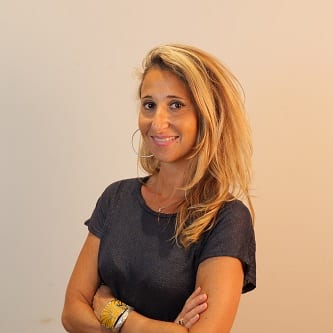
During a reporting trip across Japan, from Tokyo to Osaka, DirectIndustry met with industrial companies and institutions to explore a structural question: why is Europe becoming increasingly central in Japanese industrial strategy? In this conversation, Koichiro Morioka, motion control business development manager at Muscle Corporation, explains how the company’s integrated servo motor technology supports industrial automation, why Europe is a strategic market for its future growth, and how its motion control expertise is expanding into new applications such as humanoid robotics, mobility, and healthcare.
Across robotics, precision engineering and energy systems, a clear pattern emerged. Europe is no longer viewed only as an export market, but as a regulatory, technological and industrial framework that increasingly shapes product design itself.
This series of interviews capture the perspectives of engineers and executives on what Europe represents today, from a market to a regulatory framework and, increasingly, a space for industrial collaboration. Each episode focuses on a different layer of this transformation.
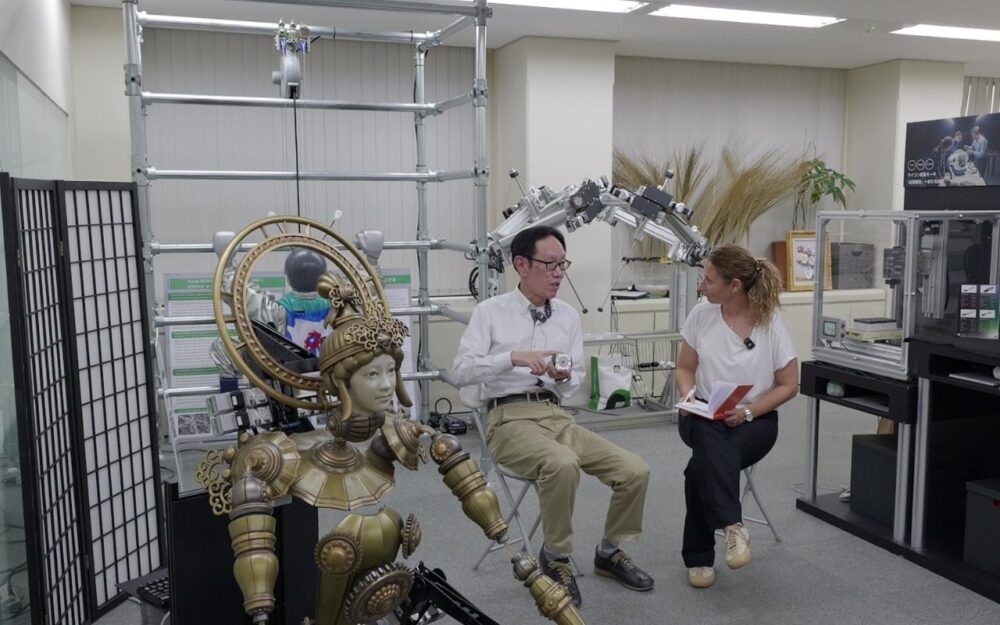
For this episode, we met Koichiro Morioka from Muscle Corporation in their headquarters in Osaka. Founded nearly four decades ago, the Japanese company has built its expertise around motion control, first supplying components for embroidery sewing machines before developing integrated servo motors. As demand for automation accelerates across industries, from semiconductors and robotics to future healthcare applications, Muscle Corporation sees Europe as a key market for long-term partnerships, collaborative innovation, and growth.

Watch our video interview
You are a manufacturer of servo motors. Can you tell us more about your company?
Koichiro Morioka: “We are now in our 38th year since the company was established. From the very beginning, we have supplied motion control components to embroidery sewing machine manufacturers in Japan. Motion control has always been our core technology.
Through our relationship with Japanese industrial machine companies, we combined all of that technology into a single product embedded directly inside a servo motor. Over the years, we have continued adding more functions and capabilities to the motor, offering this solution both in the Japanese market and internationally.“
What are the advantages of your solution compared to your competitors?
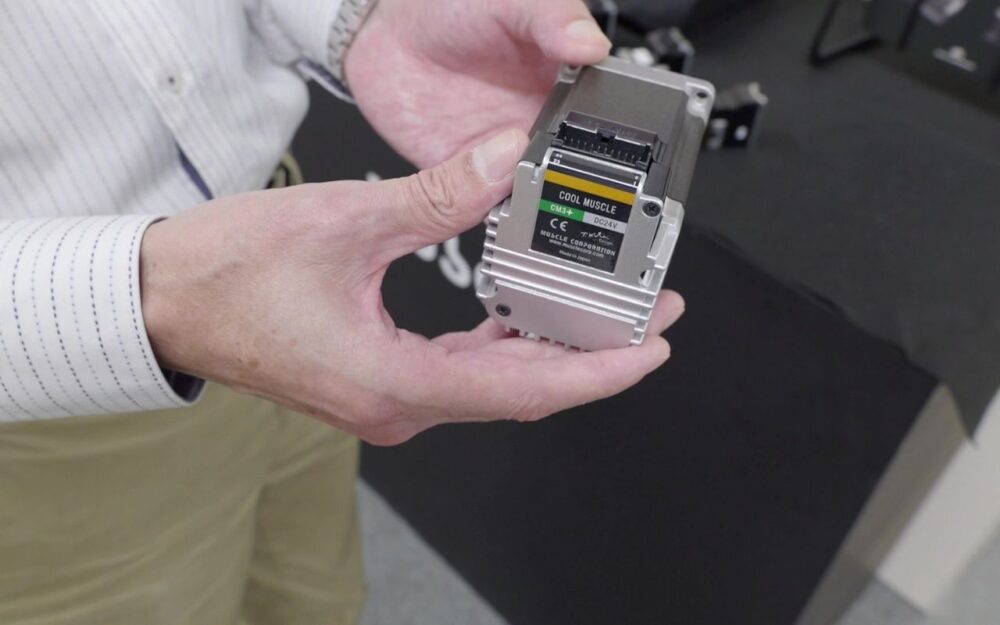
Koichiro Morioka: “To operate a motor, you normally need additional components such as a controller, a driver, and sensors. In conventional systems, these elements are all separate, so they must be connected with external cables. Our product integrates the drive, the controller, and all the necessary functions directly into the back of the motor. As a result, there is no need for external cabling, everything is contained within a single package.“
You are also talking about intelligent automation. Can you tell us more about what you mean by that?
Koichiro Morioka: “Conventional motors require an external controller to send commands and control the motor. Our motor has a CPU built into it, allowing users to create a program and store it directly inside the motor. The program can then be activated with a signal or even a single command. In that case, there is no need for an external controller, and the motor continues to operate with high precision.“
According to experts, demand for motion control systems used in humanoid robots is expected to grow by an average of 102% per year between 2023 and 2029. As this market grows, where do you see your opportunities?
Koichiro Morioka: “The market itself is growing. It is worth around US$19 billion today and it is expected to reach US$25 billion by 2030. What customers increasingly need is automation. And automation requires servo motors. Customers can choose conventional servo motors, but those usually require an external drive and can sometimes offer lower precision. Our servo motors integrate everything into the motor itself. This allows us to offer our products across many industries, including robotics and semiconductors, giving us significant opportunities to expand.“
Does it embed AI?
Koichiro Morioka: “Not yet.”
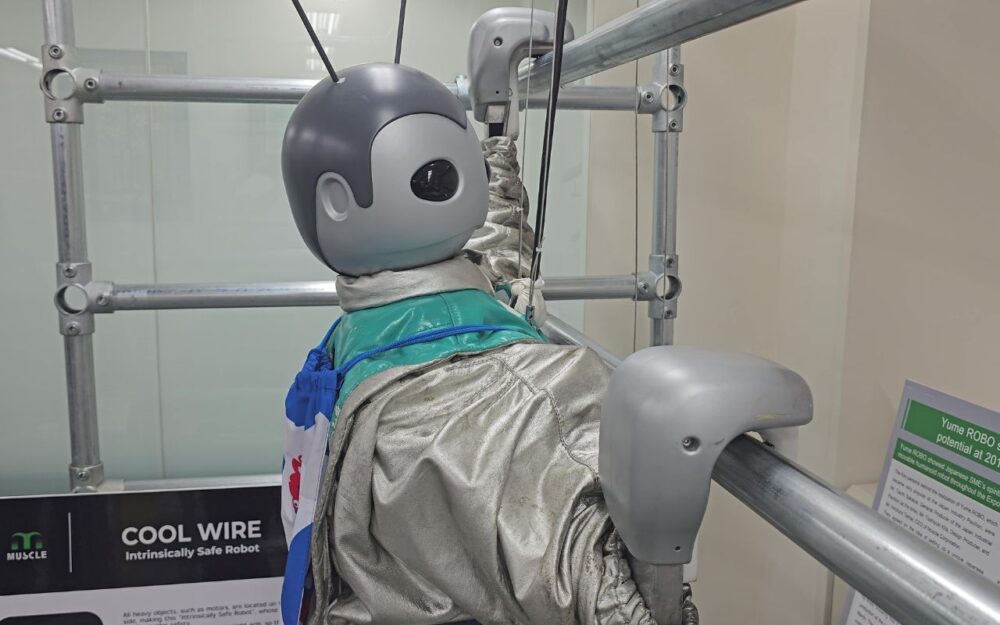
We can see a robot behind you climbing a structure and another one next to you with human hands. Tell us more about these robots and how can your technology improve dexterity and mobility, which are major topics in motion control?
Koichiro Morioka: “Mobility is very important for elderly people and people with disabilities for many reasons. We already have highly precise and intelligent motors. To adapt them to mobility systems, however, the hardware requirements are different. Those applications require higher torque. Our strength lies in our motion control technology. By scaling the motor to a larger size, we can apply the same motion control technology to almost any type of application.
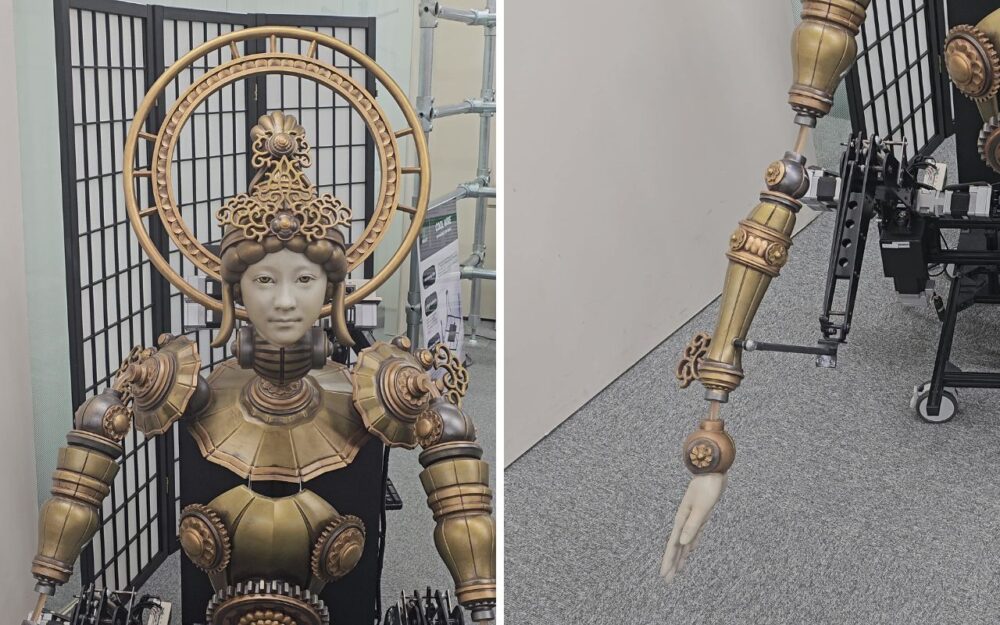
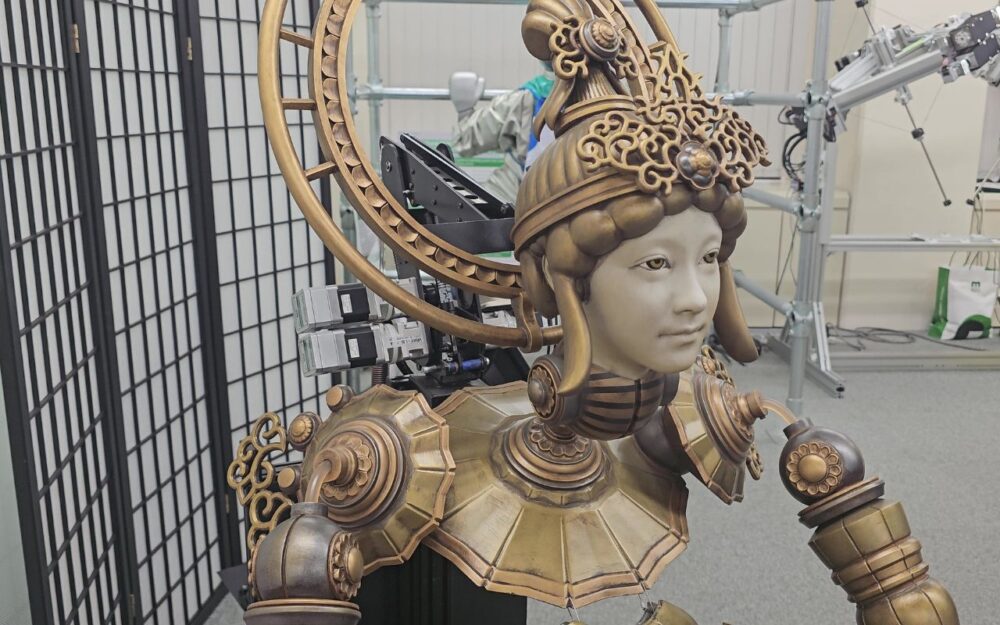
For example, we have this robot with hands, which is called the Buddha Robot. Users can move its hands and head, and the control system memorizes the robot’s motion trajectories. Although it looks like an entertainment robot, the project originated from a collaboration with a university which wanted to study how robots like this could interact with elderly people living alone. The robot is able to express emotions such as joy and sadness. The idea was that if the robot stayed in an elderly person’s home, it could share emotional interactions with someone who might otherwise have few visitors or friends. The research aimed to understand how this technology could influence the emotional well-being of elderly people.“
And what about this other robot climbing the structure?
Koichiro Morioka: “This robot is called Yume ROBO and we developed it for the Shanghai Expo in 2010. The president of our company happened to meet the manager of the Japan Industrial Pavilion in a restaurant. During their conversation, the manager explained that while the pavilion already had large video screens displaying content, he wanted something that physically moved to attract visitors. He asked our president to create such a robot.
The robot was designed with six integrated motors. Because each motor already contains its own control functions, we did not need external controllers or drivers. Using the motors’ internal programming capability, the robot operates without external controllers or sensors. At the Shanghai Expo, visitors often had to wait three or four hours to enter the Japan Pavilion. Many became tired and bored while waiting, but this robot, constantly moving up and down, helped entertain them.“
Your company is looking to expand internationally, especially in Europe. Why?
Koichiro Morioka: “As I mentioned, the global market is growing, and Europe is one of the fastest-growing markets. European industries are highly innovation-driven, and innovation requires technologies like ours. For us, Europe is not simply a place to sell products. Over the next five to ten years, we want to find strong distributors, expand our partnerships, collaborate on product development, exchange technologies, and grow together with local European companies.“
What strengths do you want to highlight to convince European distributors and customers to choose your solution? In Europe, “Made in Japan” still carries a strong reputation.
Koichiro Morioka: “Made in Japan” is widely recognized as a guarantee of quality, and we are proud to be a Japanese company. Our motors integrate the control functions, drive functions, and many unique features directly into the motor itself. Together with our European distributors, we want to communicate what we call the “value behind the price.” Customers can eliminate complex wiring, reduce installation space thanks to the integrated design, and benefit from highly precise motion control technology.
This value extends beyond the initial purchase price. Customers obtain higher product quality, longer service life, significantly reduced wiring, which makes the system almost maintenance-free, and higher motor performance compared to conventional solutions. As a result, their own applications become more valuable.
Europe has many regulations. How do you adapt to them?
Koichiro Morioka: “We closely monitor regulatory changes and requirements coming from Europe. Although adapting to new regulations can mean additional work, these rules exist to protect people and the environment. We believe complying with them is essential. So we continuously monitor legal and regulatory changes and are flexible enough to adapt our products to remain compliant.“
Which market has the greatest potential for your products?
Koichiro Morioka: “Over the next few years, semiconductors will definitely be our main target because AI is driving enormous growth in the semiconductor industry. Looking further ahead, over the next five to ten years, we also need to focus on the challenges of aging societies. We are interested in expanding into other industries such as wafer manufacturing, other highly precise manufacturing applications, and medical technologies, as healthcare will become increasingly important as populations age.“