


Working alongside people to tackle intricate industrial tasks, nimble humanoid robots are a premium growth market for the motion control technology required to replicate human movement.
Today, the vast majority of industrial robots are fixed-placed articulated arms, performing a wide range of production line tasks from spot welding cars to assembling intricate components.
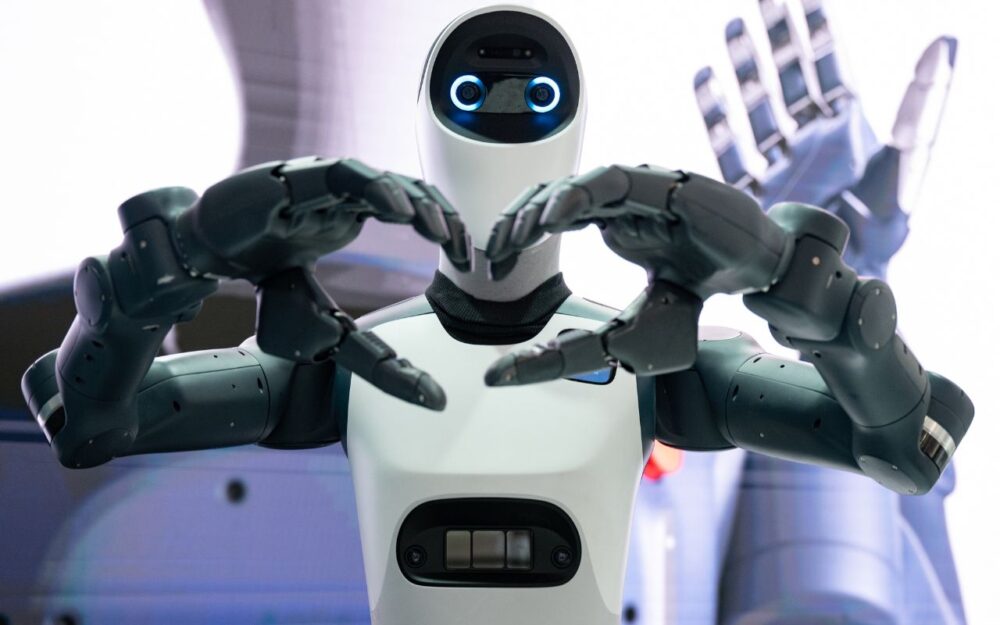
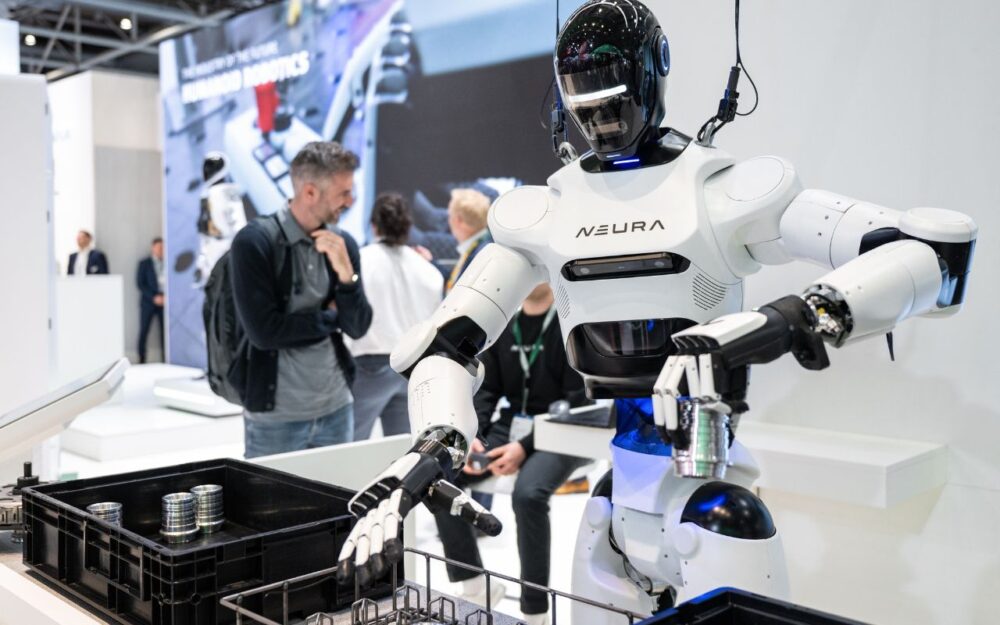
Humanoid industrial robots are more life-like, typically featuring a torso, two arms and a head. Designs vary, but their key defining features are human-like proportions, precise motion control and untethered mobility, either on legs or wheels.
Dexterity and Mobility
This combination of dexterity and mobility grants humanoid robots the freedom to perform a wide range of tasks in spaces designed for human workers, including operating tools originally designed for people.
Their flexibility makes humanoid robots useful for replacing human workers, or working alongside them, without the need to retool and redesign the workspace. Android-style robots with legs can even navigate complex environments like stairs, which is valuable in sectors such as warehouse logistics.
So far, the market for humanoid industrial robots remains small and mostly confined to proof-of-concept deployments. This is set to change as advancements in artificial intelligence allow them to perform increasingly dynamic, real-world tasks in factories, warehouses and other settings.
The Importance of Servo Components
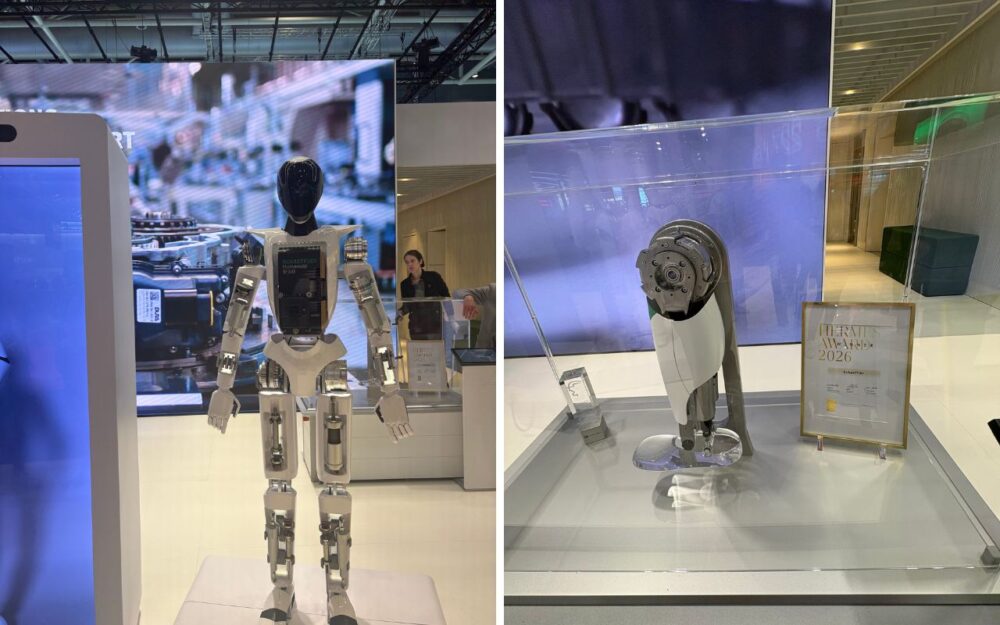
Each humanoid robot consists of dozens of servo motors, drives and control systems. Therefore, servo components are one of the most direct beneficiaries of their future market growth.
As a result, motion control demand driven by humanoid applications is forecast to grow at an average annual rate of 102% from 2023 through 2029. At this point, real-world deployments will surpass R&D deployments and continue to grow exponentially to reach large-scale commercial rollouts.
While this high growth rate admittedly comes off a low base, it is still the early signs of a new demand channel within industrial automation. While it depends on the application, early indications are that humanoid robots will primarily work alongside humans rather than replace them. This means they require not only the intelligence and dexterity to perform complex tasks, but also the safety features to protect their human co-workers.
According to Interact Analysis market analyst, Clara Sipes,
“The standardization of humanoid robot design and safety features will help drive real-world implementations, but some of those safety standards are still being written. Existing robotic safety frameworks are also being updated or expanded to address humanoid systems. For motion suppliers, this creates an opportunity not only to sell higher-value products, but also to differentiate through certification.”
Market Watch
More than 200 companies are currently developing humanoid robot platforms. Leaders in industrial applications include the United States’ Boston Dynamics and Tesla, as well as China’s AgiBot and Unitree Robotics.
China is expected to dominate commercial uptake in the short- to mid-term, according to Interact Analysis. This in part thanks to generous subsidies and tax incentives, coupled with a more relaxed regulatory framework around humanoid deployments.
The US is expected to sit behind China as the second-largest market. Meanwhile, Europe is predicted to see relatively few deployments due to more stringent labor laws and the strength of its unions.
Within manufacturing, Sipes says automotive is leading real-world adoption for assembly and inspection work performed by humanoid robots.
“This is in part because automotive has traditionally been on the cutting edge of industrial robotics. The early adoption is also due to the fact that the automotive industry is interested in the higher throughput that could be achieved by deploying humanoid robots into environments designed for humans.”