Chinese carmakers found a way round Europe’s tariffs, and their lower costs absorb much of the duty they still pay. The harder test comes as Europe starts to reward cars that are made locally.
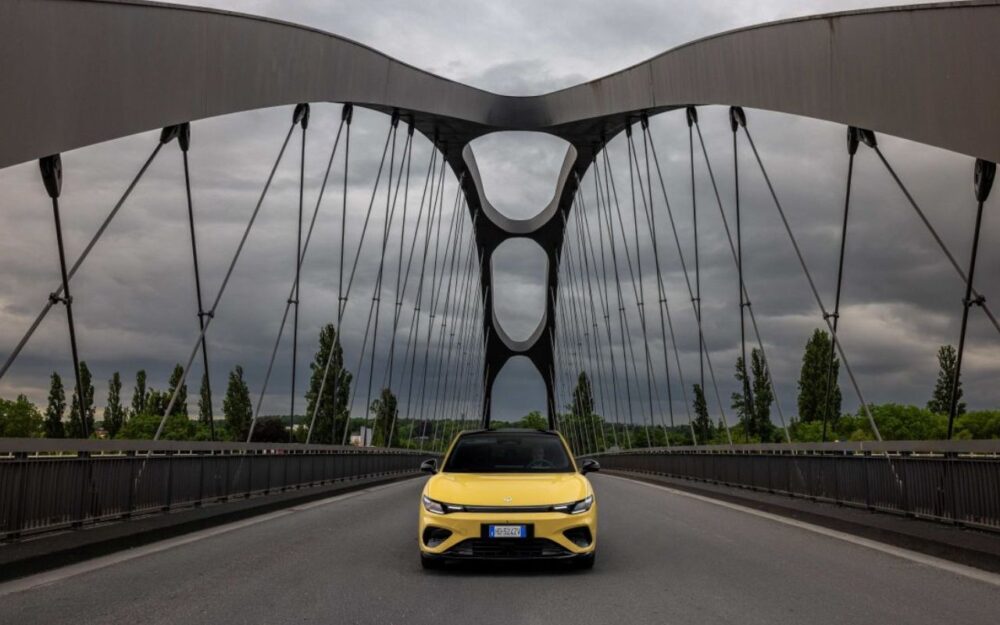
The European Union’s extra duties on Chinese-built electric cars, in force since October 2024, were meant to slow Chinese carmakers down. They add up to 35% on top of the usual 10% import tariff. Yet by September 2026, Chinese brands held 12.7% of Europe’s new-car market, up from about 1% five years earlier. According to data firm Dataforce, Chinese brands have overtaken Japanese brands for the first time, .
The duties covered only fully electric cars. Price is still the main obstacle to going electric, a European Commission survey found. Many drivers are unsure an electric car suits their daily needs. Plug-in hybrids let them hedge, and paid only the standard 10%. Within two years, Chinese brands held about a third of Europe’s plug-in hybrid market.
Where Chinese makers did pay the duty, lower costs absorbed much of it. Their cars cost about $11,000 less to build than European equivalents. This gap is largely designed in, as we explored in What Europe’s Carmakers Get Wrong About Chinese EVs?
For Sascha Voglgsang, VP Costing & Insights at benchmarking firm A2MAC1,
“In the end, it’s about landed cost.”
It means, in other words, what a car costs once it reaches the customer, duties and shipping included. As Europe tightens its rules, that sum tilts towards building cars in Europe. And this raises a harder question of how European such a car really is.
Rules That Look Inside the Car
Europe’s response starts by closing the hybrid door. The EU and China have agreed in principle to cap Chinese hybrid exports at a reported 350,000 a year for 4 years, well below the pace imports had reached.
The bigger change is inside the car. Germany and France proposed that, from 2028, only cars with at least 70% of their parts by value made in Europe, battery excluded, should qualify for subsidies and public purchases. With price the main thing holding buyers back, losing subsidies could cost a carmaker more sales than a tariff. The aim is to stop European factories becoming mere assembly plants. But the proposal still needs backing from other EU governments and the European Parliament.
A separate EU proposal, the Industrial Accelerator Act, goes after know-how directly. Foreign investments of more than €100m in electric cars or batteries would need a workforce at least half European, plus most of a list of conditions that includes sharing technology and buying locally.
The shift matters well beyond cars. Alongside taxing products at the border, trade rules are starting to measure how much of each product is made locally.
Four Ways In
A car built inside the EU pays no import duty. And if the 70% rule passes, only cars made largely in Europe will qualify for subsidies. That makes local production the surest way round both. Yet in 2025, S&P Global Mobility found, 99.3% of Chinese-brand cars sold in Europe were shipped from China.
European carmakers have their own reasons to open the door. Their profit margins have roughly halved since 2021, and AlixPartners counts 15 European car plants running below 60% of capacity. Andrew Bergbaum co-leads the firm’s automotive practice. For him,
“Chinese manufacturers are circling underused European factories, and the cost of developing the next generation of vehicles runs to billions of euros at precisely the moment carmakers can least afford it.”
For a European carmaker, an idle line is a cost, and a Chinese partner can fill it. Chinese carmakers have taken four routes into European production. Each one trades speed against how much of the car is really made in Europe.
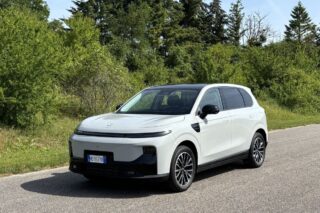
The first is to share a partner’s plant. Chinese carmaker Leapmotor, in which Stellantis, owner of Peugeot, Fiat and Opel, holds a roughly 20% stake, builds its B10 at the group’s plant in Zaragoza, Spain.
The second is to ship kits. XPeng, another Chinese electric-car maker, sends its SUVs part-built to Magna Steyr in Graz, Austria, which assembles cars for other brands. Arriving as kits rather than finished cars, they avoid the extra duty. It is the quickest route, though much of the car is still made in China.
The third is to take over a closed plant. In Barcelona’s former Nissan factory, Spanish firm Ebro builds cars with technology from China’s Chery and says it is preparing for a 70% local-content rule.
The fourth, and slowest, is to build from scratch. BYD’s plant in Szeged, Hungary, is the first car plant a Chinese maker has built in Europe from the ground up. Even there, European suppliers win work. Germany’s Dürr supplied more than 120 robots for its paint shop. Of the four, only Zaragoza has put a figure on its local content.
What Counts as Local?
Stellantis says just over 40% of the Leapmotor B10’s value is sourced in Europe, with nearby suppliers delivering stampings, wiring, plastics and seats.
How local a part is depends on how deep you look. An onboard charger, which charges the battery from the mains, can be assembled in Europe around chips made elsewhere, and BYD makes such chips itself. Batteries are harder. Making cells cheaply takes know-how that Europe’s own battery makers have struggled to master.
Zaragoza is importing that know-how. Next to the car plant, Stellantis and China’s CATL, the world’s largest battery maker, are building a €4.1bn battery plant as an equal joint venture, due to open by 2028. About 2,000 Chinese workers are expected to help build it before some 3,000 local jobs follow. For the region’s own car-industry firms, the plant is both an opportunity and a test. says David Romeral, general director of CAAR, the cluster that speaks for Aragon’s car-parts makers and suppliers.
“We don’t know this technology, these components, we’ve never made them before.”
His members are the local companies hoping to supply the new plant, so that admission shows how much of the know-how still has to come from China.
In Sagunto, near Valencia, the arrangement goes further. Volkswagen has agreed to sell 49% of its battery-cell plant there to China’s Gotion, which brings the cell technology and production know-how. For decades, European carmakers could build in China only through joint ventures with Chinese partners, which they learned from them. That model is starting to run the other way.
Chinese Designs, European Suppliers
Local-content rules track where parts are made, not where the know-how behind them comes from. Voglgsang expects Chinese makers to
“rely on European suppliers building Chinese-developed solutions, which are sometimes more integrated and smarter in design”.
That work will be contested, because Chinese suppliers are following their customers. The EU imported €5bn of Chinese car components in the first half of 2026, 23% more than a year earlier, according to European suppliers’ association CLEPA. Parts makers such as Tuopu and YAPP have set up bases in Poland and the Czech Republic.
For Europe’s suppliers, that could mean more orders built to Chinese designs, or Chinese competitors on their doorstep. How European is a Chinese car built in Europe? At Zaragoza, less than half by value. Raising that share depends on Europe learning to make the parts that matter most, and on its Chinese partners being willing to teach it.