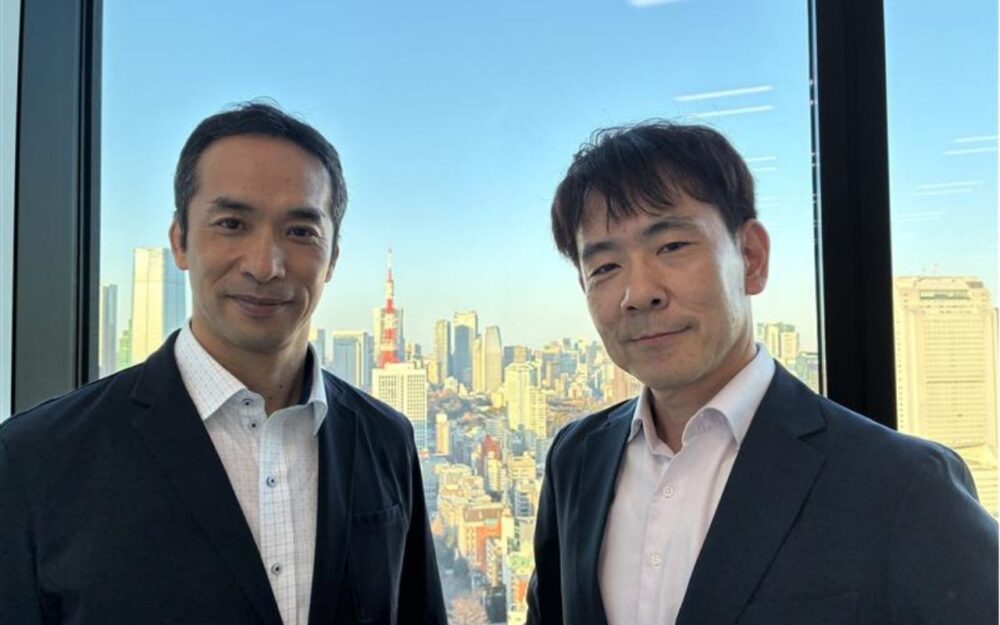




During a reporting trip across Japan, from Tokyo to Osaka, DirectIndustry met with industrial companies and institutions to explore a structural question: why is Europe becoming increasingly central in Japanese industrial strategy? In this interview, Ryuta Yamanaka, Manager of the Electronic Devices Sales Group at C.I. TAKIRON Corporation explains why Europe is strategically important for the company.
Across robotics, precision engineering and energy systems, a clear pattern emerged. Europe is no longer viewed only as an export market, but as a regulatory, technological and industrial framework that increasingly shapes product design itself.
This series of interviews capture the perspectives of engineers and executives on what Europe represents today, from a market to a regulatory framework and, increasingly, a space for industrial collaboration. Each episode focuses on a different layer of this transformation.
In this new episode, Ryuta Yamanaka, Manager of the Electronic Devices Sales Group within the New Business Development & Promotion Department at C.I. TAKIRON Corporation explains how Japanese precision engineering is increasingly being re-evaluated in the context of European industrial needs. Reliability, miniaturization and application-specific adaptation are becoming critical requirements.
How would you describe your company’s key product innovations and technological differentiators today?
Ryuta Yamanaka: “Our core technological strengths today are miniaturization, reliability, stable quality, and responsive motion performance in small precision micromotors. In particular, our coreless motor technologies enable smooth rotation with low cogging and strong responsiveness, which are important in applications such as medical devices, optical equipment, and other precision instruments. Our brushless motor lineup also offers advantages in long life, high efficiency, low vibration, and low noise.
Another important differentiator is not only the motor performance itself, but also our ability to provide careful engineering support, customization from the prototype stage, and flexible support from small-lot development to mass production. We believe this combination of precision design, quality stability, and customer-oriented development support is a key part of our value proposition today.
At the same time, we are continuing to strengthen adjacent technologies such as gearheads, encoders, and application-specific solutions so that we can gradually move from component supply toward higher-value proposals.”
What makes your products or technologies distinct compared with other international competitors?
Ryuta Yamanaka: “Compared with international competitors, our strengths lie in precision performance in the small-diameter range, stable quality, low complaint rates, and close customization support for customer-specific applications. We have capabilities in very small motor sizes, starting from around 4 mm in diameter, which is an advantage in compact medical, optical, and precision equipment where space is highly constrained.
In addition, our coreless motors offer smooth motion and fast response, while our brushless motors provide long life and high efficiency. Beyond product specifications, we also differentiate ourselves through close engineering communication and our willingness to support customers from the early design and evaluation stages.
While some larger global players are very strong in standardized full-line portfolios, our strength is in combining reliability and flexibility. Rather than competing only on price, we aim to compete through quality stability, application fit, and responsive technical support.”
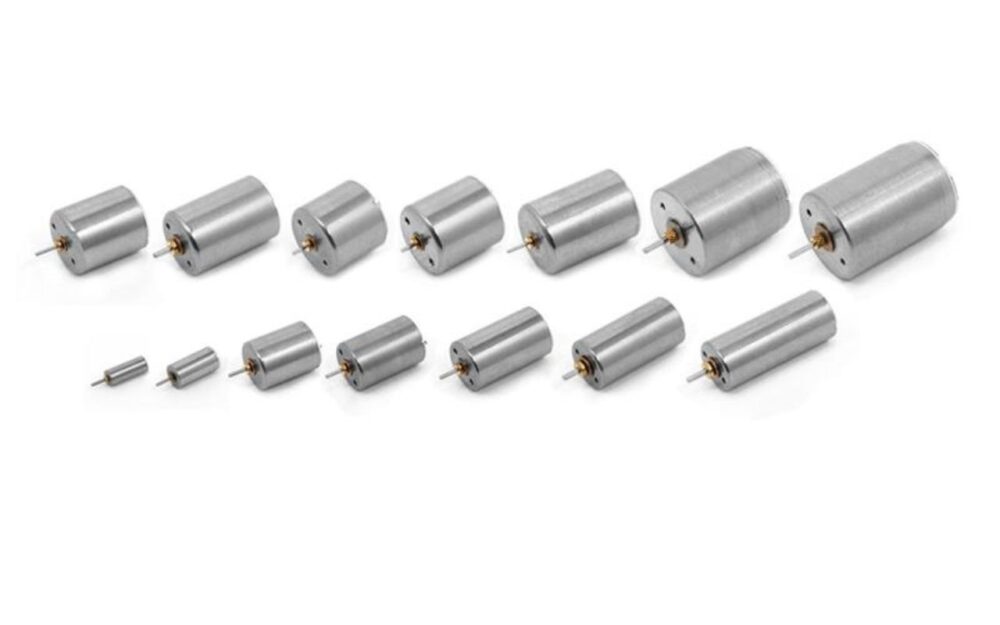
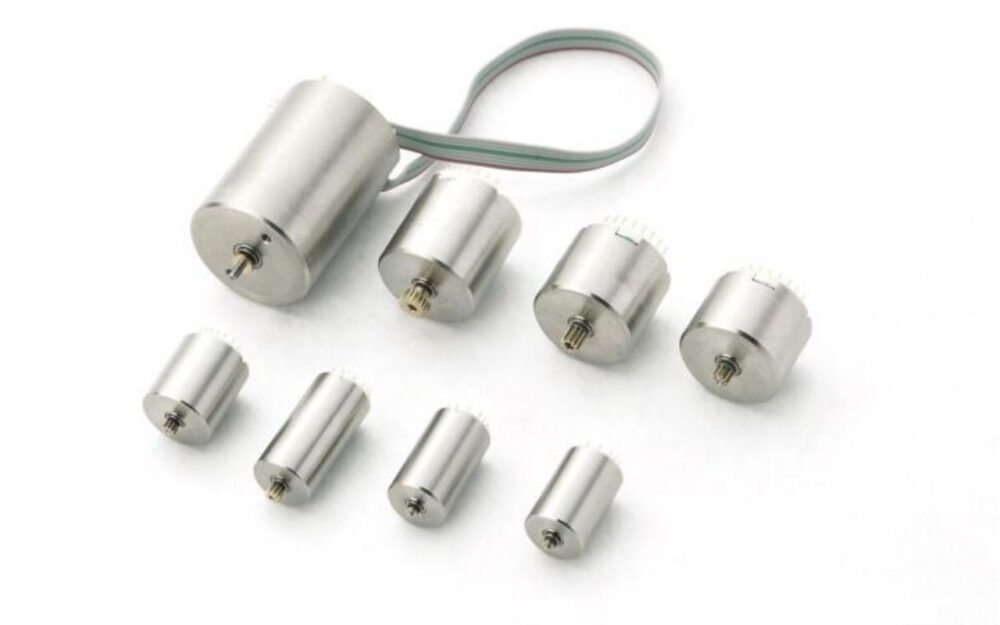
Why is Europe strategically important for your company?
Ryuta Yamanaka: “Europe is strategically important for us because it is a leading market for high-value applications such as medical devices, robotics, industrial automation, and precision equipment. European customers typically place strong emphasis on reliability, safety, regulatory compliance, and long-term quality assurance. These are areas where we believe our strengths in precision manufacturing and stable quality can be highly relevant.
Europe is also important from a strategic perspective because it helps us improve our global competitiveness. Working with European customers often means meeting demanding technical and documentation requirements, which in turn helps us strengthen our engineering, quality, and market credibility worldwide.”
What are you bringing, concretely, to the European market?
Ryuta Yamanaka: “We aim to bring compact, high-reliability precision micromotors to the European market, especially for medical, precision, and robotics-related applications. Our value proposition includes compact size, responsive motion, long service life, stable quality, and the ability to adapt specifications to customer needs. We believe these characteristics are especially important in applications where space is limited and precision is critical.
Beyond the product itself, we also want to bring engineering support, application-oriented discussions, and a flexible approach from evaluation to production. Over time, we also intend to enhance our offering through combinations with gearheads, encoders, and more integrated solution concepts.“
What are the strengths of your innovation in this market?
Ryuta Yamanaka: “The strength of our innovation in this market lies in our ability to combine miniaturization, motion quality, reliability, and customer-specific adaptation. Market trends indicate increasing demand for compact, efficient, and precise micromotors, particularly in medical devices, lab automation, dental systems, and portable equipment. We believe our product strengths align well with these needs, especially in small-diameter and high-precision applications.
Another important point is that innovation in this field is not only about higher speed or smaller size. It is also about making products easier to adopt in real applications through stable quality, engineering responsiveness, and gradual expansion toward higher-value configurations. In that sense, our innovation strength is practical and application-driven.”
How are current geopolitical and industrial tensions affecting your international strategy, supply chains, or expansion plans in Europe?
Ryuta Yamanaka: “Current geopolitical and industrial tensions are affecting the global business environment, including supply chains, material procurement, logistics, and regulatory expectations. For our company, these developments reinforce the importance of supply stability, multi-sourcing, careful inventory planning, and closer coordination across sales, engineering, procurement, and quality functions.
At the same time, the current environment is also increasing customer interest in reliable suppliers and quality-focused partners. In Europe especially, regulatory expectations, traceability, and quality assurance are becoming even more important. We therefore see the current environment not only as a risk, but also as an opportunity to strengthen our position by emphasizing reliability, quality stability, and long-term partnership. “