C.I. Takiron is a specialist in high value-added coreless micromotors, serving applications where compact size, efficiency, and reliability are mission-critical. As part of C.I. Takiron’s Electronic Devices Group, the company has built a strong reputation as a development partner for demanding markets such as medical devices, robotics, electronic locks, and mobility systems.
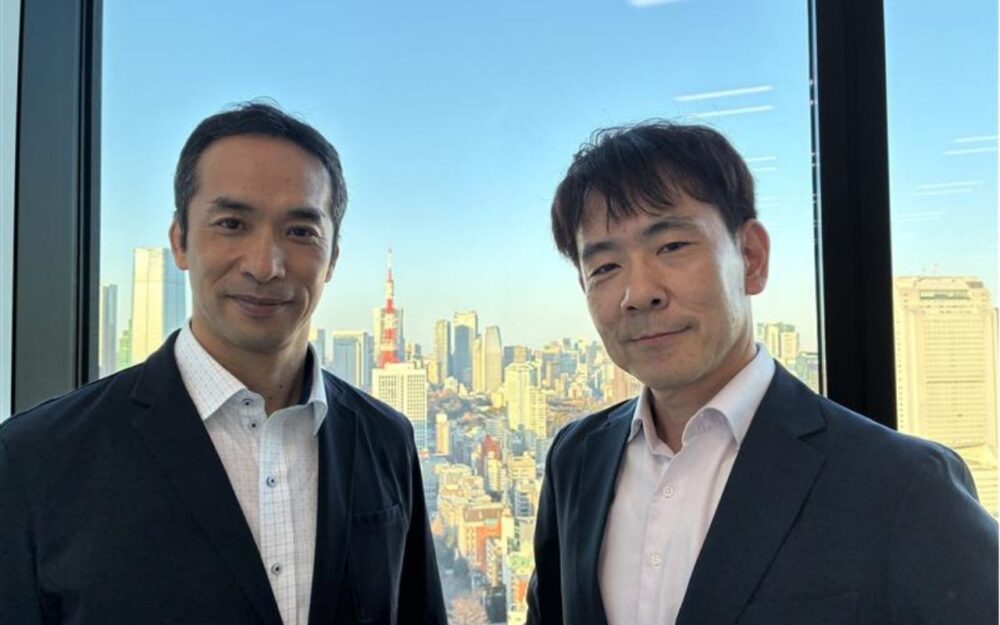
In this interview, Takeshi Kirihara, R&D Manager, and Ryuta Yamanaka, Sales Manager, share C.I. Takiron’s market positioning and long-term vision for micromotor innovation.
Corporate Strategy and Positioning
How do you see your company’s positioning in today’s global micromotor market?
Ryuta Yamanaka: We position ourselves as a mid-sized manufacturer in the coreless micromotor field, with a particular strength in providing high value-added custom solutions.
Do you consider your company to be a niche specialist, or a competitor to the major motor manufacturers?
Ryuta Yamanaka: Unlike the global major competitors that focus primarily on standard product lineups, we place importance on our role as a specialist partner in niche areas, dedicated to “ultra-miniaturization and high efficiency” and “high value-added customization.”
Are you aiming to expand into new market segments or applications going forward?
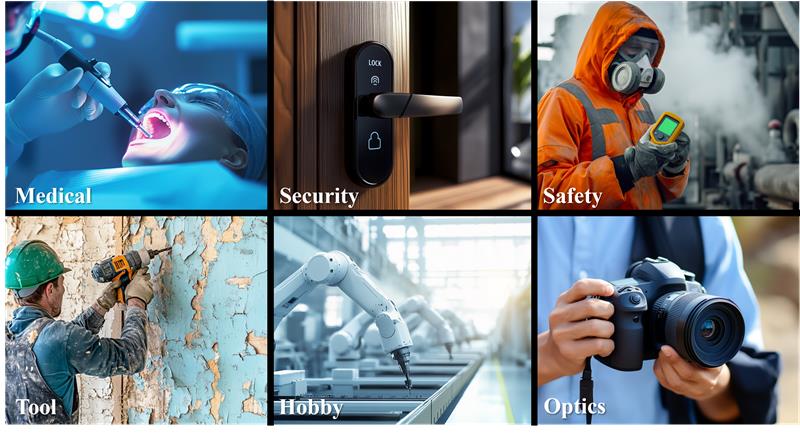
Ryuta Yamanaka: Yes. In addition to electronic locks, bicycles, and power tools, we are proactively expanding into new applications such as medical devices, robotics, and regenerative energy systems.
How has the focus of your business evolved since you started manufacturing micromotors?
Ryuta Yamanaka: At the startup phase, we manufactured portable vibration motors. Today, our business scope has broadened significantly, and we have been shifting toward custom motors for a wide variety of applications—such as cameras, electronic locks, bicycles, and pumps—as well as toward higher-margin business domains.
C.I. Takiron market segments
What market or technological changes have driven major shifts in your business so far?
Ryuta Yamanaka: Key turning points have included the expansion of the small precision motor market, the emergence of new applications such as electronic locks and bicycle components, and the growing demand for high precision and high reliability in medical and robotic applications.
In which industries or application areas do you see the greatest growth opportunities?
Ryuta Yamanaka: We see the greatest growth potential in areas where ultra-compact size, high efficiency, and reliability are critical, such as electronic locks, bicycle components, medical devices, and robotics.
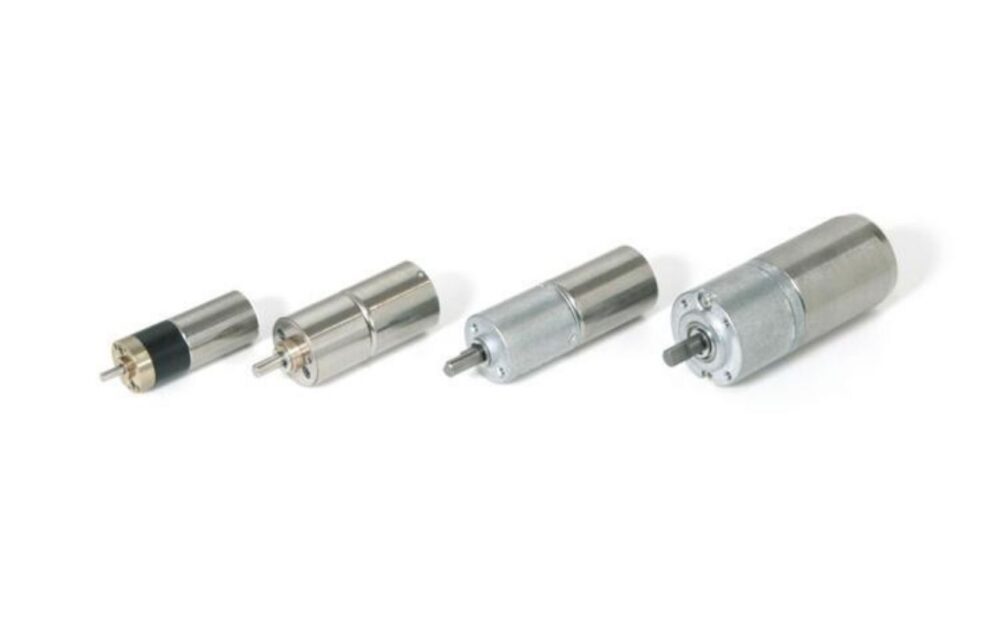
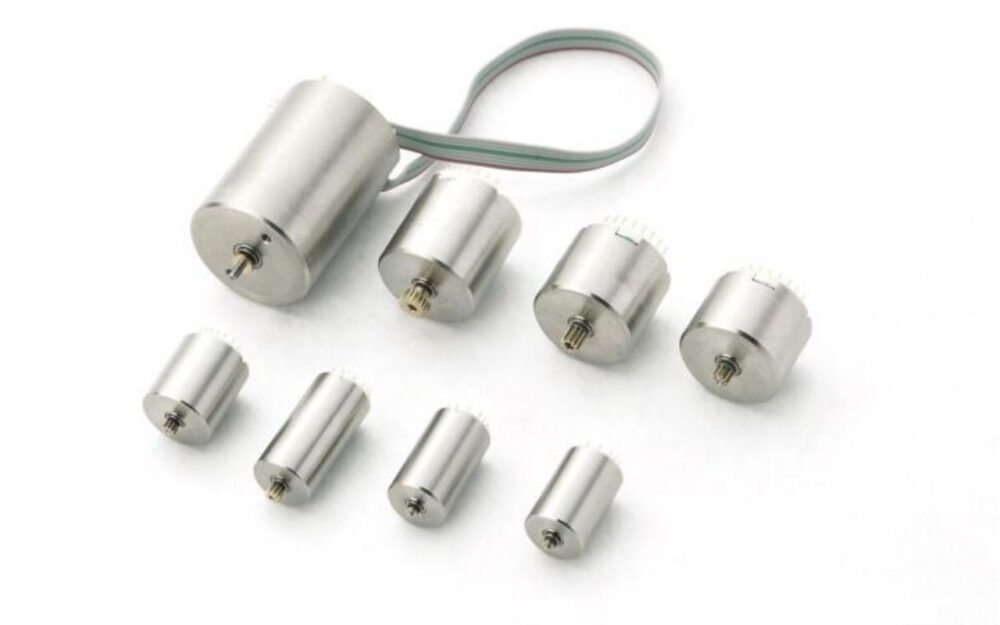
C.I. Takiron motorsC.I. Takiron motors
Customization & Trade-Offs
How do you approach customization when customers require unique motor specifications?
Takeshi Kirihara: We engage in co-creation with our customers from the early development stages, providing end-to-end support from specification study and prototyping through evaluation and mass production, while optimizing items such as shafts, bearings, gearheads, and winding specifications for each application.
How flexible can you be in adapting motor designs to customer needs, and what are the typical trade-offs?
Takeshi Kirihara: Based on 4–22 mm class coreless motors, we can flexibly modify designs to meet requirements such as high torque, low noise, long life, and compact/lightweight form factor. In doing so, we carefully balance trade-offs between output and lifetime, torque and power consumption, and performance and cost.
How do you balance resource allocation between standard product lines and fully customized motor development?
Takeshi Kirihara: Our focus is primarily on custom products; essentially a large majority of our products are custom designs that are built to the specifications that the customer requires. Accordingly, we concentrate our development resources on customization.
To what extent is your business driven by custom solutions compared to standardized products?
Ryuta Yamanaka: Most of our key projects—such as electronic locks, bicycle shifters, pumps, dental instruments, and servos—are custom-made and optimized to customer specifications. Our growth is primarily driven by these custom solutions.
How are you adapting to environmental and sustainability requirements in materials, procurement, and lifecycle management?
Takeshi Kirihara: We procure materials and components that comply with environmental regulations such as RoHS and REACH. In addition, by leveraging our products’ inherent strengths in energy saving and long-life design, we work to reduce environmental impact across the entire product lifecycle.
Are you engaged in, or planning, joint R&D with other companies in robotics, medical devices, or related industries?
Takeshi Kirihara: Yes. We continuously work with various manufacturers and design engineers to develop products that meet their motor quality and performance requirements.
When manufacturing is conducted at multiple sites, how do you ensure consistent quality management?
Takeshi Kirihara: We apply common quality standards and inspection procedures across all our production sites, including our newly established Tokyo plant, domestic partner factories, and our plant in China. Our management departments conduct audits and continuous improvement activities to ensure globally consistent quality.
Technology, Innovation, and Miniaturization
What are the main trade-offs between coreless motors and brushless motors?
Takeshi Kirihara: Coreless (brushed) motors excel in compactness, fast response, and cost performance, and are relatively easy to control; however, their lifetime is constrained by brush wear. Brushless motors offer long life, high efficiency, and high output, but require drive electronics and are somewhat more complex and costly. We typically recommend coreless motors for precise positioning and small servo applications, and brushless motors for applications where long life and cleanliness are critical.
How far are you pushing the limits of motor miniaturization?
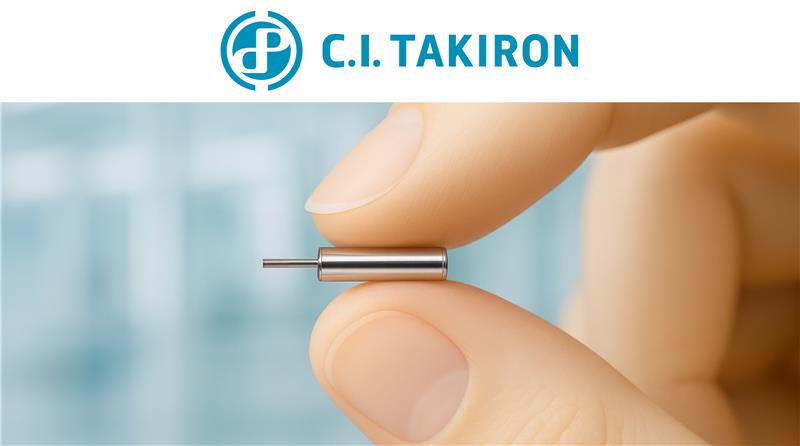
Takeshi Kirihara: We have commercialized micromotors with diameters as small as 4 mm and are continuously working on further increasing power density and improving energy efficiency, with a special focus on ultra-compact, high-efficiency applications.
What challenges do you face when reducing motor size without sacrificing performance?
Takeshi Kirihara: Key challenges include heat generation and efficiency losses, ensuring durability, and controlling manufacturing variation. We address these by combining careful material selection, magnetic design, and precision machining technologies.
How do you manage risks related to the availability and cost of rare-earth materials?
Takeshi Kirihara: We mitigate risks by sourcing from multiple suppliers and exploring alternative materials, while also optimizing magnet usage and improving efficiency at the design stage to reduce exposure to price fluctuations and supply disruptions.
Are you considering strategies such as replacing rare-earth magnets, recycling, adopting alternative materials, or diversifying supply sources?
Takeshi Kirihara: Yes. From the perspectives of sustainability and reducing procurement risk, we are pursuing multiple options in parallel, including diversification of supply sources and high-efficiency designs that reduce the amount of magnet material required.
How is pressure on magnet supply chains influencing your long-term R&D roadmap?
Takeshi Kirihara: It is driving research into new architectures that can achieve high efficiency while reducing dependence on magnets, and it has become one of our key long-term R&D themes.
Do you expect material constraints to shift the industry toward more efficient or smaller motors?
Takeshi Kirihara: We believe material constraints will accelerate the shift toward motors that deliver higher efficiency, higher power density, and longer life. By focusing on the “ultra-compact and high-efficiency” domain, we intend to be at the forefront of this trend.
Future Direction & Strategic Vision
What is your vision for future motor technologies in fields such as robotics, medical devices, and consumer electronics?
Ryuta Yamanaka: Our vision is to provide compact, high-efficiency, and highly reliable micromotors and actuators that support human-friendly robots, highly reliable medical equipment, and smart devices, and to become a key component supplier that underpins next-generation mobility and lifestyles.
Do you see your company as a challenger to the major motor manufacturers, or as a specialized partner in specific niches?
Ryuta Yamanaka: We see ourselves as being in both, but we particularly emphasize our role as a specialized partner in niche fields such as medical devices, robotics, electronic locks, and bicycles—where we can also collaborate with major manufacturers.
Where do you believe your company has the strongest competitive advantages?
Ryuta Yamanaka: Our strengths lie in our technological expertise in 4–22 mm class coreless micromotors, our ability to provide high value-added customization—including support for small lot sizes and short lead times—and the highly reliable, low-complaint quality that is recognized by customers worldwide.
Are you exploring innovations that go beyond conventional motor designs?
Takeshi Kirihara: Yes. We are actively considering and developing architectures that go beyond standalone motors, including system-level solutions that combine motors with gearheads, encoders, and drivers, as well as proprietary technologies for regenerative energy applications.
What do you see as the major technological or market challenges over the next 10 years?
Takeshi Kirihara: We expect significant challenges in responding to decarbonization and environmental regulations, the rapid expansion of automation and robotics amid labor shortages, increasingly stringent safety requirements in high-reliability markets such as medical, and the need to manage raw material and supply chain risks.
If you were to summarize your long-term mission in a single sentence, what would it be?
Ryuta Yamanaka: Our mission is to contribute to enhancing our customers’ product value and to realizing a sustainable society by providing ultra-compact, highly efficient, and highly reliable micromotors.