


French start-up Khimod has developed a new technology for producing synthetic methanol (e-methanol) from carbon dioxide and low-carbon hydrogen. Validated in Wissous, near Paris, and protected by three patents, the technology can produce, according to the start-up, up to 25 kg of synthetic methanol per kilogram of catalyst per hour, compared with 1 kg for traditional processes.
While conventional methanol, produced from natural gas or coal, has a negative impact on the climate, bioethanol offers an environmentally attractive alternative. However, its use will remain limited, as arable land is primarily reserved for food crops.
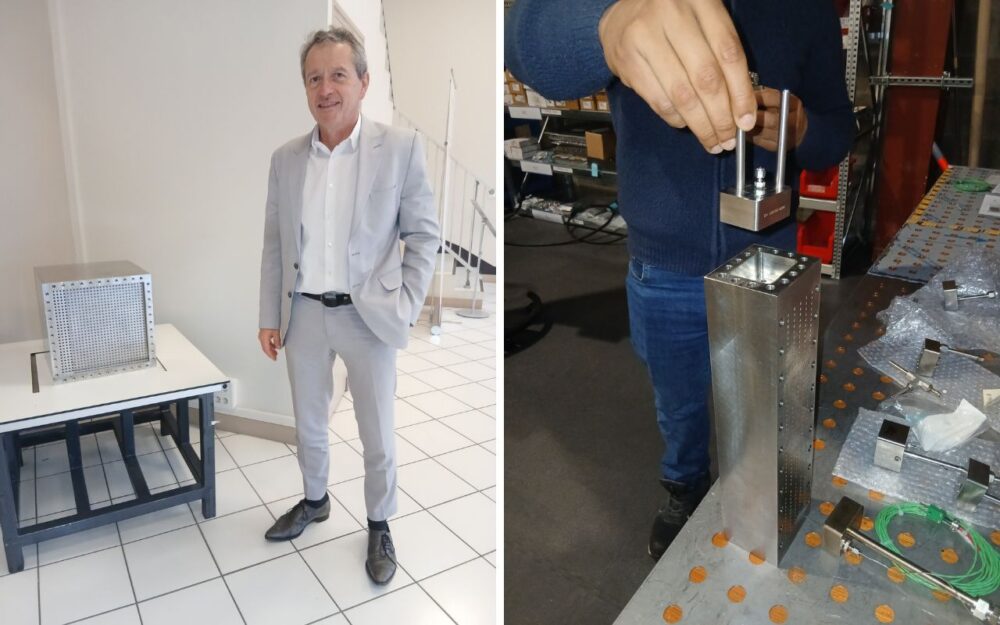
The solution may lie in synthetic methanol (e-methanol), with net-neutral greenhouse gas emissions, provided it is produced from low-carbon or recycled hydrogen and CO₂. The catalytic system developed by Khimod is specifically designed to handle these types of inputs. Another key advantage is the compact size of the system. The reactor occupies just one cubic meter, making it 10 times smaller than a conventional process.
The 3 Key Features of the Innovation
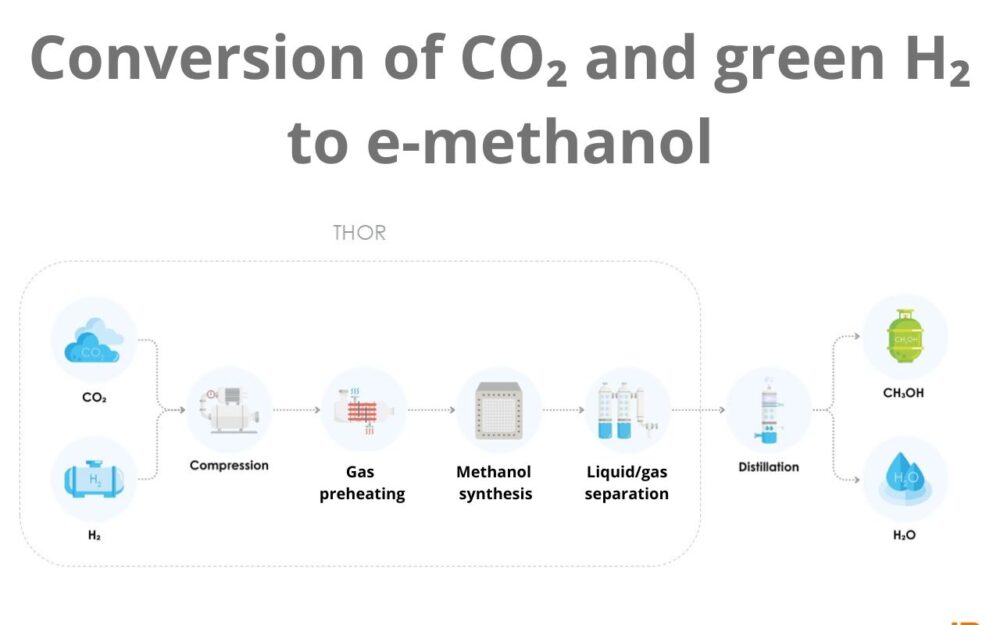
Khimod is conducting optimization experiments on its process as part of the Thor project, supported by the Paris Region. The start-up operates a mini-infrastructure capable of producing three tonnes of e-methanol per year. The objective is to obtain near-pure methanol while minimizing raw material losses.
This catalytic system stands out in three ways. First, its yield: according to Eric Aubay, vice-president in charge of flow chemistry at Khimod,
“it is 25 times higher than existing technologies, thanks to production levels reaching 25 kg of methanol per kilogram of catalyst per hour, compared with 1 kg in conventional processes.”
In addition, the conversion rate is also high, ranging from 50 to 70%. This is achieved through a very high-pressure reaction process, around 300 bar. Molecules that are not transformed are recovered for reuse.
Finally, the reactor itself features a milli-structured design. Monolithic metal plates maximize contact surfaces and allow precise control of heat transfer. This therefore prevents overheating and reducing the amount of catalyst required.
The R&D team has also considered ways to recover the waste heat generated by the reactor, using it either for heating or energy production.
According to Khimod, the financial impact is significant: more compact units are estimated to reduce production costs by 15 to 20% compared with current processes. This advantage is nevertheless offset by the high cost of producing green hydrogen and/or capturing CO₂ for reuse. But the situation is evolving with the conflict opposing Israel and the United States to Iran. This geopolitical upheaval, which is pushing states toward greater strategic autonomy, represents a major opportunity for Khimod. Cost is once again becoming just one variable among many others.
Khimod, which is also experimenting with e-kerosene production, is expected to unveil a new catalytic system within the next few months. It will expand the start-up’s portfolio. Here again, the conflict in the Middle East could work in its favor.
The Manufacturing Workshop… Before the Factory
The manufacturing workshop in Wissous features a semi-automated production line capable of producing reactors in a variety of shapes (cylindrical, cubic or parallelepiped) and in different sizes. The process relies on assembling metal plates, followed by a diffusion bonding operation carried out in a furnace at 1,000°C under 1,000 bar pressure. This ensures optimal bonding of the components.
A final machining stage, subcontracted locally, provides access for the cooling fluid, generally oil, within the reactor’s internal circuit. This is particularly useful when hydrogen and carbon dioxide react before being transformed into synthetic methanol.
With a current production capacity of 200 reactors per year, the workshop is already meeting the needs of its first customers.
You could also be interested in these stories