

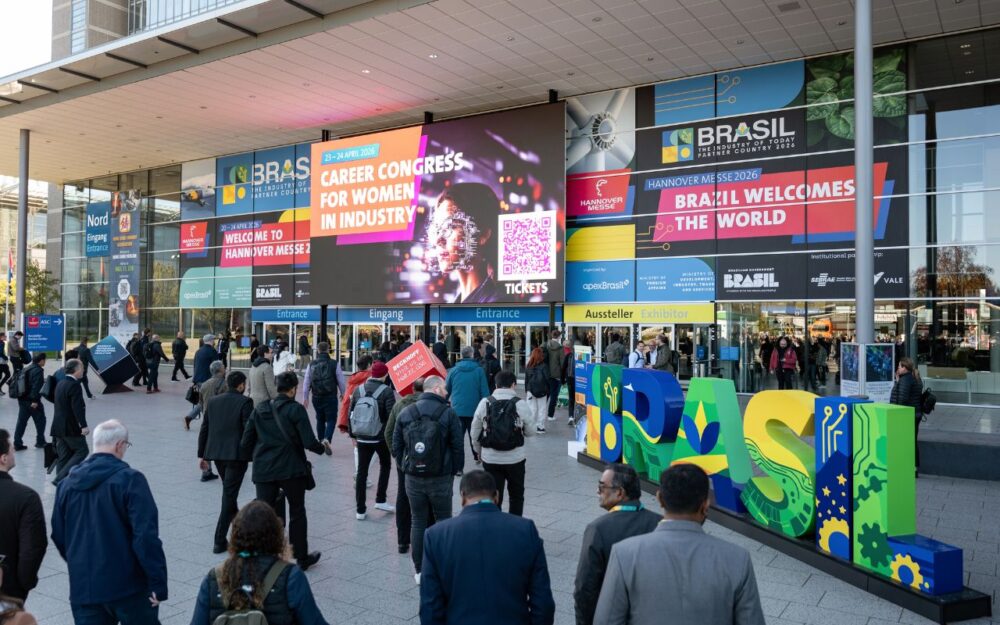

Hannover Messe 2026 puts energy back at the heart of industry, with hydrogen showcased as a system solution alongside electrification.
Hydrogen appears this year with a noticeably sharper focus. Less hype, more systems engineering and investment logic. Across the Energy & Industrial Infrastructure halls, exhibitors highlight technologies that improve efficiency, integration, supply-chain resilience and total cost of ownership. These are all crucial if hydrogen is to become a realistic option alongside electrification.
The fair also highlights Brazil as a driving force for sustainable industrial transformation and a clean-energy leader. This brings energy transition and industrial cooperation with Germany into the narrative.
Why Hydrogen Feels Different This Year
In the fair’s press-preview framing, hydrogen was positioned as one pillar of industrial transformation (alongside industrial AI and defense manufacturing), signaling that renewable energy is increasingly treated as a strategic industrial input, not a side topic.
Against this backdrop, hydrogen is increasingly discussed as an industrial systems question. Where does it deliver value versus direct electrification? How do storage, transport and fuel cells move from prototypes to bankable deployments? Does the bottleneck remain cost, infrastructure, supply chains, or standards? The 2026 edition answers these questions with solutions that are less “concept car” and more “integration-ready building block”.
Key Advancements in 2026: Storage, Transport, Fuel Cells
1) Fuel cells: higher power density, lower complexity, closer to diesel parity
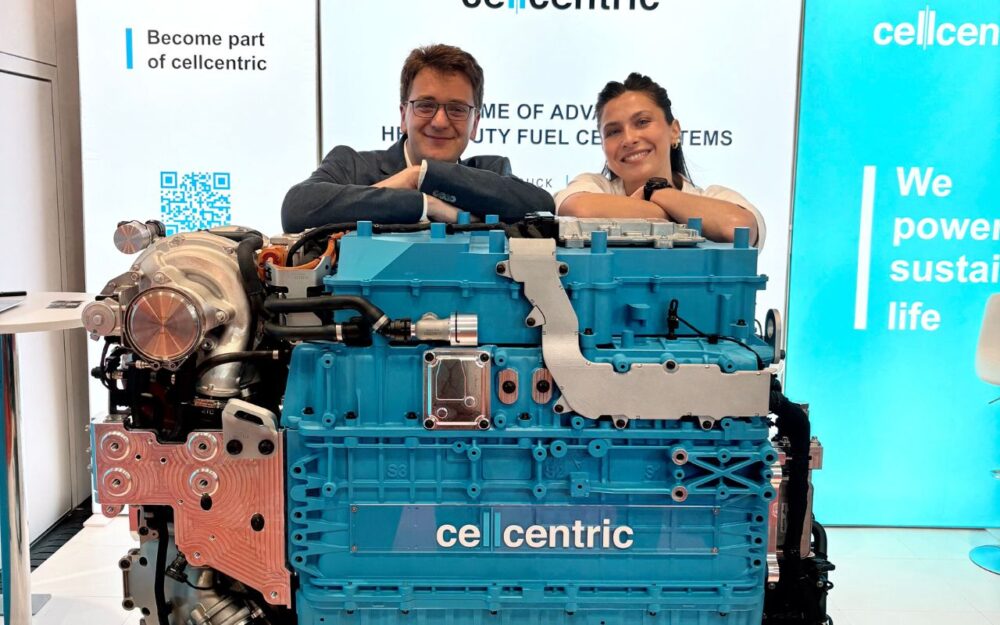
One of the clearest signals this year is the shift from “can it work?” to “can it compete?”. Cellcentric’s newly named BZA375 fuel cell system, unveiled at the fair, is framed explicitly around total cost of ownership (TCO) and heavy-duty performance. The company positions the system as engineered for demanding applications and as a step toward diesel-competitive durability and operational flexibility.
Key technical direction points to what the industry is optimizing for: simplified integration (single-system architecture), improved efficiency, and high-power density. In other words, fewer components, easier packaging, and performance per kilogram. This matters for industrial adoption because integration complexity and downtime risks often decide projects more than peak efficiency alone.
To make the technology tangible, I asked Joachim Ladra, Head of Sales, Marketing & Communication at cellcentric how he would explain how a fuel cell works to a child:
“We feed the system with hydrogen – that’s the fuel. Inside the fuel cell, the hydrogen reacts with oxygen. This chemical reaction creates electricity. And that electricity can be used to power a truck or a train.”
2) Hydrogen production components: supply-chain aware innovation
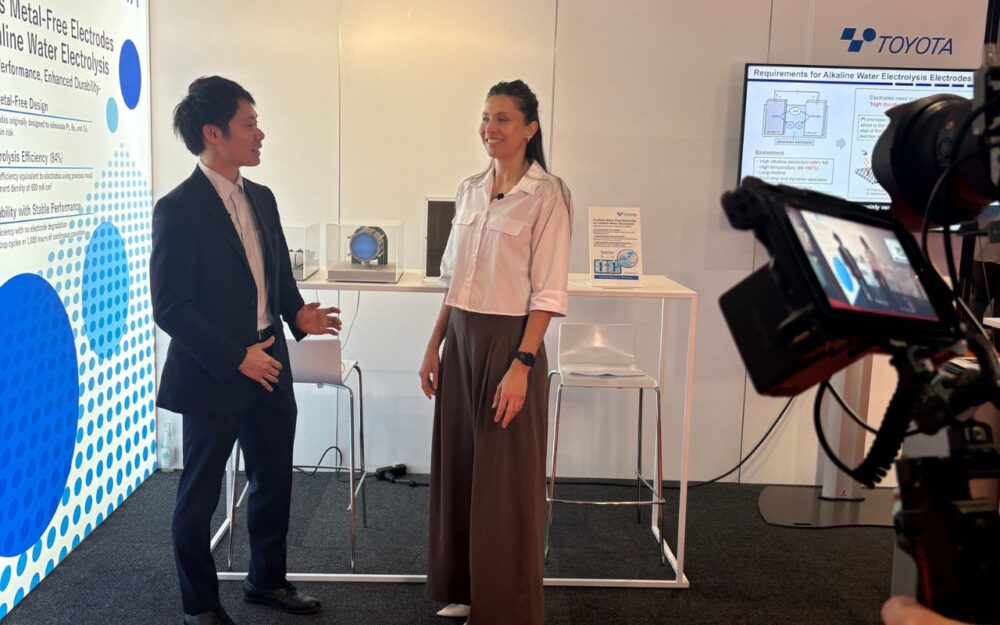
Hydrogen’s industrial ramp-up is constrained not only by electrolyzer capacity, but by the availability and cost of materials. Toyota Industries brings a concrete angle here. It announces an electrode for alkaline water electrolysis designed without cobalt or precious metals, explicitly addressing supply-chain risk while targeting high efficiency and durability.
For Hiroki Yamauchi, Senior Researcher at Toyota Industries,
“Our electrode is based on nickel, which is relatively low-cost. At the same time, we can demonstrate performance comparable to precious-metal electrodes, along with high durability. We are now looking for partners interested in testing this technology.”
3) Green Energy Park: moving beyond tech – toward projects and partnerships
Hydrogen transitions are ultimately delivered through projects, not press releases. Green Energy Park positions itself through partnership-building and project execution. At Hannover Messe 2026, this type of actor is particularly relevant, as the market is shifting from prototypes to execution ecosystems, where EPC capabilities, offtake alignment and bankable project structures become decisive.
A case in point is Green Energy Park’s Brazil project HYDEAS (Hydrogen Decarbonization Alliance for Steel). It focuses on developing large-scale green hydrogen production based on the country’s strong renewable energy potential. Together with local partners, the initiative aims to supply green hydrogen for industrial use and export markets, linking renewable generation in Brazil with international hydrogen supply chains. The focus extends beyond technology to the creation of bankable projects while covering infrastructure, partnerships and long-term offtake structures to enable industrial deployment.
For Bart Biebuyck, Chief Executive Officer at Green Energy Park,
“The steel industry accounts for around 8% of global CO₂emissions. Brazil’s fully renewable power grid enables the production of green hydrogen, which can be used in the direct reduced iron (DRI) process to produce green iron, which can then be shipped to Europe and processed into green steel.”
Partner Country Brazil – Clean-Energy Narrative Meets Industrial Opportunity
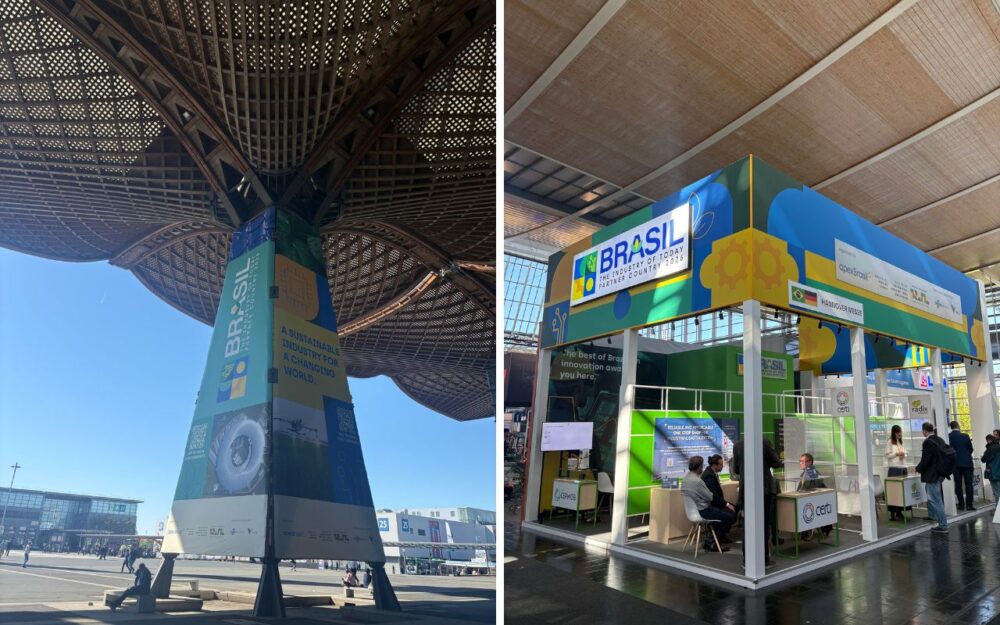
Brazil’s role as Hannover Messe 2026 Partner Country adds an important dimension. Hydrogen is not only an industrial technology, but also a question of renewable supply, trade corridors and industrial policy. Hannover Messe frames Brazil as a driver of sustainable industrial transformation and highlights its scale and resources as Latin America’s largest economy, positioning the country as a relevant partner for industrial decarbonization pathways.
What does this mean for hydrogen? Brazil’s presence makes it easier to discuss the full value chain – from renewable generation potential and industrial demand to technology transfer and joint projects. For European industry, the question is how to translate that potential into reliable, certifiable molecules and long-term contracts.
What Challenges Remain on the Path to Scale?
Despite visible progress, the obstacles are well known, and Hannover Messe 2026 implicitly reflects them by emphasizing “application” and ROI in its programming. The challenges can be clustered into four themes:
- Cost & bankability: moving from subsidized pilots to projects with stable economics (CAPEX, OPEX, and offtake terms).
- Infrastructure & logistics: transport, storage and refueling networks still lack technology readiness.
- Supply chains & materials: scaling electrolyzers and fuel cells requires resilient access to critical inputs, hence the attention to material substitution strategies.
- System integration: industrial buyers need turnkey reliability such as interfaces, safety, standards, and service models often decide adoption speed more than core chemistry.
What Hannover Messe 2026 Makes Clear
The strongest takeaway from Hannover Messe 2026 is the maturity of the hydrogen conversation. Fuel cells are being engineered around TCO and integration, electrolysis components around material resilience, and project players around partnerships that reduce delivery risk.
With Brazil as Partner Country, the fair also widens the frame. Hydrogen is not only a technology choice. It is part of an emerging industrial geography where renewable supply, trade relations and industrial policy converge. For manufacturers, the message is clear. Hydrogen is increasingly less about “if” and more about “where it wins”. And how fast industry can build the infrastructure and contracts that let it scale.