



In large-scale food processing, the condition of vacuum equipment can directly affect packaging performance, making regular diagnostics and planned maintenance critical to production stability. In this article, discover how food company MBRF shifted from reactive to condition-based maintenance to improve vacuum system reliability and maintenance planning.
When Equipment Condition Becomes a Production Parameter
In high-throughput food processing, maintenance performance can have a direct impact on production performance. At MBRF, one of the world’s largest animal protein producers, vacuum systems are used across a production network spanning 27 sites in Brazil. During packaging, the vacuum system must consistently evacuate air and residual gases within a defined cycle time and reach the required pressure level before sealing.
Any deterioration in vacuum performance can therefore have operational consequences. A pump that takes longer to reach the target pressure can increase cycle times, while unstable evacuation can affect packaging consistency. What may initially appear to be a pump maintenance issue can ultimately become a process reliability issue. This makes the condition of the installed vacuum equipment an important factor in maintaining production stability.
The Limitations of Reactive Maintenance
For MBRF, vacuum equipment had historically been supported mainly through spare-parts supply. Many maintenance activities were carried out by the company’s own teams or by third-party service providers, while manufacturer involvement in field service remained limited. This model allowed routine maintenance and repairs to be handled locally. But it provided limited visibility into the actual condition of the installed equipment across the wider production network. Performance degradation could therefore remain undetected until it became operationally relevant. Maintenance interventions were often triggered by an emerging problem rather than by a structured assessment of equipment condition.
For a distributed industrial network, this creates two challenges: equipment reliability becomes harder to predict, and maintenance planning becomes more difficult. The issue is not simply whether a pump can be repaired when it fails. It is whether its condition can be assessed early enough to determine when maintenance should be performed, what resources will be required, and how the intervention can be coordinated with production.
Moving Toward Condition-Based Service
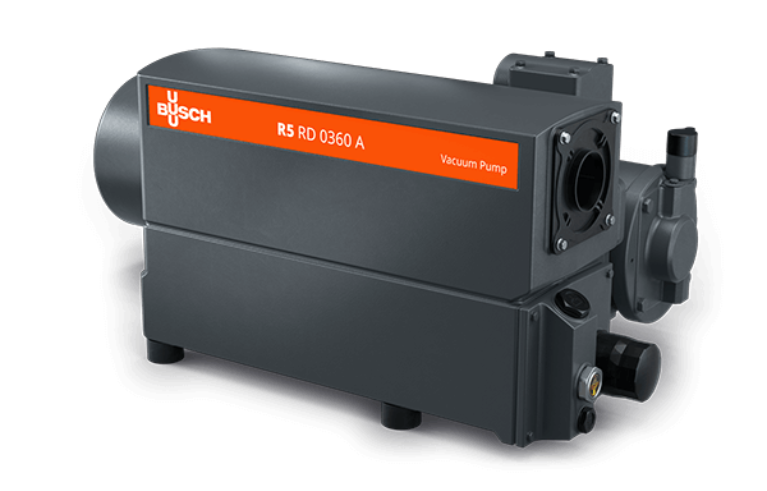
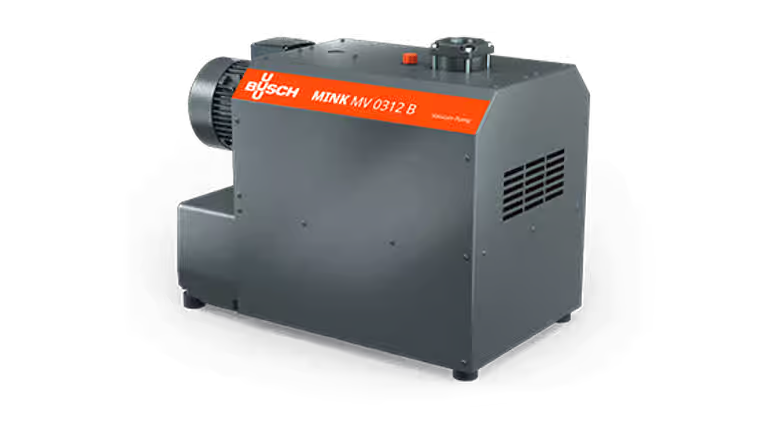
To address this challenge, MBRF and vacuum systems manufacturer Busch, developed a structured service contract covering the installed base of R5 rotary vane vacuum pumps, MINK claw vacuum pumps and vacuum boosters. The approach combines several elements: predefined service and spare-parts structures, regular vacuum performance checks, coordinated field service, and the availability of replacement pumps.
The objective is not to transfer all maintenance activities to the equipment manufacturer. Instead, responsibilities are divided according to the type of intervention. MBRF’s maintenance teams continue to perform routine activities such as oil and filter changes. Busch periodically verifies equipment condition through inspections and diagnostics. More complex interventions, including overhauls, can then be carried out either on site or at Busch’s facilities, depending on the equipment and the nature of the work.
Condition-Based Maintenance Loop
A continuous maintenance cycle linking equipment condition, diagnostics and planned intervention.
Rather than waiting for equipment performance to deteriorate sufficiently to trigger a repair, maintenance decisions can be based on the observed condition of individual pumps.
Diagnostics Turn Maintenance Data Into Planning Information
Regular diagnostics provide a different type of visibility for a maintenance organization. Each inspection generates information about the condition of the equipment. Critical pumps can be identified by site, maintenance requirements can be prioritized, and interventions can be coordinated with the customer’s production schedule. This is particularly important in a distributed manufacturing network. A maintenance strategy that works for a single plant can become considerably more complex when equipment is spread across dozens of sites.
In this context, condition monitoring is not only about detecting a potential failure. It also supports maintenance prioritization and resource planning. If a pump requires an overhaul, the intervention can be anticipated. If a replacement unit is required, its availability can be planned. If equipment is still operating within the expected parameters, unnecessary intervention can potentially be avoided. The result is a shift from maintenance based primarily on failure or fixed routines toward maintenance informed by the actual condition of the equipment.
Spare Equipment as Part of the Maintenance Strategy
The availability of spare parts and replacement pumps is another important element of the approach. For production-critical equipment, diagnostics alone do not eliminate downtime risk. Once a maintenance requirement has been identified, the necessary resources must also be available to act on it. By positioning spare parts at the customer site and making spare pumps available when required, the service model connects condition assessment with intervention readiness. This reduces the gap between identifying an equipment problem and being able to resolve it.
For maintenance teams, that distinction is significant. A condition-based strategy only delivers operational value when diagnostic information can be translated into a concrete maintenance action.
From Equipment Maintenance to Production Predictability
The main change for MBRF is therefore not simply more frequent servicing. It is greater visibility and predictability across the installed base. Regular specialist inspections make it possible to identify changes in equipment condition before they develop into unexpected production interruptions. Maintenance can then be scheduled, resources coordinated and replacement equipment prepared in advance.
The approach also creates greater transparency around maintenance expenditure. With equipment condition documented across sites, MBRF can build a clearer picture of upcoming interventions and associated costs, supporting more structured budgeting across its production network. As Everton Bernardi, responsible for Engineering and Maintenance at MBRF, explains in a press release:
“The partnership has proven to be both solid and strategic since the very beginning of the contract, characterized by a collaborative and transparent approach to both the drafting of the agreement and the execution of activities. We have observed a strong alignment with the business needs across our various units, responsiveness in service delivery, and consistent improvement in the processes involved.”