


Extracting the carbon from methane natural gas, leaving clean “turquoise” hydrogen to burn in industrial furnaces, French envirotech startup Spark Cleantech is fast-tracking Europe’s decarbonizsation efforts.
Hydrogen is a leading alternative to methane natural gas for European heavy industries – such as metallurgy, cement, glass, chemical and automotive – looking to stop burning fossil fuels and reduce their carbon footprint.
The key challenge is producing and distributing hydrogen at scale in an affordable, energy-efficient and environmentally-friendly way.
Green Hydrogen
Currently expensive, “Green” hydrogen is created by separating water into hydrogen and oxygen, using electrolysis powered by renewable electricity. The process is carbon-neutral but energy intensive, which drives up the price.
Cheaper “Blue” hydrogen is created by converting methane natural gas into hydrogen and carbon dioxide. The process relies on Carbon Capture and Storage (CCS) technologies to trap the carbon dioxide and bury it underground. Even so, it still results in emissions due to methane leakage and incomplete carbon capture.
Turquoise Hydrogen
Meanwhile, “Turquoise” hydrogen provides the environmental benefits of green hydrogen at roughly the same cost as blue hydrogen.
It is created using high temperature pyrolysis to break down methane into hydrogen and solid carbon with no emissions. Occurring without oxygen, pyrolysis avoids combustion and does not create carbon dioxide. Instead, it breaks the bonds between the one carbon and four hydrogen atoms which make up each CH4 methane molecule.
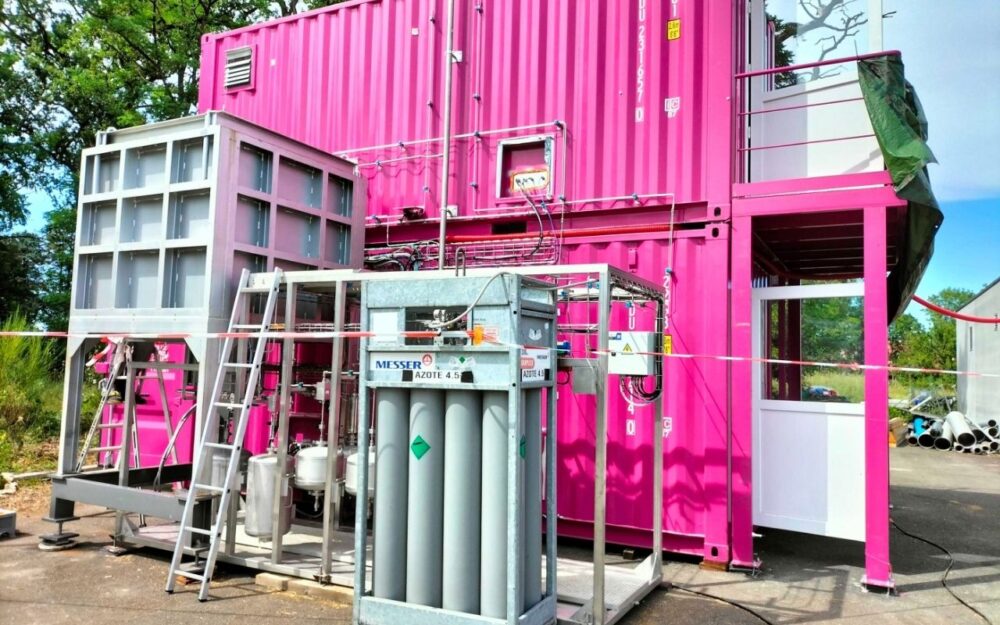
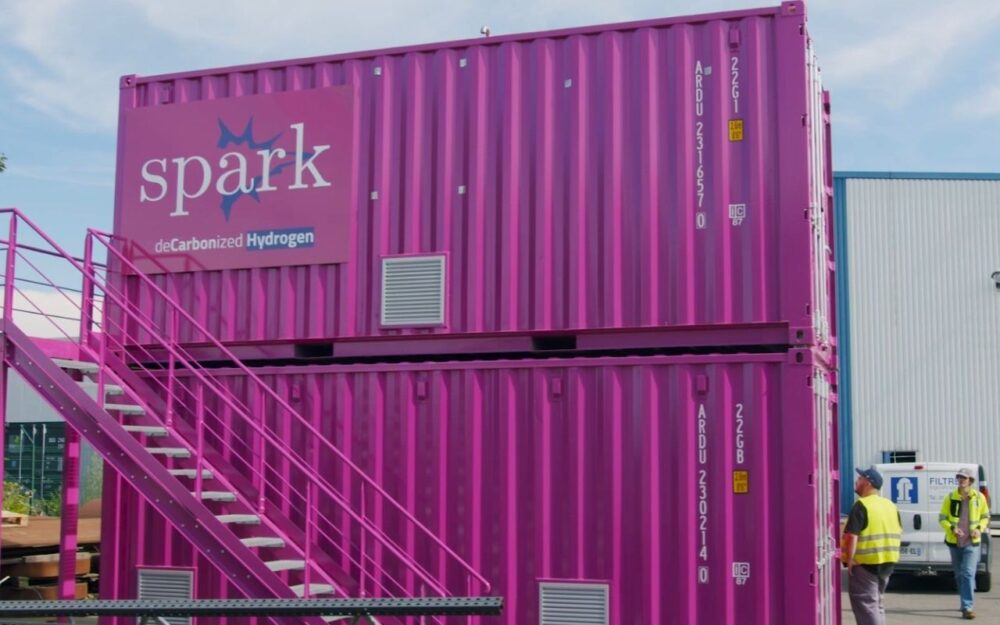
Spark Cleantech’s Nanopulsed Plasma Tech
Using Spark Cleantech’s patented Nanopulsed Plasma technology to super-heat the methane for pyrolysis consumes five times less electricity than green hydrogen’s electrolysis process, says CEO and co-founder Patrick Peters:
“The expense of green hydrogen means that Europe is struggling to build sovereign production capabilities for clean hydrogen to power heavy industry. What we are offering is a way to decarbonize industry in Europe with clean hydrogen which is not only affordable to produce but also economical for heavy industry to adopt.”
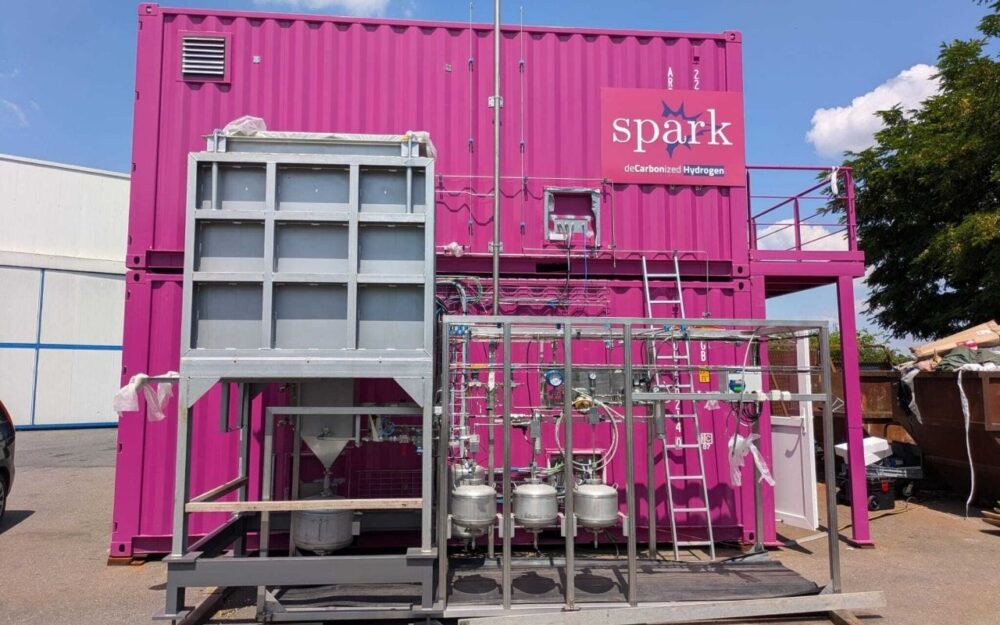
Founded in 2022, Spark Cleantech underwent its industrial pilot in 2024-25. Raising another €30 million to fund the scale up, it is currently developing a 100 kg/day hydrogen module for pilot deployment on industrial sites this year.
Commercial sales are expected to begin around 2027-28, with modules producing up to 25 tons of hydrogen per day.
Producing Hydrogen Onsite
Rather than struggle with the logistics of compressing and transporting hydrogen across Europe, Spark Cleantech’s technology creates hydrogen for customers onsite.
The compact plasma pyrolysis modules take incoming methane from the natural gas grid and feed hydrogen into the factory, where current industrial burners can switch from burning methane to hydrogen without modification.
This allows heavy industries to easily switch to clean energy while avoiding production downtime and the significant capital expenditure required for electrification.
Spark Cleantech collects the leftover solid carbon pellets, which it sells to help finance the initial investment and makes it possible to offer hydrogen at the same price as natural gas.
Thanks to its high purity and conductivity, the carbon enhances the performance of batteries, composites and a range of industrial materials.
“Along with eliminating the need for heavy industry to pollute by burning methane, we are also decreasing global fossil fuel consumption by selling that pure carbon. Today, industrial carbon is typically produced from the incomplete combustion of oil, whereas our carbon is created from a totally environmentally-friendly process.”
Spark Cleantech is not the only company entering the clean hydrogen production segment. Another French startup, Sakowin, has also developed a technology to turn methane into CO₂-free hydrogen. tere is based on plasmalysis.