Chinese EVs cost less to build largely because of decisions made at the design stage, not on the factory floor. Engineered as one system, they need fewer parts, reach the market faster and, by one industry benchmark, carry a cost advantage of up to 38%.
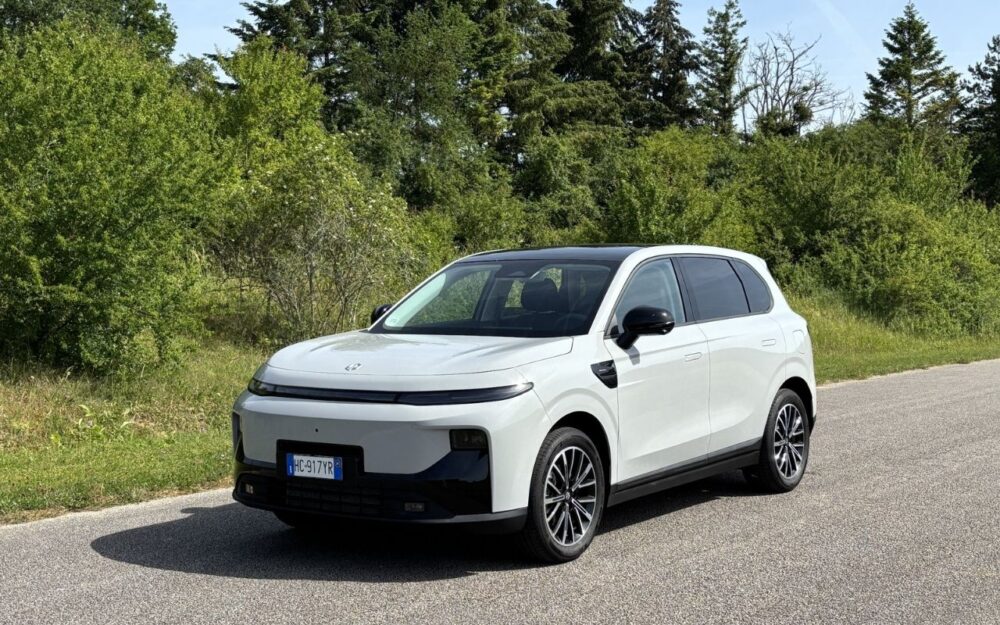
On a Stellantis assembly line in Zaragoza, Spain, workers build a car that was designed in China. The Leapmotor B10, a compact electric SUV, is the most visible result of a roughly 20% stake taken by Stellantis, the group behind Peugeot and Fiat.
Two design choices in the B10 explain why Chinese EVs have become the benchmark European makers measure their own designs and costs against. Its battery cells are built straight into the chassis, so the pack is part of the car’s structure rather than a box bolted underneath. And three regional controllers that would each run part of a conventional car’s electronics have been merged into one.
Chinese electric cars are undercutting European ones on price. And the easy explanation is the factory: giant casting presses and dense robotics. Sascha Voglgsang, VP Costing & Insights at automotive benchmark A2MAC1 sees it differently. His engineers tear down and benchmark vehicles for carmakers and suppliers. For him,
“I think it’s less about the factory itself. Actually, legacy OEMs have quite strong manufacturing capabilities. I would not put this in question.”
He feels the gap is that Chinese makers look at the car as one system, while European makers tend to optimize each part or module on its own, which does little for the platform as a whole.
The difference is settled before a car reaches the plant. Many of China’s EV makers are barely a decade old and built their plants from scratch. Starting from zero gives their engineers a freedom older carmakers lack, with no platform variants, model ranges or regional versions to design around.
Chinese makers’ cost structure carries a 38% advantage compared to Western OEMs, driven by leaner indirect costs and faster time to market. For any manufacturer, the takeaway is that most of what a car costs to build is locked in on the drawing board.

You could be interested in our video inside a Xiaomi’s EV factory
Peeling Back the Layers
Take the battery. European carmakers have taken a layered approach to building it. Cells go into modules, modules into a pack, and the pack into the car. And each step adds mechanical parts, weight and cost. In the B10, the cells sit directly in the chassis. So one structure does the work of three, with fewer parts and less weight, and a stiffer body as a result. BYD goes further in its Seal, where the top of the battery doubles as the cabin floor.
Battery chemistry was part of the same bet. Years ago, Chinese makers committed to lithium iron phosphate (LFP) cells for mid-range cars, while European makers hesitated. LFP cells are cheaper and more stable than the nickel-rich cells common in Europe, which makes them easier to build into the car itself.
European engineers were sceptical. When these designs first came up in talks with European carmakers, Voglgsang says, the first reaction was often disbelief:
“They will not be able to achieve the safety requirements for Europe.”
Chinese models have since earned Euro NCAP’s top five-star safety rating.
Fewer Parts, Fewer Assembly Steps
The choice to use giant castings, which combine several parts into one, is made in the design office. At Xiaomi, one casting replaces 72 parts and 840 weld points, halving production time for that section of the body.
Leapmotor, the B10’s maker, has built its own giant-casting line and moved four separate control systems onto one central chip. This shrinks the amount of wiring that has to be threaded through the car on the line. Chinese makers did not invent these ideas, but they’re implementing them faster and continuously improving on them.
You could be interested in this story
Speed Is a Habit in Chinese Car Design
Every year, Chinese makers bring eye-catching extras, such as built-in fridges and rear-seat cinema screens, to their vehicles, outpacing their European counterparts with new features that drive significant interest from consumers. Each model builds on the last but is a little smarter in its design, its supply chain or how its parts are sourced. And that is where much of their cost advantage comes from. Geely’s Zeekr brand, for example, uses AI to search the group’s 20 years of designs for parts it can reuse.
Reuse like this is part of what lets Chinese makers aim to develop a car in 18 to 24 months, against the five years traditional carmakers have typically taken. Chinese makers also draw 76% to 100% of their sales from models launched in the previous three years, against under a third for European brands.
Much of the gap is caused by legacy infrastructure. Established carmakers carry the weight of past platforms and plants, and bigger organisations move more slowly. Many of Europe’s car makers are taking a page from China’s book, as Stellantis has with Leapmotor. Renault developed its latest Twingo at its Shanghai center in roughly two years. Half the time it took for the Clio 5. Volkswagen brought development of its ID Polo and ID Cross down to 36 months. Better, but still short of the Chinese target. Faster development closes only part of the gap, though. Makers such as BYD and Leapmotor also keep far more of the work in-house.
Owning the Chain
Designing an entire car is easier when you make most of the parts yourself. BYD makes about 80% of its tier-one components in-house, against 37% at Tesla. It builds its own batteries and electric motors, and the integration goes deep. In parts such as the onboard charger, BYD now makes the semiconductors itself, chips it once bought from global suppliers. For Gregor Williams of Rhodium Group,
“For BYD, vertical integration is the single most important factor behind the company’s price advantage. Vertical integration requires higher upfront capex and R&D, but it eliminates supplier markups across a much larger share of the vehicle.”
By his estimate, that saves BYD about $2,369 a car. The EU justified its tariffs on Chinese EVs by pointing to state subsidies.
“Subsidies matter, but only to a certain extent”, Williams says, accounting for only about 5% of BYD’s roughly $4,700 cost advantage over Tesla’s Chinese-built Model 3.
Optimize the Whole Car
For manufacturers in any sector, the lesson is to stop improving products one part at a time, Voglgsang says:
“Don’t go slice by slice and optimize the individual subcomponents. Really optimize the whole thing.”
Redesigning that way costs money, and Europe’s carmakers have less of it each year. Andrew Bergbaum, global co-leader of AlixPartners’ automotive practice, warns that
“the window to act from a position of financial strength is closing and closing faster than most boardrooms and governments assume.”
The drawing board also decides where a car’s parts come from. Leapmotor, like BYD, makes an unusually large share of its parts itself. The workers on the assembly line in Zaragoza are building a car that was designed in China, and many of its most valuable parts are still made there. If a Chinese car can be built in Europe, what are EU tariffs really stopping, and why haven’t they slowed Chinese carmakers down?