


Industrial water systems operate under dual pressures: They must deliver consistent quality while supporting continuous production schedules that leave little room for equipment downtime. Manual inspections provide valuable snapshots of system health, yet the intervals between these checks create blind spots where gradual shifts in pressure, flow, or temperature can develop undetected.
By the time routine maintenance reveals these changes, performance may have already declined enough to affect operations. Smart sensors and predictive algorithms address this gap by monitoring conditions continuously. They detect subtle deviations as they emerge and give operators advance notice to schedule maintenance before minor issues escalate into costly equipment failures.
The Shift Toward Intelligent Industrial Water Systems
Traditional maintenance approaches rely on fixed schedules that assume equipment degrades at predictable rates. This assumption works reasonably well for routine wear, but it overlooks the variability inherent in industrial operations. A pump operating under a higher load one month may develop stress points that scheduled maintenance won’t catch until the next quarterly inspection. During that window, performance can drift below acceptable thresholds without triggering any alerts.
Continuous monitoring changes this dynamic by eliminating the gaps between inspections. Operators gain visibility into how equipment behaves under actual operating conditions rather than relying on theoretical degradation curves. When process conditions shift outside normal parameters, the data stream captures those changes immediately. Predictive maintenance uses this real-time information to help teams investigate anomalies and plan interventions before undetected problems force emergency repairs or unplanned shutdowns.

Read also our report inside a California’s Wastewater Plant
How Smart Sensors Capture Real-Time Analytics
IoT sensors installed throughout industrial water systems track operating conditions, including pressure, flow rate, and temperature at multiple points along the treatment process. These continuous readings establish a baseline profile of normal performance for each piece of equipment. Over time, accumulated data makes it easier to spot deviations from established patterns, even if they fall within the equipment’s rated tolerance.
MECO has established itself as a leader in building the infrastructure necessary for advanced analytics programs. The company’s platform draws on information from numerous field installations, each generating data on dozens of process parameters.
According to MECO, “The advantage of MECO smart ANALYTICS™ is its multitude of machines in the field, providing a large set of data, each with dozens of process parameters profiling themselves against known conditions, recognizing minute anomalies, dealing with those anomalies, and alerting to otherwise undetectable issues.”
This aggregated view allows facilities to detect subtle changes that might go unnoticed with single-site monitoring. Earlier detection extends the window in which operators can investigate a change before it compromises system reliability or affects water production quality.
Leveraging Predictive Algorithms for Equipment Longevity
Machine learning models analyze sensor readings over extended periods to estimate when specific components may require maintenance. These forecasts consider how equipment has performed historically under similar conditions, accounting for variables that fixed schedules cannot anticipate.
As noted by the experts at MECO, “MECO built the infrastructure necessary to support a widespread commercial analytics program in 2016. This included dedicated secure servers and the standardizing of instrumentation on machinery to provide the necessary inputs, outputs, and communication.” This early investment positioned the company to deliver predictive insights across multiple facilities and equipment types.
Membrane systems offer a useful case study in how predictive models translate sensor data into maintenance planning. Researchers tested a membrane prediction model against 12,528 operating cycles from an industrial-scale ultrafiltration system, reporting an average prediction error of just 4.50 cycles.
Forecasts based on actual equipment conditions, rather than theoretical lifespans, help teams plan membrane replacements before performance declines disrupt production schedules. The ability to anticipate component degradation allows facilities to coordinate maintenance during planned downtime rather than responding to failures as emergencies.
Detecting Anomalies Before They Cause Disruptions
Changes in vibration patterns or temperature gradients often signal developing pump problems well before the equipment fails. Pumps operating outside normal vibration ranges may indicate bearing wear, misalignment, or imbalance, which can eventually cause a shutdown if left unaddressed. Thermal sensors can identify temperature increases that suggest motor stress or inadequate lubrication. These early warning signs allow maintenance teams to investigate root causes and schedule repairs during planned downtime.
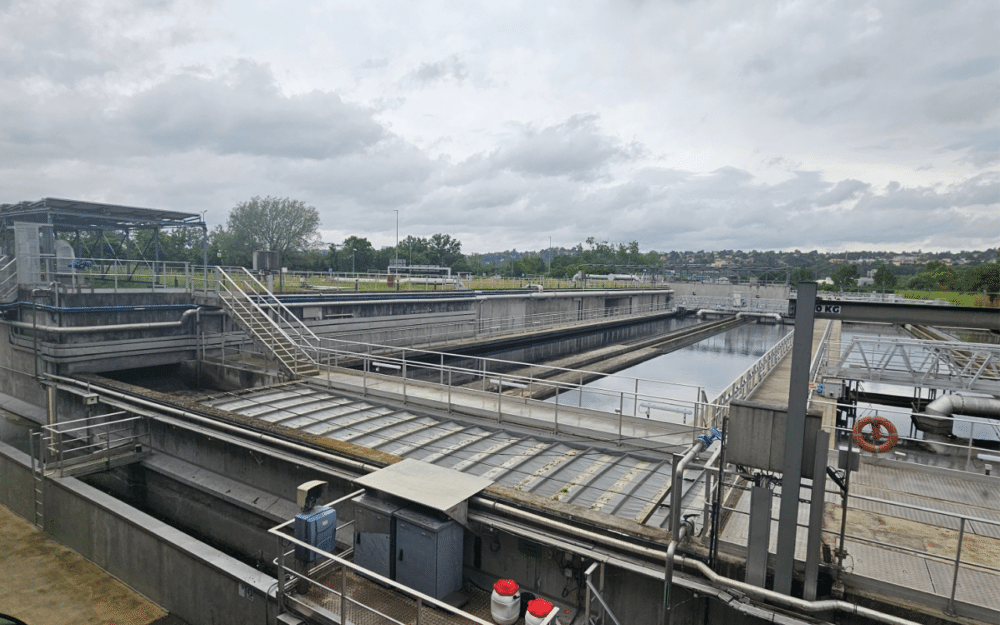
At CURRENTA’s river water treatment plant, sensors installed on three pumps monitored operating conditions to identify potential faults, including imbalance and bearing wear. The predictive monitoring system reports 70% less downtime and 30% longer service life as a direct result of implementing these strategies at the facility. The results illustrate how early detection translates into measurable operational improvements.
Bearing wear that might go unnoticed during routine inspections creates detectable vibration signatures that sensors can flag for investigation — addressing the issue during scheduled maintenance costs significantly less than replacing a failed pump and recovering from an unplanned shutdown.
Measurable Impact on Water Management Solutions
Connected water management solutions help facilities track both reliability metrics and resource consumption across their systems. Highlighting its success in the field, “MECO smart ANALYTICS™ technology and service recently reported 50% savings on energy consumption and operational efficiency over the past 18 months.”
Energy optimization yields substantial cost reductions for water-intensive operations, particularly when facilities can identify inefficiencies in real time rather than only during annual energy audits. The ability to correlate energy consumption with specific operating conditions allows teams to adjust system parameters and reduce waste without compromising output quality.
A separate study of a beverage plant’s reverse osmosis system found that failure-free operating days rose from 72.8% to 84.5% after the deployment of AI-driven monitoring. The nearly 12-percentage-point improvement in reliability reduced both maintenance costs and production disruptions.
These examples demonstrate different ways facilities can quantify the value of predictive water management solutions. However, actual outcomes depend on factors including the condition of existing equipment, the operating environment, and how effectively teams respond to alerts generated by monitoring systems.
Frequently Asked Questions
Industrial facilities often have questions about how predictive technologies integrate with existing maintenance programs and what limitations these systems face.
How do smart sensors help prevent industrial water system failures?
Smart sensors provide continuous visibility into equipment operating conditions, tracking parameters including pressure, flow rate, temperature, and vibration. This constant monitoring establishes a baseline of normal performance for each component. When readings begin to drift outside expected ranges, the system flags these deviations for investigation. Operators can then schedule maintenance to address developing issues before they escalate into failures that force unplanned shutdowns.
What does predictive maintenance add to routine inspections?
Routine inspections assess equipment condition at fixed intervals based on calendar schedules or runtime hours. Predictive maintenance supplements this approach by monitoring actual equipment behavior between inspections. The continuous data stream reveals how components perform under real operating conditions rather than theoretical degradation rates. This visibility helps teams prioritize maintenance based on actual need rather than predetermined schedules, catching problems that might not surface until the next scheduled check.
Can AI detect every potential failure?
AI-driven monitoring systems excel at identifying patterns indicating gradual degradation or emerging anomalies in tracked parameters. However, these systems depend on sensor coverage and data quality. Sudden mechanical failures that occur without warning signs in monitored parameters may not generate alerts ahead of time.
External factors, including power surges or operator errors, can also cause failures that fall outside the patterns the algorithms recognize. Predictive systems work best as part of a comprehensive maintenance strategy that includes routine inspections and operator expertise.
Embracing the Next Era of Industrial Water Purification
Smart sensors provide operators with continuous insight into equipment conditions across industrial water systems. Predictive analytics transforms the constant stream of information into earlier maintenance decisions, supporting more reliable operations. The value these tools deliver depends on how effectively facilities translate alerts and forecasts into timely action.
As sensor technology and machine learning models become more accessible, the competitive advantage will shift toward organizations that integrate predictive insights into their operational workflows and use that information to prevent problems rather than simply documenting them.