
Cooling systems are often the focus of attention in data center design. Yet, building envelopes are equally critical, determining operational energy loads and embodied carbon. ArcelorMittal Building Solutions explains why the envelope deserves the same scrutiny as the mechanical systems within.
Data centers never switch off. Servers generate heat around the clock, while the cooling plant draws huge amounts of energy to maintain a stable temperature. Most conversations about efficiency stop there, fixed on chillers, air conditioning and free cooling loops.
But the building envelope sets the baseline for how hard cooling plant must work. The walls, roof and insulation specified at design determine how much heat can escape, how much solar gain gets in and how much of the structure’s embodied carbon is fixed at the outset. Fail to specify wisely and you risk compromising safety, sustainability, efficiency and continuous operation.
The Data Center Envelope: Where the Cooling Load Is Set
Heat gained through a poorly insulated wall or roof is heat the cooling system has to remove. At data center scale, that adds up fast. The cost is apparent in energy bills, but there is also a huge strain placed on plant that is already running near capacity.
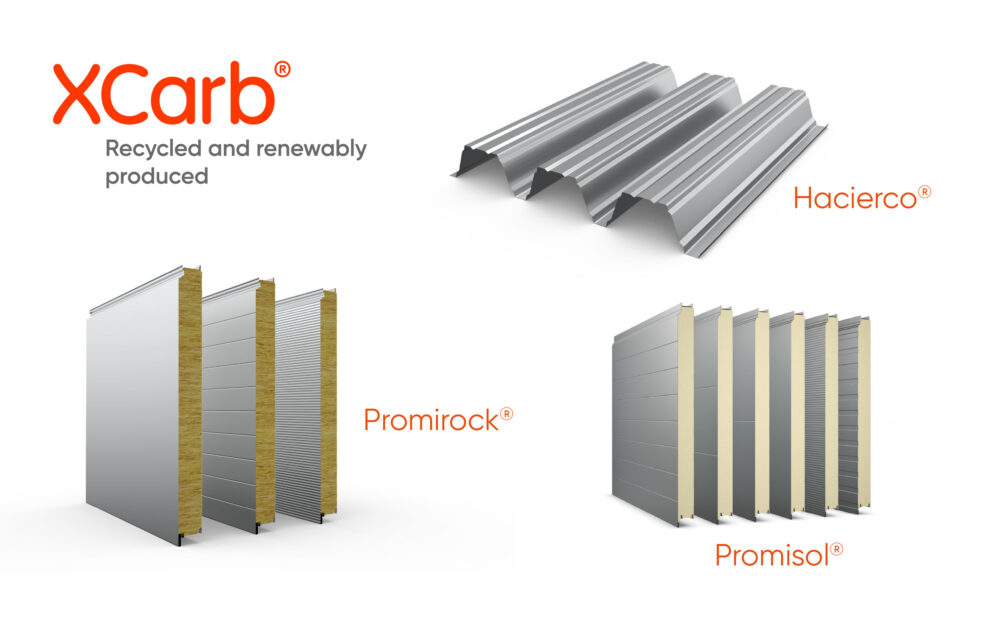
Insulated sandwich panels with polyisocyanurate (PIR) or mineral wool cores are among the most direct ways to reduce that load. Roof and wall systems such as Ondatherm® and Promisol® from ArcelorMittal Building Solutions combine insulation with airtight design, cutting the energy demands that would otherwise push cooling systems into overdrive.
In particular, for data center construction where space is at a premium, PIR panels are an excellent choice. They offer impressive insulation and thinner composition. For example, ArcelorMittal Building Solutions’ advanced insulation foam, Advancore®, is an enhanced PIR foam that delivers the same thermal performance as standard sandwich panels with 14% reduced thickness.
In other words, the same outcome can be achieved with less material, which is beneficial for space, costs and carbon footprint.
Thermal Performance Without Compromise
The same envelope decisions that govern temperature control also govern two other things that architects cannot ignore: fire risk and embodied carbon.
Mineral wool panels such as Promirock® offer fire resistance up to EI240, suited to electrical rooms, battery storage and fuel storage areas where risks run higher.
Fixed upstream, long before the data center is operational, embodied carbon is a factor of envelope selection that is sometimes overlooked. ArcelorMittal’s XCarb® recycled and renewably produced steel is made in an electric arc furnace powered by renewable electricity. It uses a high proportion of scrap material and performs identically to traditional high-quality steel.
Profiles such as ArcelorMittal Building Solutions’ Hacierco® deck can see embodied carbon fall from 2.9 to 0.95 kilograms of carbon dioxide equivalent per kilogram – a reduction of up to 67%. Promisol® S, combining Advancore® insulation with XCarb® recycled and renewably produced steel, cuts global warming potential (GWP) by 48% against the standard equivalent.
These figures come from independently verified Environmental Product Declarations (EPDs). The solutions are designed for a 50-year service life, can be dismantled rather than demolished and, because steel is infinitely recyclable, can stay within the circular economy when decommissioned.
A Case in Point
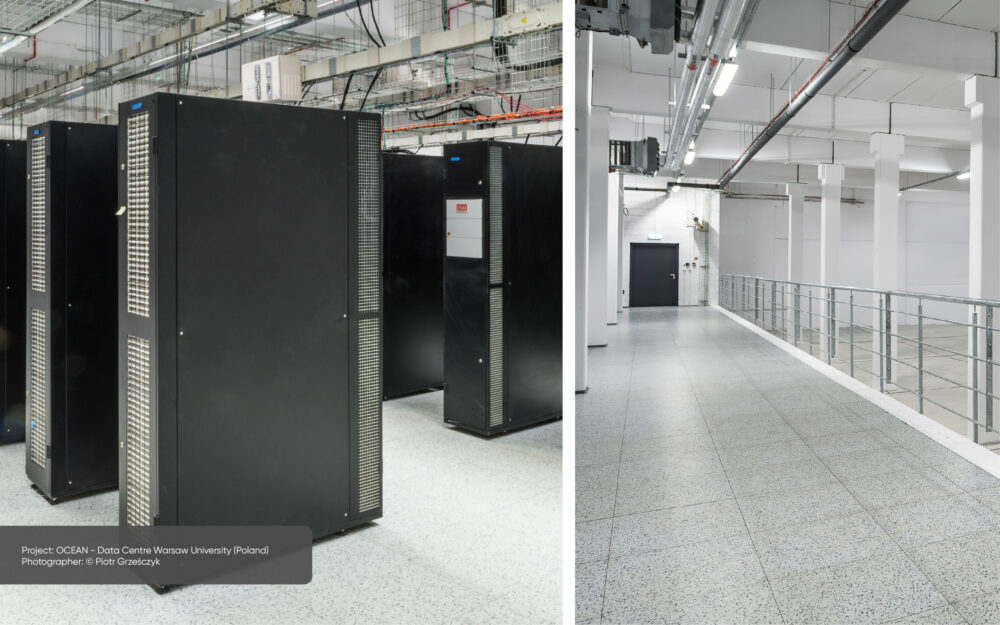
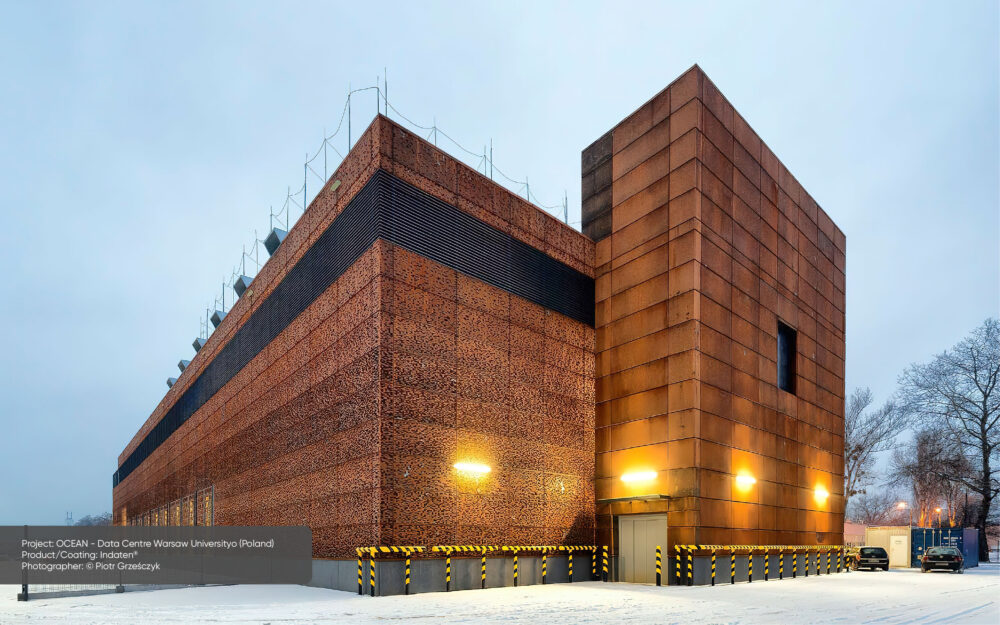
At Warsaw University’s data center, ArcelorMittal Building Solutions supplied weathering steel Indaten® for a sunscreen of customized, perforated steel cassettes, just 2mm thick. Inspired by traditional programming punch cards, the pattern limits the solar radiation reaching the glazing behind, reducing demand on air conditioning and improving comfort. The finished build serves as proof that envelope decisions can take pressure off cooling and deliver an elegant aesthetic simultaneously.
Specify Early
None of these approaches perform optimally as an afterthought. Balancing the envelope’s energy efficiency and carbon footprint is easiest to get right when it is specified alongside the mechanical systems from the project outset.
ArcelorMittal Building Solutions’ technical advisory service, Smart Support, gives architects and engineers guidance from the earliest design stages, including carbon comparisons across solutions, as well as advice on fire resistance.
Demand for data centers will continue to grow, and with it, so too will scrutiny of their energy and carbon use. For support on your next data center build, speak to an ArcelorMittal Building Solutions expert today.