

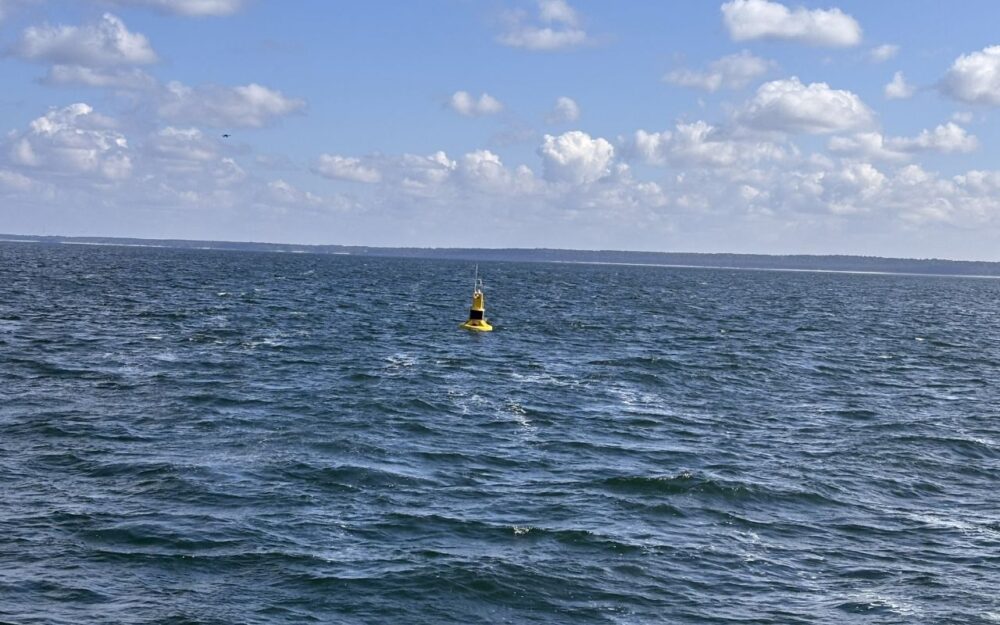

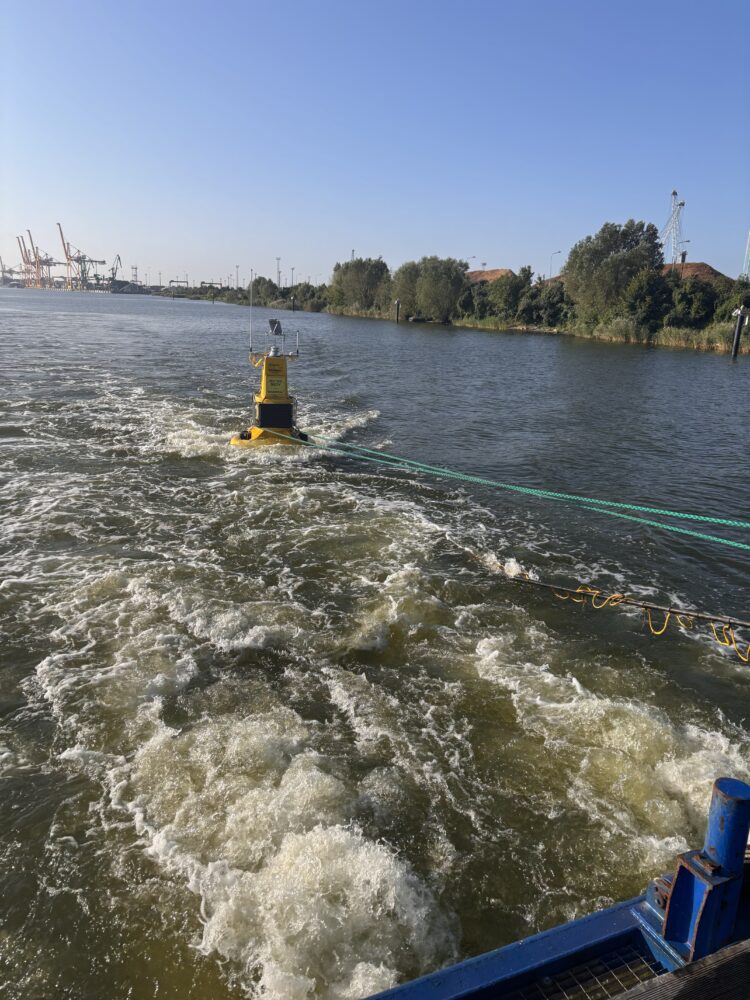
Authorities at the Port of Klaipėda in Lithuania deployed a new smart buoy that monitors weather and water conditions in August 2026. The innovative device is part of the EU-sponsored MOVEO project, which facilitates seamless transport networks through technological innovation.
The buoy is situated four nautical miles from the entrance to the port. Port of Klaipėda is crucial to the country’s economy, serving as a major avenue for cargo. It is the northernmost ice-free port in the Baltic Sea. Rail and road networks spider out from the harbor, connecting it to the interior of the nation and to the rest of Europe. Buoy will enable real-time adjustments to logistics plans and the optimization of cargo and transport flows. This will facilitate more convenient and smoother shipping operations.
Algis Latakas, Director General of the Klaipėda Seaport Authority, explains:
“The hydrometeorological buoy is one of the components of the monitoring and forecasting system being deployed at the Port of Klaipėda. It will collect real-time data on wind direction and speed, water currents, wave height and water level, as well as GNSS signal interference.”
A Smart Buoy
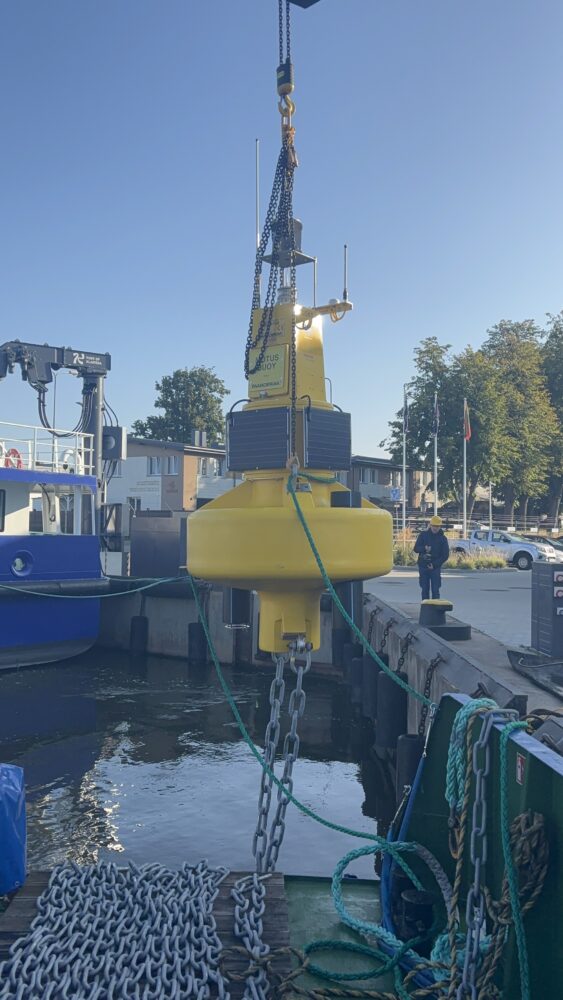
The buoy contains four wind sensors, two wave-measuring devices, three water-current sensors and three water-level gauges. The IoT comprises a range of devices equipped with sensors that transmit valuable data.
Data harvested by the buoy is fed into a central algorithm that helps to calculate optimal movement patterns for vessels moving in and out of the port. It is used to assess the speed at which vessels should approach. It could also anticipate potential delays, allowing for efficient queueing procedures and ensuring the safety of the vessels and their occupants.

You could also be interested in this story
It also communicates with vessels themselves, allowing them to assess their location when GPS and other technologies are malfunctioning. In such cases, these vessels can be further guided by smaller ships maintained by the port authority after they are in position for entry.
Much of the data collected by the buoy was not previously available, according to Latakas. It can be used directly to inform shipping patterns – and can also be integrated into models that use historical data.
“In the future, an algorithm for forecasting hydrometeorological conditions will also be developed. The system as a whole will enable more accurate forecasting of conditions in the Port of Klaipėda and its approaches, allowing logistics plans to be adjusted promptly and cargo and transport flows to be optimised. Water-level forecasts will also allow for more accurate loading plans and deeper drafts when conditions permit.”
Much of the maintenance on the buoy can be conducted remotely.
“As with any other infrastructure in the Port of Klaipėda, the buoy’s technical condition will be continuously monitored. If repairs or more complex maintenance are needed, the buoy can be recovered and serviced at the base.”
The European MOVEO Project
The buoy is part of a larger effort by the MOVEO project to encourage more efficient transportation. It is one of five demonstration sites spread across France, Italy, Lithuania and Switzerland. The origins of Klaipėda Port date back to 1252. However, a new chapter in the port’s development, advancement and growth began following the restoration of Lithuania’s independence and the establishment of the Klaipėda State Seaport Authority in 1991.
Today, Klaipėda Port is a modern transport and logistics center that embraces innovation and plays a vital role in strengthening the country’s economy. It ensures energy independence and enhances national security. It now accounts for approximately 6.24% of Lithuania’s GDP. Nearly 40 million tonnes of cargo moved through Klaipėda in 2025.
“The opportunity to become one of the demonstration sites where advanced solutions developed through the MOVEO project are deployed allows us to gain a deeper understanding of and assess innovations that can enhance navigational safety, contribute to more efficient cargo flow management, and support more environmentally friendly operations. By participating in the project, we are bringing the solutions of the future to the Port of Klaipėda.”