


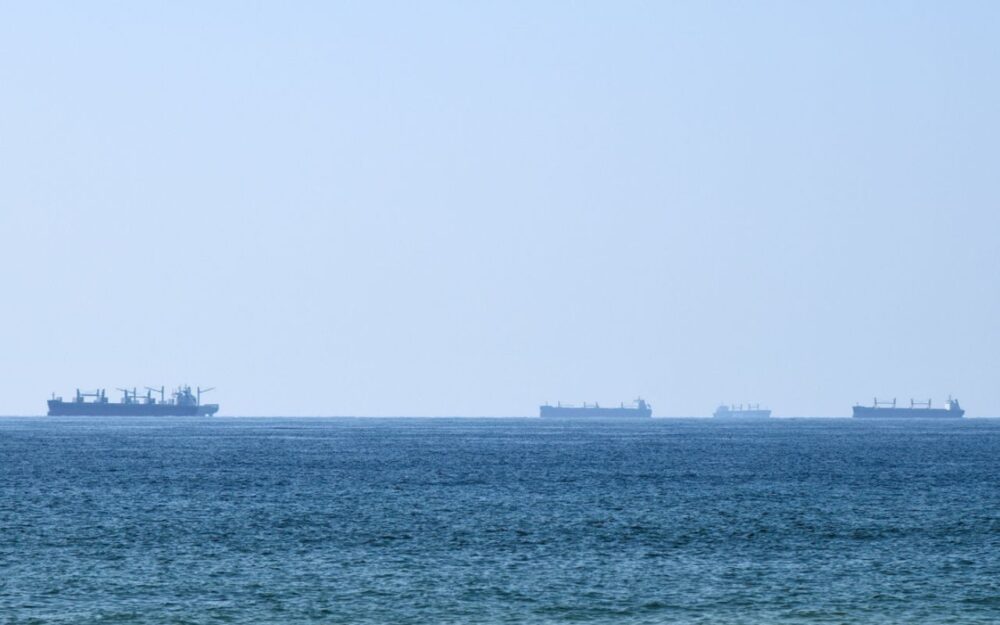

According to Allianz Commercial report, an estimated value of $125 billion are still waiting in the Persian Gulf due to the war in Iran.
With around 90% of global trade transported by sea, maritime security and the uninterrupted flow of goods through strategic waterways have become critical concerns for manufacturers, logistics operators and supply chains worldwide.
According to Allianz Commercial’s 2026 Annual Maritime Safety Report, recent disruptions in the Persian Gulf have underscored the vulnerability of global shipping routes and accelerated a shift toward what the insurer describes as a “new maritime order. This new order is defined by geopolitical uncertainty, higher risk premiums and a growing emphasis on resilience over efficiency.
$125 Billion Worth of Shipping Impacted in the Persian Gulf
The recent closure of the Strait of Hormuz, one of the world’s most important maritime chokepoints, has highlighted the scale of the risks facing international trade.
Based on Allianz Research data, approximately 1,150 cargo vessels, representing an estimated value of $125 billion including cargo, have been waiting in the Persian Gulf to resume navigation following recent diplomatic developments. The affected fleet accounts for roughly 29 million gross tons and involves around 20,000 seafarers.
The situation demonstrates the strategic importance of major maritime passages and the significant operational consequences that arise when they become inaccessible. Beyond commercial losses, prolonged disruptions also place considerable psychological and safety pressures on crews operating in conflict-affected regions.
Even if navigation through the Strait of Hormuz returns to normal, industry experts believe strong international guarantees regarding safe passage will be required before shipping traffic can recover to pre-crisis levels of approximately 140 vessels per day.
Geopolitical Risk Becomes Shipping’s Primary Concern
While the maritime industry has made significant progress in improving safety over the past decade, geopolitical instability has emerged as one of the sector’s most pressing challenges.
Recent events in the Middle East follow a succession of disruptions that have tested global supply chains, including the COVID-19 pandemic, congestion at major ports and blockages of critical shipping routes. Together, these events have exposed the limitations of highly optimized, just-in-time logistics models.
As uncertainty increases, many companies are reassessing supply chain strategies, moving toward inventory buffers and diversified logistics networks designed to improve resilience rather than maximize efficiency alone.
For shipowners, cargo operators and industrial manufacturers, the ability to adapt quickly to route disruptions is becoming a strategic advantage rather than simply a risk-management exercise.
Maritime Safety Continues to Improve
Despite geopolitical tensions, Allianz Commercial’s report indicates that maritime safety performance continues to improve globally.
More than 900 total vessel losses involving ships over 100 gross tons were recorded during the past decade. However, the annual average has fallen significantly. Between 2021 and 2025, total losses averaged 70 vessels per year, compared with 111 per year during the previous five-year period (a reduction of 37%).
In 2025, only 43 total losses were reported worldwide, reflecting the positive impact of ongoing investments in safety measures, technology and operational standards.
Marine incidents also declined by approximately 16% year-on-year, falling from 3,353 cases in 2024 to 2,818 in 2025.
Machinery Failures and Fires Remain Key Threats
Traditional operational risks continue to generate substantial losses across the shipping sector.
Machinery damage and breakdowns accounted for more than half of all reported marine incidents in 2025, with 1,505 cases worldwide. Collisions between vessels ranked as the second most common cause of incidents.
Meanwhile, fires aboard large vessels remain a major concern. More than 200 ship fires were reported during 2025, making it the second-highest annual total of the past decade. Container ships and vehicle carriers are particularly exposed, especially as cargoes become more diverse and increasingly include lithium-ion battery-powered products such as electric vehicles.
At least nine total vessel losses were attributed to fires during the year.
Bigger Ships Mean Bigger Financial Exposure
The report also points to growing financial risks associated with ever-larger vessels.
As ship capacities increase, so does the potential scale of “general average” claims, in which shipowners and cargo owners share the costs incurred to save a vessel, crew and cargo during an emergency.
These cases are often highly complex and can involve enormous financial stakes. Contributions required from cargo owners may reach up to 50% of cargo value. On vessels carrying thousands of electric vehicles, total cargo values can easily exceed $100 million.
For insurers, shipowners and cargo operators, this trend is creating new challenges in risk assessment, claims management and emergency response planning.
Resilience Takes Priority Over Efficiency
The Allianz report concludes that the maritime industry is entering a period of profound transformation. Geopolitical instability, rising claims costs, fleet modernization requirements and decarbonization pressures are collectively reshaping risk management priorities.
As a result, resilience is increasingly being treated as a strategic asset. Companies are investing not only in insurance coverage but also in operational flexibility, supply-chain diversification and proactive risk management to reduce exposure before disruptions escalate into major losses.
For global manufacturers and industrial operators dependent on maritime transport, the message is clear: in a world of growing uncertainty, resilience is becoming as valuable as efficiency.