


Neodymium-iron-boron (NdFeB) magnets are fundamental to many of the technologies driving Europe’s green and digital transitions, from electric vehicles and wind turbines to everyday electronics. However, their production relies heavily on rare earth elements predominantly sourced from outside Europe, with China leading the global supply chain.
Recycling old magnets into new ones is gaining attention for a sustainable, circular economy and to cut dependence on imported raw materials. The magnet recycling market is expected to grow from US$1.2 billion in 2024 to US$4.5 billion by 2033. The industry could become a strategic industrial sector within the next decade.
A new international standard by the International Organisation for Standardisation (ISO) aims to establish common guidelines for the “short-loop recycling” of NdFeB magnets. This process recovers and reuses materials with fewer steps, lower energy consumption, and less waste.
Research initiatives such as the EU-funded HARMONY project are also uniting expertise across Europe to create practical approaches for circular magnet recycling, from collecting and dismantling magnets to recovering metals and producing new ones.
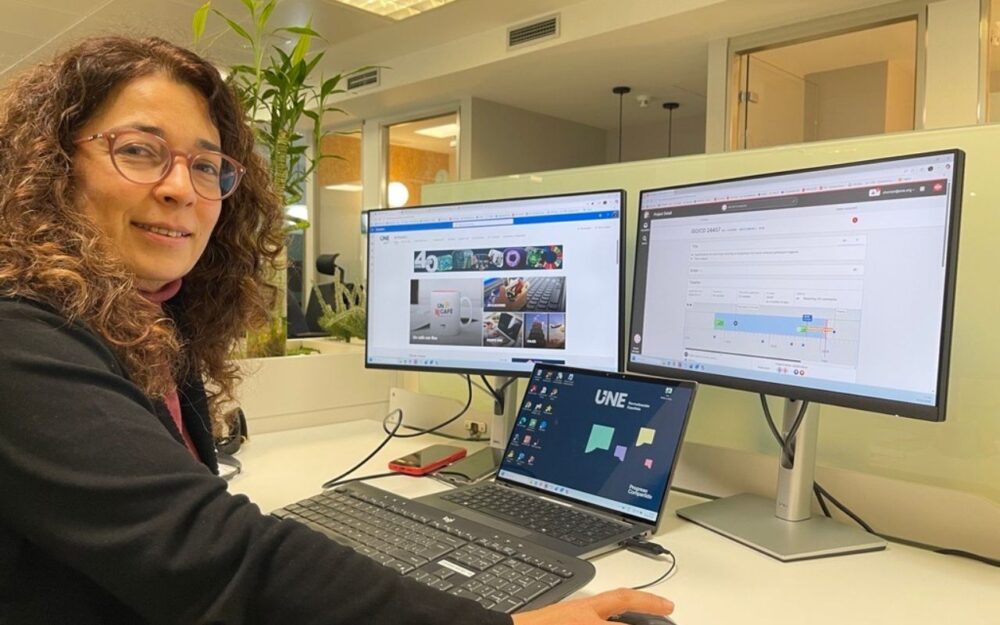
We spoke with Cristina Hernán Hernán from Asociación Española de Normalización, the Spanish standards body. She discussed the importance of standards in this evolving field and their potential impact on Europe’s industrial independence, sustainability goals, and competitiveness.
Can you explain what “short loop recycling” means for NdFeB magnets and why it is important for Europe’s capacity to produce them independently?
Cristina Hernán Hernán: “Short-loop recycling is based on reducing the number of processing steps required to recover materials, thereby lowering energy consumption and overall costs. This approach is particularly relevant for Europe, as it helps reduce dependence on third countries for magnet supply and strengthens self-sufficiency in strategic sectors.
In this context, recycling rare earth magnets, especially neodymium-iron-boron (NdFeB) magnets, represents a key opportunity. These materials are essential for technologies such as electric mobility, renewable energy, and electronic devices. Short-cycle processes make it possible to recover their functionality without fully breaking them down, thus reducing environmental impact and carbon footprint.
However, commercial recycling of rare earth magnets remains limited, despite progress in developing new processes. The value chain for these materials is complex and faces challenges in sustainability, traceability, and efficiency. At the same time, growing global demand, particularly in energy and digital applications, highlights the need to strengthen recycling and advance towards greater strategic autonomy in Europe.“
Why does a young industry like magnet recycling need an ISO standard now, instead of letting the market develop first and setting rules later?
Cristina Hernán Hernán: “ISO standards are essential tools that provide a common language and establish shared requirements, facilitating international trade. If we were to wait for individual industries to develop their own methodologies, we would likely face a wide variety of approaches in the market, making it difficult to reach a consensus on standard requirements. In the worst case, consensus might not be achieved at all, leading each country to develop its own methodology, which may not be accepted by others due to environmental, efficiency, or purely economic considerations.“
What will this new ISO standard actually cover in practice? Are there areas, such as quality, safety, environmental protection, or traceability, that you think will be especially important?
Cristina Hernán Hernán: “The standard first establishes a common terminology, as the same terms are sometimes used with different meanings. For this reason, it is essential to clearly define what is meant by specific concepts. Once a shared terminology is in place, the standard then sets out the technological process, the technical requirements, and, importantly, the environmental protection and safety requirements.“
Europe remains largely reliant on China for the rare earth elements required to produce these magnets. Why is this dependency a critical issue, and how could improved recycling enhance Europe’s independence and sustainability?
Cristina Hernán Hernán: “Europe’s heavy dependence on China for the supply of rare earth elements is a critical issue due to the high geographical concentration of both production and processing. China not only accounts for around 70% of global rare earth production, but also dominates the refining and separation stages, which are essential for their industrial use. This situation creates a strategic vulnerability for Europe, as any export restrictions, geopolitical tensions, or market fluctuations could directly disrupt key sectors such as electric mobility, renewable energy, and advanced electronics.
The rare earth supply chain is complex and subject to environmental, regulatory, and social constraints, making it difficult for other regions to rapidly develop domestic production capacity. As a result, Europe depends not only on imported raw materials but also on specialised processing technologies largely located outside its territory, increasing its exposure to supply disruptions and price volatility.
In this context, recycling, especially through short-loop approaches, can play a crucial role in improving Europe’s strategic independence. Recovering rare earth magnets from end-of-life products reduces the need for virgin raw materials and allows Europe to utilise resources already present within its own market. This helps decrease reliance on imports while strengthening the resilience and stability of supply chains.“
The HARMONY project is creating a full recycling loop for these magnets, from collection to the production of new magnets. What has been the biggest achievement of this initiative so far?
Cristina Hernán Hernán: “Although it is still too early to identify a single definitive achievement, the HARMONY project has already made significant progress, particularly in demonstrating that recycling NdFeB magnets can be viable, efficient, and applicable in real industrial contexts.
Unlike more limited approaches, HARMONY does not focus on just one stage of the process but instead addresses the entire recycling value chain. This includes the collection of end-of-life products, the dismantling and separation of magnets, the recovery of rare earth elements, the production of recycled NdFeB powder, the manufacturing of new magnets, and finally the validation of their properties. This validation is crucial, as it confirms that recycled magnets can achieve performance comparable to those produced from virgin raw materials.
This comprehensive approach is essential because it removes common bottlenecks in industrial processes, such as the disconnect between recycling and production stages. Furthermore, by incorporating validation in real applications in collaboration with the industries that will ultimately use these materials, the project demonstrates their practical functionality. In doing so, it helps overcome one of the main non-technological barriers: market distrust toward recycled materials.
Overall, HARMONY is helping to lay the foundations for a more competitive, sustainable, and fully industry-integrated model for magnet recycling.“
Have there been moments during the HARMONY project where the lack of clear standards or guidance created difficulties? If so, what was missing?
Cristina Hernán Hernán: “So far, no significant difficulties have been identified regarding the absence of clear standards or guidelines within the HARMONY project. In our first deliverable, we included a list of over 500 standards across various areas.
We considered at the outset of the process that it was necessary for HARMONY partners to be aware of these standards so that they could rely on them for their work within the project. In this way, we aimed not only to make partners aware of the existence of these standards but also to highlight the importance of harmonising both the processes and the project’s final product with existing standards.
Throughout the entire project, we have kept abreast of new developments emerging at the European and international levels in order to inform the partners of these and emphasise to them the importance of sharing the knowledge generated in the HARMONY project with the rest of the scientific community through their participation in new standardisation projects initiated by themselves or within any of the active European or international technical bodies.”
For companies considering investing in magnet recycling in Europe, what confidence can this standard provide, and what uncertainties remain?
Cristina Hernán Hernán: “For companies considering investing in magnet recycling in Europe, this standard can provide a high level of confidence, greater clarity on requirements, and strong assurance, as standards are developed by leading experts representing the stakeholders of each sector. However, it is important to note that this is still a developing field, and some uncertainties remain, which are expected to diminish as the sector continues to evolve.”
What role should EU institutions assume to ensure Europe develops a truly independent magnet recycling industry by 2030?
Cristina Hernán Hernán: “To achieve a truly independent magnet-recycling industry by 2030, European Union institutions must actively engage with and support these initiatives. This involves closer collaboration with industry, acting in some cases as coordinators to align efforts and in others as facilitators to remove barriers and promote the sector’s development.
I encourage all experts to reflect on the importance of getting involved in developing standards that make life easier for users, protect the environment, and help build a more equitable and fairer world for all.“