

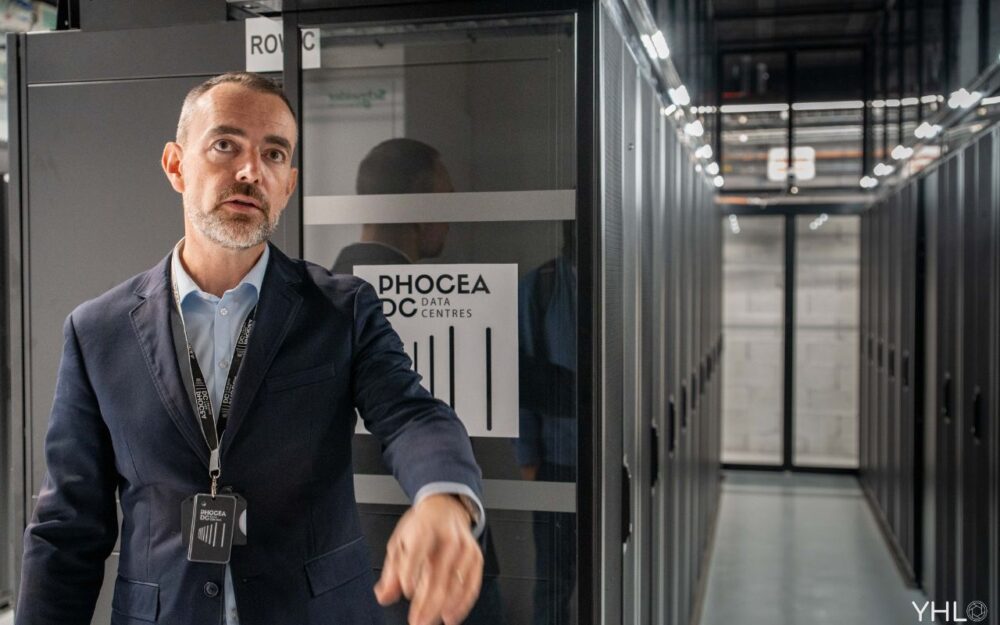

In downtown Marseille, a former industrial building has been completely transformed into a neighborhood data center: PHOCEA DC. Its founder, Damien Desanti, has turned the site into a showcase for a sovereign, environmentally conscious model of a data center, one embedded within the city rather than hidden away in sprawling industrial parks on the outskirts. We were invited to tour the facility, from its electrical rooms and UPS systems to its Meet Me Room and its first immersion cooling trials.
As AI fuels an unprecedented boom in data center construction across Europe, opposition to these energy-intensive facilities is also growing. Noise, land consumption, visual impact and electricity demand have become major concerns for local communities. In Marseille, however, one company is betting that data centers do not have to be hidden on sprawling suburban campuses. DirectIndustry visited PHOCEA DC, a sovereign urban data center housed inside a refurbished industrial building in the heart of the city, where founder and CEO Damien Desanti is promoting a different model. His is designed to integrate into the urban fabric while supporting France’s ambitions for digital sovereignty.
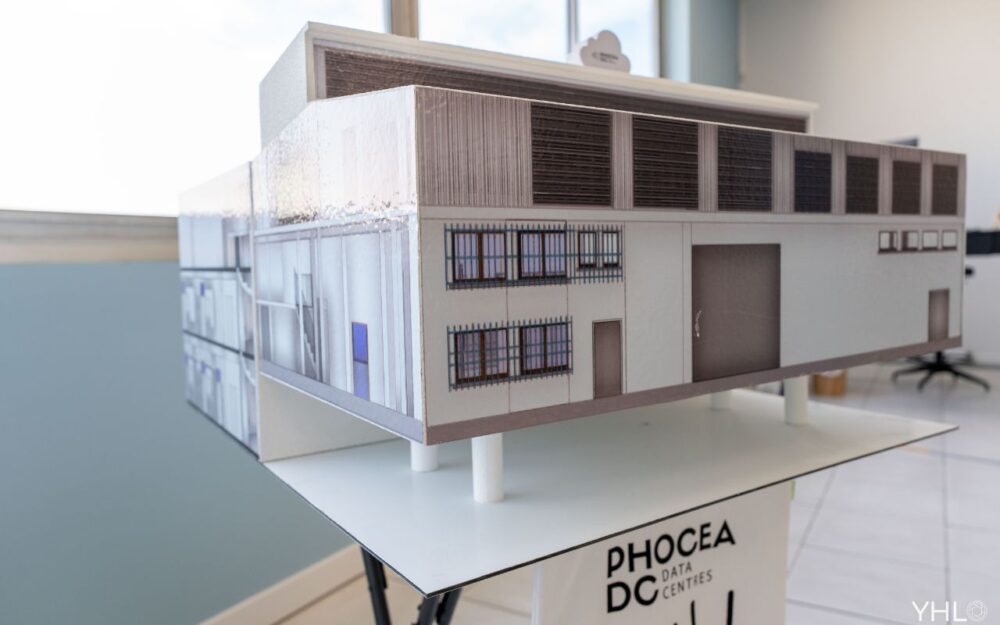
At first glance, nothing about the building suggests it houses critical digital infrastructure. Located on a downtown street in Marseille, the former industrial facility has been entirely renovated to accommodate a 600 kW data center. The discreet façade is intentional, explains Damien Desanti, founder and CEO of PHOCEA DC:
“We wanted to demonstrate that a data center can become part of the city rather than expanding its footprint outside it.”
This urban approach directly addresses one of the industry’s growing challenges. As Europe accelerates investments in AI-ready infrastructure, obtaining permits and public acceptance for new facilities has become increasingly difficult. By repurposing an existing building instead of constructing another hyperscale campus, PHOCEA DC illustrates how smaller sovereign data centers could complement larger facilities while reducing land consumption and integrating more naturally into existing neighborhoods.
Marseille, Europe’s emerging digital port
For Damien Desanti, France possesses two major advantages in the global race for AI infrastructure.
First, the country generates more electricity than it consumes, offering available low-carbon power for digital infrastructure. Second, artificial intelligence has fundamentally changed computing requirements.
“The arrival of AI has multiplied power requirements by a factor of one hundred. It completely changes the scale of infrastructure we need.”
Geography provides Marseille with another strategic advantage.
The Mediterranean city has become one of Europe’s principal digital gateways. Indeed, numerous submarine cables are landing on its coastline before connecting northward through the Rhône Valley into the wider European network. DirectIndustry has regularly reported on these submarine cable landings. The reflect the city’s emergence as one of Europe’s leading connectivity hubs. This positioning has earned Marseille the nickname of Europe’s “digital port”. The city is now increasingly important in discussions surrounding digital sovereignty and strategic infrastructure.
Ensuring clean and uninterrupted power
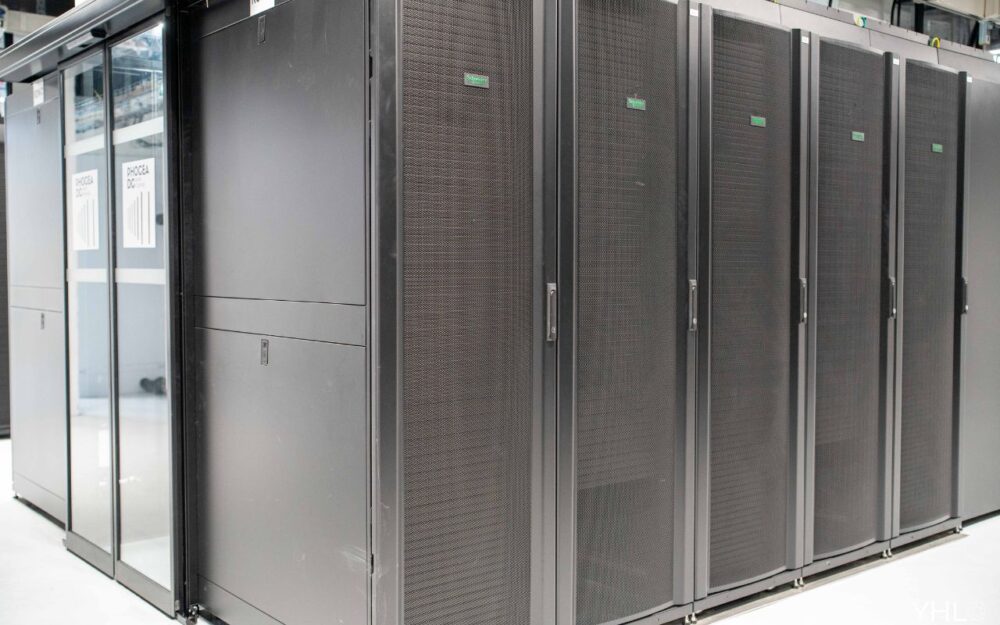
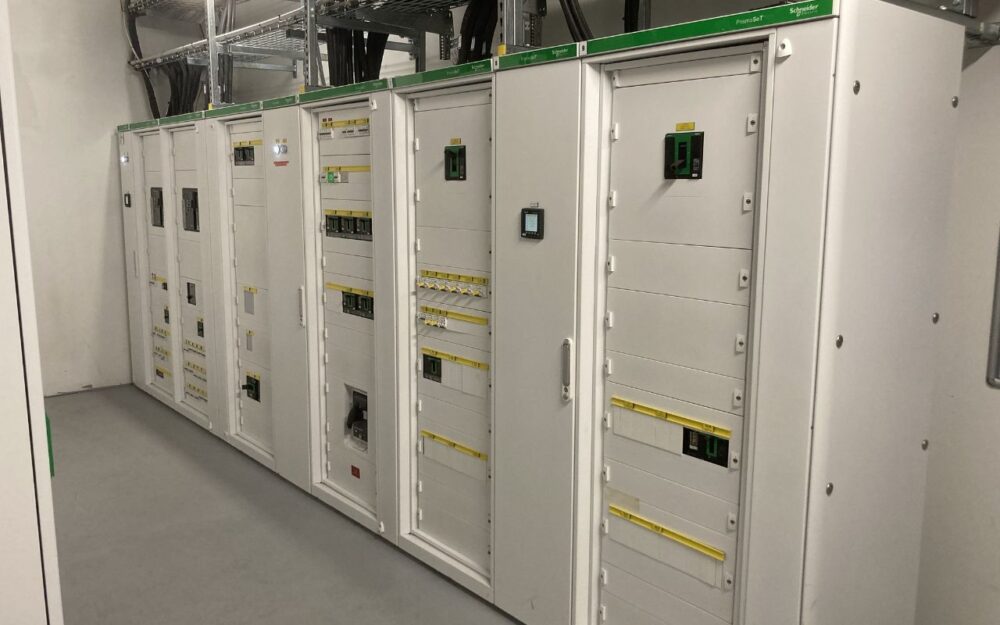
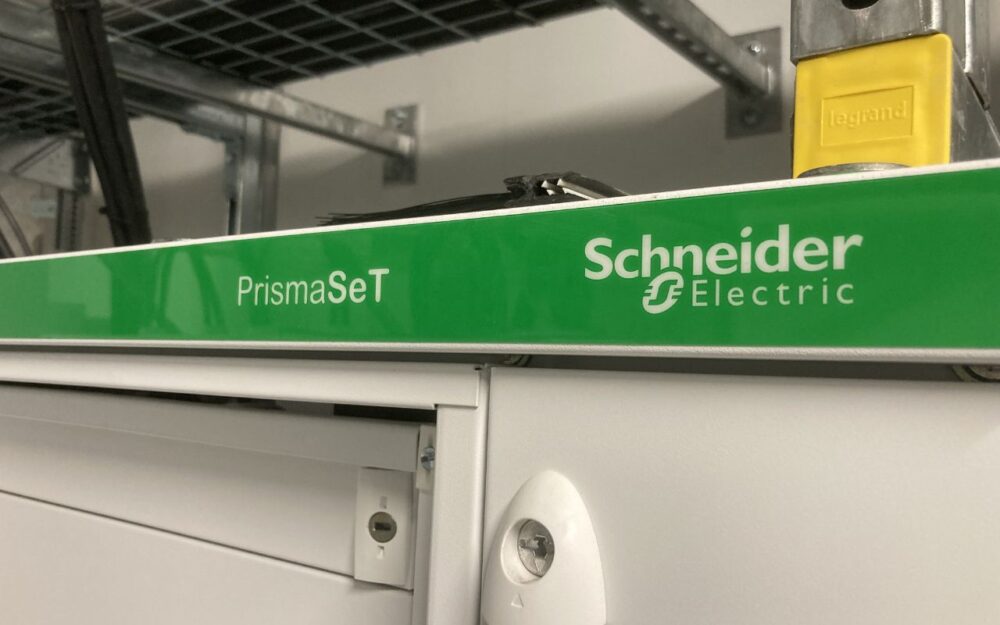
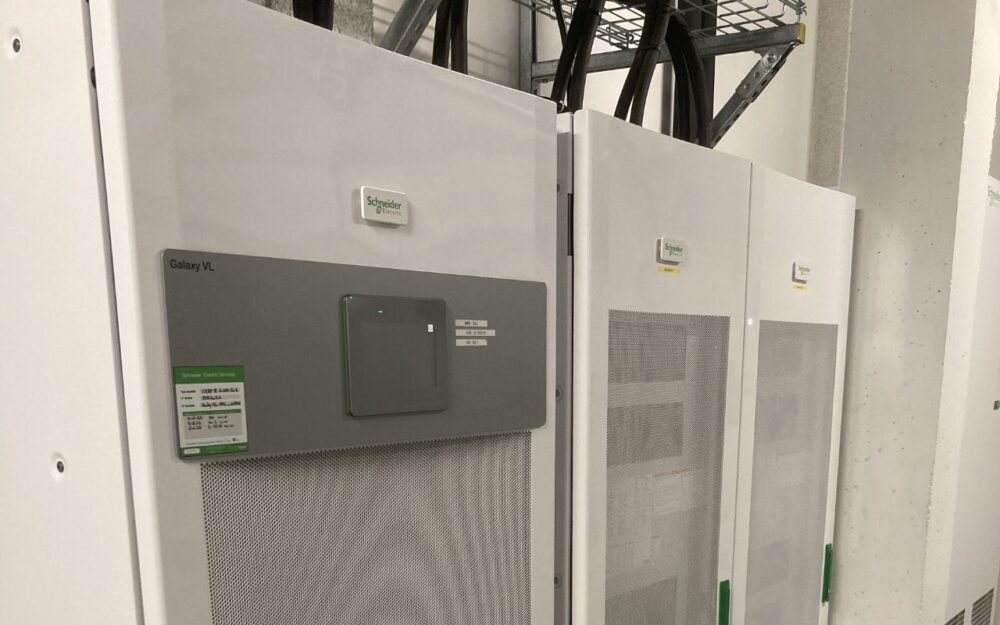
The technical visit begins inside the electrical room. This is where Schneider Electric PrismaSeT switchboards and Galaxy VL UPS systems protect the entire facility.
Their role is essential. They stabilize and “clean” incoming electricity before distributing it to servers throughout the building. And they ensure sensitive IT equipment receives consistent, high-quality power.
The facility is also equipped with encapsulated lithium backup batteries featuring self-extinguishing technology designed to minimize risks in the event of individual cell failure. This technology, adopted as battery safety, has become an increasing concern across the industry following several high-profile incidents.
The focus on battery safety follows several high-profile incidents in the industry. In France, the fire that destroyed part of OVHcloud’s Strasbourg campus in 2021 remains one of the sector’s defining events. The blaze, which originated in one building and led to the loss of millions of websites and customer services, highlighted the importance of redundancy, fire compartmentalization and robust suppression systems in modern data centers.
Fire safety designed around lithium battery risks
Electrical resilience is closely linked to fire protection.
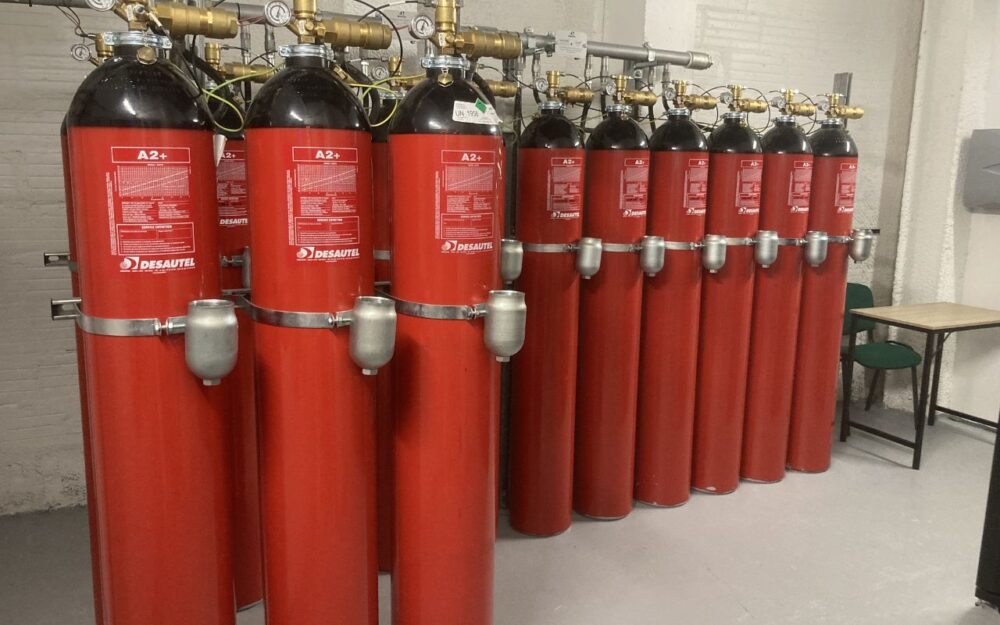
PHOCEA DC’s dedicated extinguishing room houses rows of automatic gas suppression cylinders using Desautel A2+ technology. Connected through an extensive piping network, the system can automatically release extinguishing gas into the technical rooms (including the server halls), if a fire is detected.
The installation reflects the growing emphasis placed on mitigating risks associated with lithium battery installations inside modern data centers.
The Meet Me Room: where connectivity begins
Among the various technical spaces, Desanti considers the Meet Me Room the most strategic. This is where telecommunications operators connect their fiber networks to customers’ server racks. In practice, it forms the interface between external telecom infrastructure and clients’ private digital environments.
“For a French sovereign data center, this room is fundamental. It is where the separation between telecom operators and customers’ infrastructure becomes tangible.”
Cooling today’s servers, and tomorrow’s AI hardware
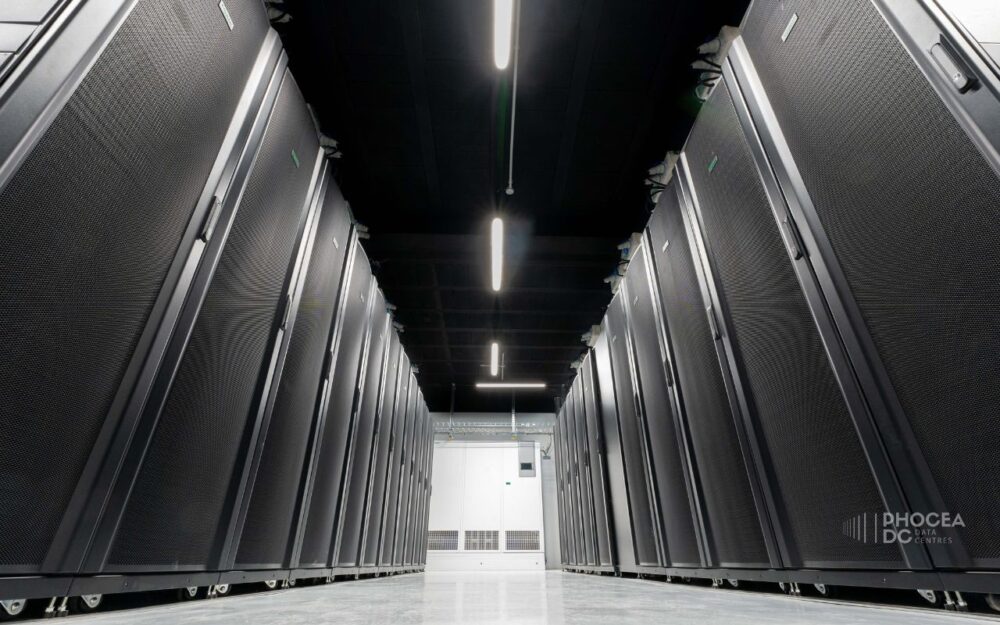
Cooling remains one of the defining engineering challenges of modern data centers.
Desanti points out that France and the United States have historically adopted different approaches. French facilities still rely predominantly on electrically powered forced-air cooling, whereas water-based cooling has become much more widespread in American installations.
PHOCEA DC is already experimenting with the next generation of thermal management.
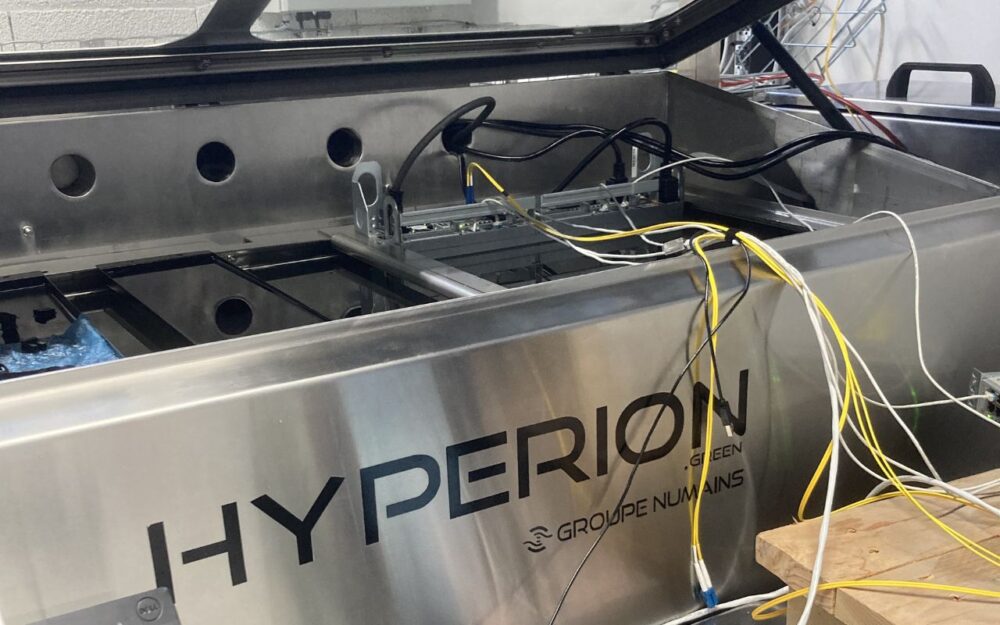
Inside one test area sits an Hyperion Green immersion cooling tank developed by Numains Group, where servers operate submerged in dielectric liquid.
The technology promises significant efficiency gains but still faces practical limitations.
“Immersion cooling is extremely promising. But today it still isn’t compatible with Nvidia GPUs, which prevents its deployment for many AI applications.”
Turning waste heat into a local resource
One of the strongest arguments supporting PHOCEA DC’s urban model lies outside the building itself.
Data centers often face criticism over their electricity consumption, and PHOCEA DC is no exception. Operating at full capacity, the facility consumes roughly as much electricity as a town of around 10,000 inhabitants.
However, because the facility is located within the city, the waste heat generated by its servers could eventually be recovered and used to heat surrounding residential or commercial buildings—provided appropriate district heating infrastructure is installed.
Rather than becoming an isolated industrial asset, the data center could therefore contribute directly to its local environment.
It is another illustration of the company’s broader philosophy: integrating digital infrastructure into the city instead of separating it from it.
A sovereign cloud built on French infrastructure
PHOCEA DC positions itself as a provider of sovereign, local and environmentally responsible data center services. In practical terms, sovereignty means ensuring that customers’ data remains under French and European jurisdiction throughout its lifecycle, from the infrastructure itself to the legal framework governing access to the data.
The company is entirely financed by French investors and relies exclusively on French suppliers for the construction and operation of its infrastructure. According to Desanti, this approach ensures that the company remains outside the scope of non-European legislation such as the U.S. CLOUD Act and the Foreign Intelligence Surveillance Act (FISA), under which American authorities may request access to data held by U.S. companies, even when that data is stored abroad under certain legal conditions.
By operating entirely under French jurisdiction, PHOCEA DC aims to provide an additional layer of legal protection for organizations handling sensitive information. Its services are primarily intended for regional and national customers, including local authorities, healthcare providers, digital companies, telecom operators, managed service providers and fast-growing technology startups.
The Marseille facility currently employs six people directly while relying on a network of specialized subcontractors for electrical systems, HVAC maintenance, safety equipment and other technical services.
Although relatively small in scale, the site demonstrates how proximity data centers can create local industrial ecosystems while maintaining highly specialized operations.
2026: A turning point for French data centers
Our visit took place at a pivotal moment for France’s data center industry, which is currently undergoing a period of unprecedented expansion. The sector entered a new phase in 2026 following the announcement of a €75 billion agreement involving SoftBank, aiming to deploy between 1 and 3 GW of computing capacity across France.
While hyperscale campuses will inevitably dominate this expansion, Desanti believes urban facilities such as PHOCEA DC represent a complementary model.
“Large campuses will be necessary, but proximity data centers also have a role to play for sovereignty, for resilience, and for better integration into our cities.”
According to the company, the data center has been well accepted by the local community. Before PHOCEA DC moved in, the building housed an industrial business that generated regular deliveries and truck traffic. In comparison, the data center results in significantly fewer vehicle movements.
To address another common concern, noise, the company has installed acoustic enclosures around its cooling equipment and backup generator sets. The company says it significantly reduces sound emissions both during normal operation and in the event of a power outage.