


As Europe faces increasingly frequent and intense wildfires, the equipment firefighters rely on is undergoing a profound transformation. From lighter protective suits and cleaner materials to respiratory protection against toxic particles, manufacturers are redesigning personal protective equipment (PPE) to respond to a new generation of risks.
Every summer, the images return: entire villages and towns evacuated, thousands of firefighters deployed and vast areas of forest reduced to ash. But against a backdrop of prolonged drought and record-breaking temperatures, wildfires are no longer exceptional events across Europe, wildfires are no longer exceptional events. They are, unfortunately, becoming a structural challenge for emergency services.
According to the European Forest Fire Information System (EFFIS), more than 565,000 hectares of land have already burned across the European Union since the beginning of the year at the time of writing, including nearly 537,000 hectares mapped, of which 51% were forested land. 1 407 fires were detected since the start of the year and 17.98 million tonnes (Mt) of CO₂ emitted since the start of the year.
Spain and Italy remain the countries most severely affected, followed by France and Portugal. This shows that the Mediterranean basin continues to bear the brunt of increasingly intense fire seasons.
France is still battling a major wildfire in the Var region after containing a megafire near the tourist city of Bordeaux, while in Greece, firefighters are fighting another large blaze around 70 kilometres from Athens, compounded by strong winds that continue to hamper suppression efforts.
Firefights Face More Than Flames
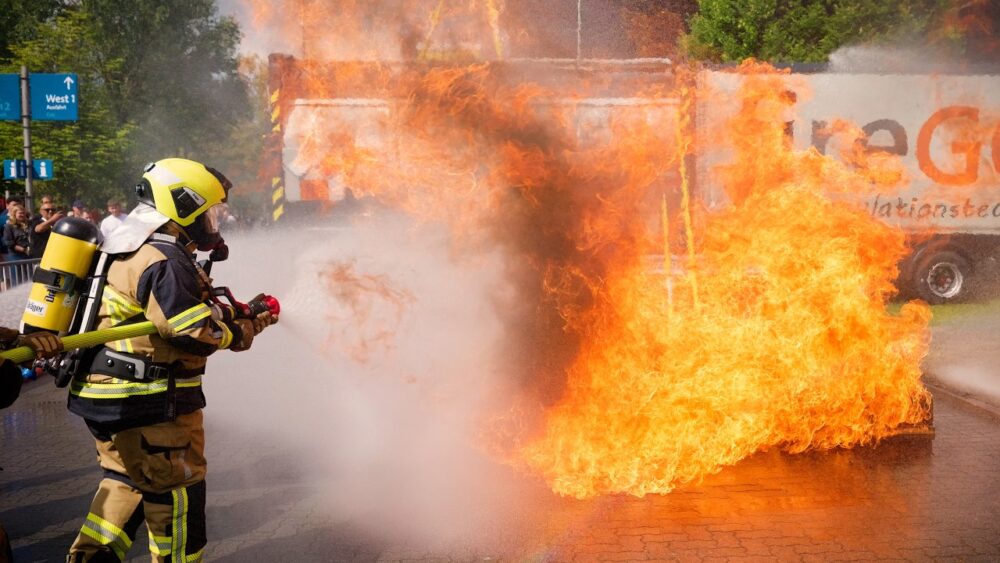
Beyond their growing frequency, fires are also becoming operationally more challenging for firefighters. Longer deployments, more extreme heat, denser smoke and the emergence of new hazards (from lithium-ion battery fires to toxic combustion particles) are placing unprecedented demands on personal protective equipment (PPE). Rather than simply resisting flames, a new generation of firefighter gear is being designed to improve mobility, reduce physiological stress and protect responders against a wider range of risks.
At the same time, longer intervention times and more physically demanding operations require equipment that is lighter, more breathable and less exhausting to wear.These changing operational conditions are pushing manufacturers to rethink the balance between protection, mobility and comfort.
At Interschutz 2026, Europe’s leading trade fair for fire and rescue services that took place last June, these priorities were reflected across the exhibition floor. Manufacturers showcased a new generation of protective clothing, gloves and specialist equipment designed for a reality in which firefighters must not only withstand higher temperatures but also operate longer, move faster and better protect their long-term health.
Less Weight, More Mobility
One of the strongest trends emerging from Interschutz is the race to reduce the weight of protective equipment without compromising thermal performance. French textile specialist Otego, which has been manufacturing aluminized technical fabrics for more than three decades, has focused its latest developments on this objective.
Its Fireshield aluminized fabric, designed for interventions close to intense flames in industrial facilities and airports, complies with EN 1486 requirements and weighs less than 1 kg/m². This is roughly half the weight of some conventional aluminized solutions. Lower weight reduces fatigue and improves firefighters’ mobility during demanding interventions.
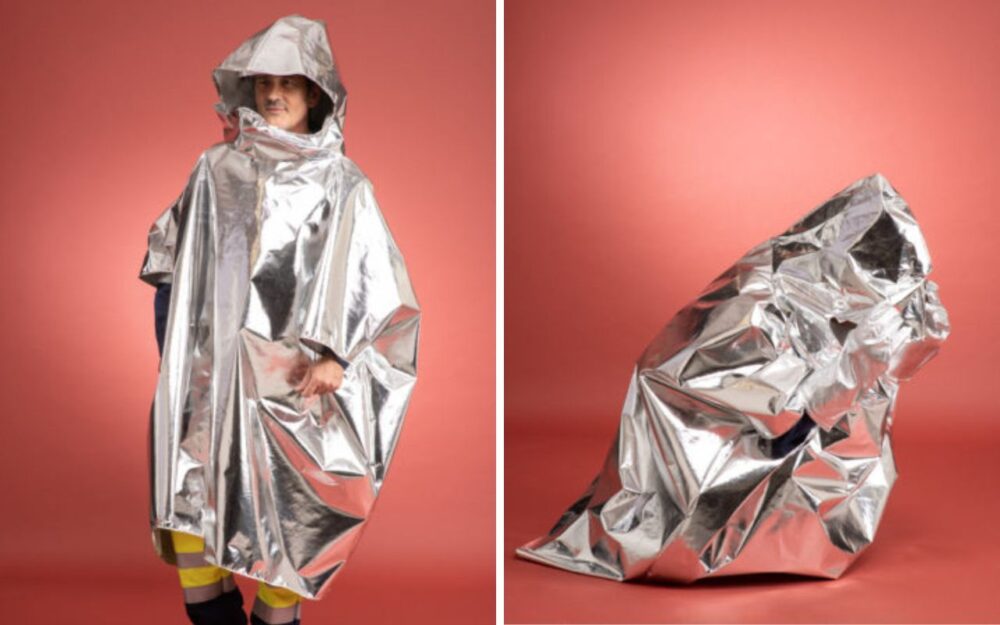
The company also introduced the Fireshield Poncho, an emergency protective garment intended for rapid deployment during wildfire operations. It can also be used in other critical situations requiring temporary thermal protection. According to the company, future development is also increasingly driven by new industrial risks, particularly those associated with lithium-ion batteries and electric mobility.
Mission-specific Protection
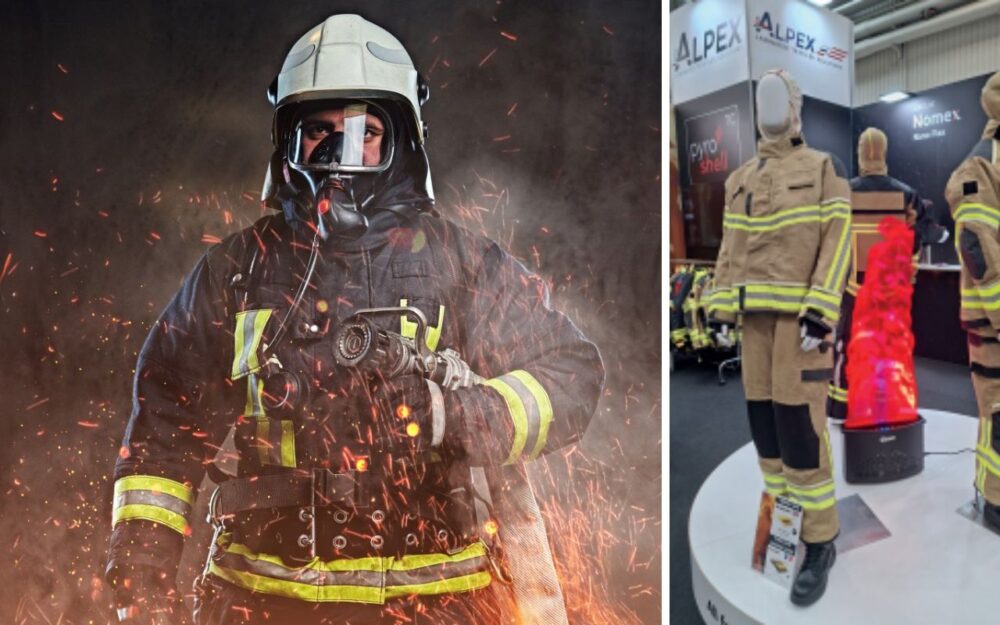
Another noticeable evolution is the growing specialization of firefighter clothing. Instead of designing one universal protective suit, manufacturers are increasingly developing equipment adapted to specific intervention scenarios such as structural firefighting, wildland fires, road rescue or technical rescue operations.
French membrane specialist Alpex, whose technical membranes are used by PPE manufacturers worldwide, has invested heavily in this approach. The company develops breathable waterproof membranes aimed at improving thermal comfort while adapting protection levels to different operational environments.
Beyond ergonomics, Alpex is also addressing one of the industry’s biggest environmental challenges: reducing the use of PFAS, the family of fluorinated chemicals often used in protective textiles for their water- and oil-repellent properties.
Its new PFAS Safe membrane technology seeks to reduce reliance on these substances while maintaining compliance with international performance standards. At the same time, the company continues to manufacture conventional PTFE membranes where market requirements still demand them.
Smoke Is Becoming as Dangerous as Fire
One of the defining concerns of the 2026 wildfire season is no longer the flames themselves, but the smoke they produce. The massive wildfire that recently swept through the Bordeaux region generated a vast smoke plume visible from space and degraded air quality far beyond the immediate fire zone, highlighting how large wildfires have become both a firefighting and a public health challenge.
For firefighters working on the front line, heat is no longer the only threat. Wildfire smoke contains a complex mixture of fine particulate matter (PM₂.₅), carbon monoxide, volatile organic compounds such as benzene, and polycyclic aromatic hydrocarbons (PAHs). When fires spread into urban or industrial areas, the combustion of buildings, vehicles and infrastructure can also release heavy metals and other toxic contaminants. These substances can be inhaled or absorbed through the skin during prolonged interventions.
Growing scientific evidence has linked repeated occupational exposure to these combustion by-products with an increased risk of respiratory diseases and several forms of cancer among firefighters. As a result, manufacturers are increasingly extending protection beyond thermal resistance to address long-term health risks associated with smoke and contamination.
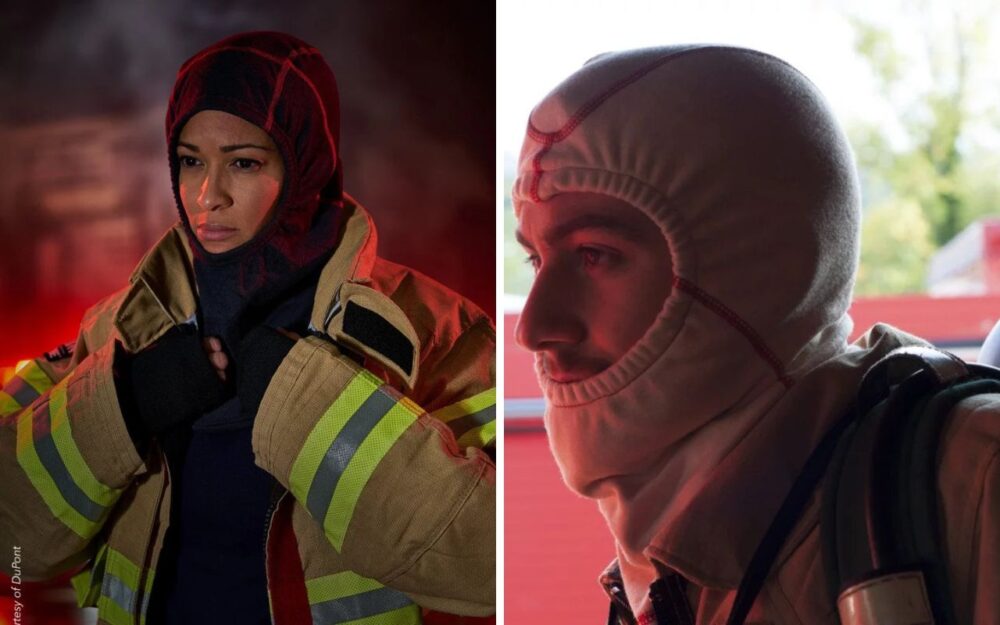
One response comes from Alpex, whose Pyroshell® textile technology incorporates an intumescent graphite layer that improves the fire resistance of synthetic fabrics. In partnership with Arclin, the company has also developed protective hoods integrating Nanoflex filtration technology. According to Alpex, the hoods can filter up to 99.9% of harmful airborne particles generated during firefighting operations, adding a layer of protection against contaminants that conventional fire hoods were not originally designed to stop.
Gloves are Evolving
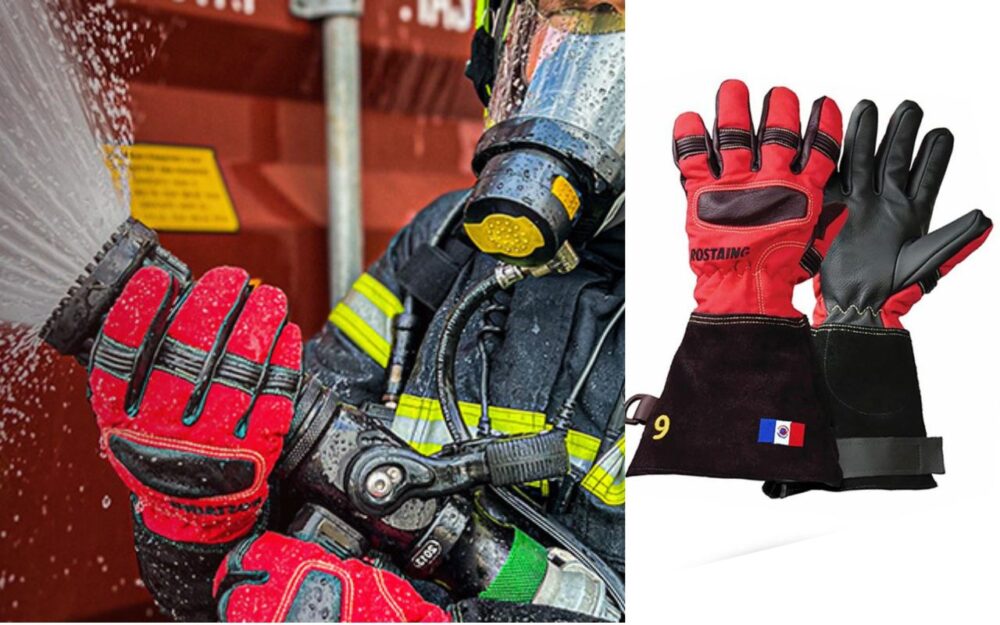
Hand protection is also changing. French glove manufacturer Rostaing, founded in the XVIIIth century (1789 more precisely), increasingly develops new products directly alongside firefighters instead of relying solely on laboratory testing.
Working with the Paris Fire Brigade (BSPP), the company spent eighteen months developing a new structural firefighting glove designed to improve thermal insulation while preserving dexterity. According to the manufacturer, the resulting architecture creates an additional insulating air layer that increases thermal protection by 250% compared with the previous design, without sacrificing the precision required to manipulate tools during interventions.
Durability has also become a design priority. Because modern firefighter equipment must undergo frequent decontamination after exposure to combustion residues, gloves are expected to maintain their protective properties through repeated washing cycles.
Like other manufacturers, Rostaing is also preparing for future environmental regulations through its RAPACE range, developed without PFAS while maintaining thermal, chemical and mechanical protection.
Emergency Responders’ Protective Solutions
Climate-driven fires are only one part of the evolving risk landscape. Emergency services increasingly need to intervene in industrial accidents, hazardous material releases and potentially contaminated environments.
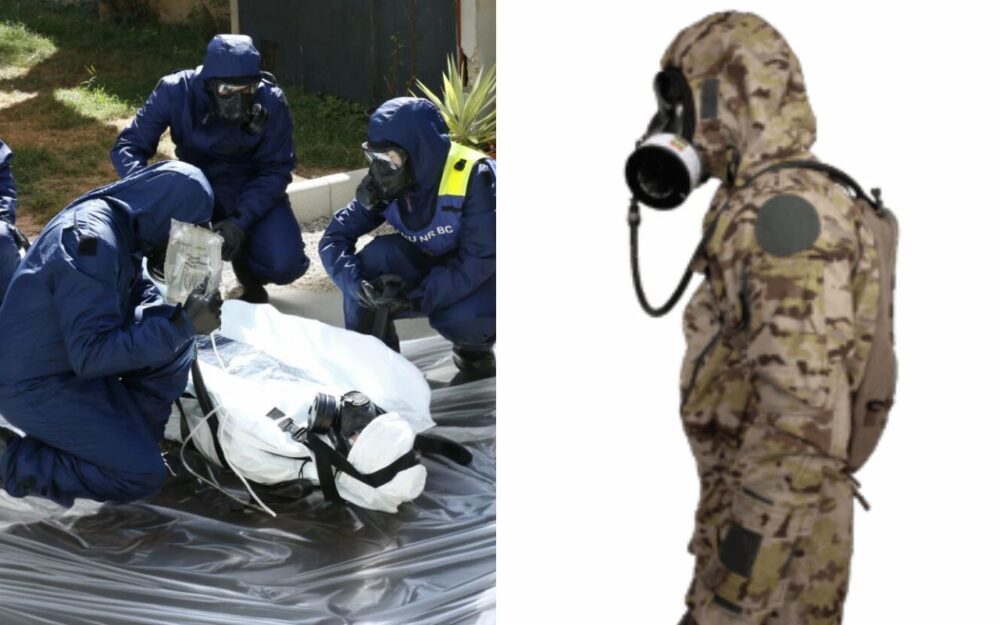
French company Ouvry, historically known for military CBRN (chemical, biological, radiological and nuclear) protective equipment, is adapting its expertise to civilian first responders. Among its latest developments is Evacops®, a lightweight evacuation bag designed to transport contaminated or potentially contaminated victims while preventing secondary contamination of rescue personnel and vehicles.
The company also showcased ODrink®, a hydration system allowing responders wearing full CBRN respiratory protection to drink without removing their masks. This capability is becoming increasingly important during prolonged operations in hazardous environments, as emergency teams are sometimes required to remain deployed for up to 24 hours without full rest periods during major incidents.
Ouvry is simultaneously working on more ergonomic filtering suits intended for missions lasting up to twelve hours, reflecting another growing concern: maintaining operational effectiveness over increasingly long interventions.
Designing for theNext Generation of Emergencies
Although wildfires remain the most visible symbol of Europe’s changing climate, the innovations presented at Interschutz suggest that manufacturers are preparing for a much broader transformation of emergency response.
Firefighter equipment is becoming lighter. Protection now extends beyond heat to include toxic particles, and new industrial hazards. At the same time, manufacturers are beginning to address environmental concerns by reducing reliance on PFAS without compromising safety.
As climate risks continue to evolve, innovation in firefighter equipment is likely to accelerate in the coming years. With longer and more intense wildfire seasons becoming a recurring challenge across Europe, the demand for protective solutions adapted to this new reality will only continue to grow. Manufacturers will increasingly have to design equipment that protects firefighters not only from the immediate danger of flames, but also from the long-term health and environmental risks associated with a changing world.