

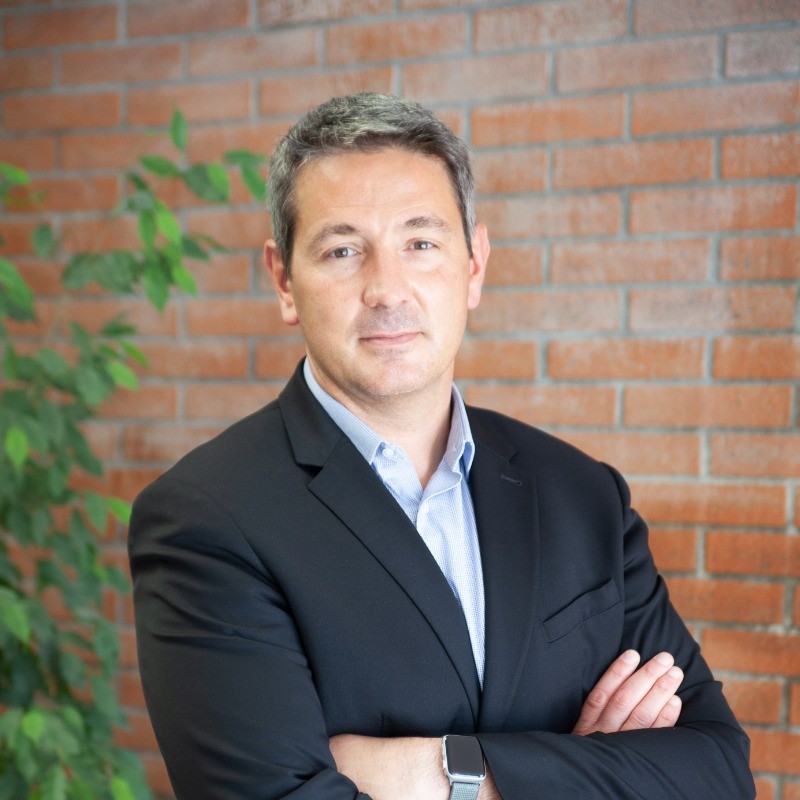
In this op-ed, Jérôme Laplace, the CEO of Running Brains Robotics explains that Europe’s tech sovereignty cannot be decreed but must be built.
There is something deeply paradoxical in the way Europe speaks about technological sovereignty today. We have turned it into a rallying cry, almost a slogan, brandished at every summit and in every roadmap. But on the ground, on industrial sites, in critical infrastructures and in supervision centres, the reality is quite different.
According to the European Commission, more than 50% of the technologies deployed in European critical infrastructures come from outside the continent. And when we look at artificial intelligence, which forms the foundation of the next generation of industrial systems, the United States and China together account for nearly 80% of global investment.
These figures are not statistical abstractions.They describe a concrete dependency: that of a continent which consumes more technology than it produces, and which relies on others for functions that have become vital.
Sovereignty is not a label
Too often, “buying European” is confused with “being sovereign”. These are not the same thing. But the opposite is just as false: sovereignty is not autarky. No manufacturer, whether in Europe or elsewhere, produces every single component it integrates, and a sensor may very well come from a foreign supplier. What makes the difference is what is done with them. True mastery is played out in design, in algorithms, in the electronics and mechanics developed in-house, in the assembly carried out on home soil, and in the integration of all these elements into a coherent system.This is precisely what separates an assembler from a true manufacturer.
This mastery cannot be decreed. It is built, slowly, through investment in engineering departments, in engineers trained here, in proprietary algorithms developed in-house. It requires accepting a simple truth: one does not become sovereign by outsourcing one’s intelligence to others.
The Security of Sensitive Sites : A Revealing Field
The sector of sensitive-site protection, whether energy, oil and gas, chemicals, data centres, transport, storage, defence or military bases, is revealing of this challenge. These are precisely the places where technological dependency carries the greatest risk. When a robot patrols continuously across a hydrocarbon depot, around a data centre, on the perimeter of a military base or on a chemical site, it collects critical data. The algorithms that process them, the servers that host them, the sensors that capture them: all of this directly determines a country’s ability to protect its own facilities.
Entrusting these building blocks to foreign technologies means accepting, at best, a commercial dependency. At worst, a point of entry. This is not about giving in to paranoia: it is about drawing the lessons from fifteen years of debate over telecom equipment, cloud services and critical components. Each time, Europe discovered too late what it had delegated.
An Industrial Issue, Not Merely a Political One
Technological sovereignty is generally treated as a political issue. It is, first and foremost, an industrial one. It is not enough to pass regulations, taxonomies or investment plans: companies are needed that can take up the baton on the ground. SMEs, mid-cap companies and laboratories that carry out the patient work of engineering, production and deployment.
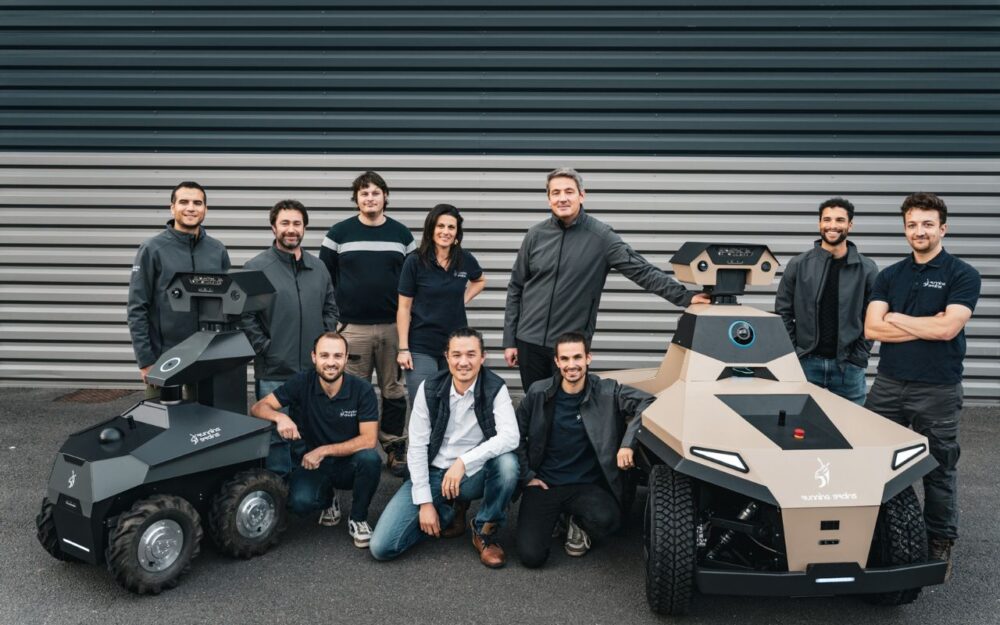
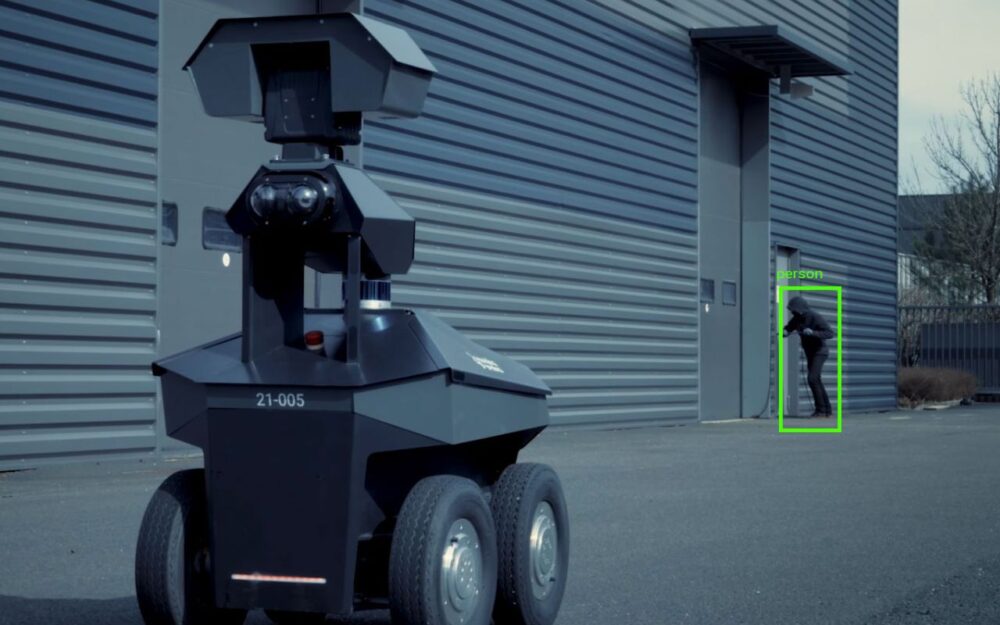
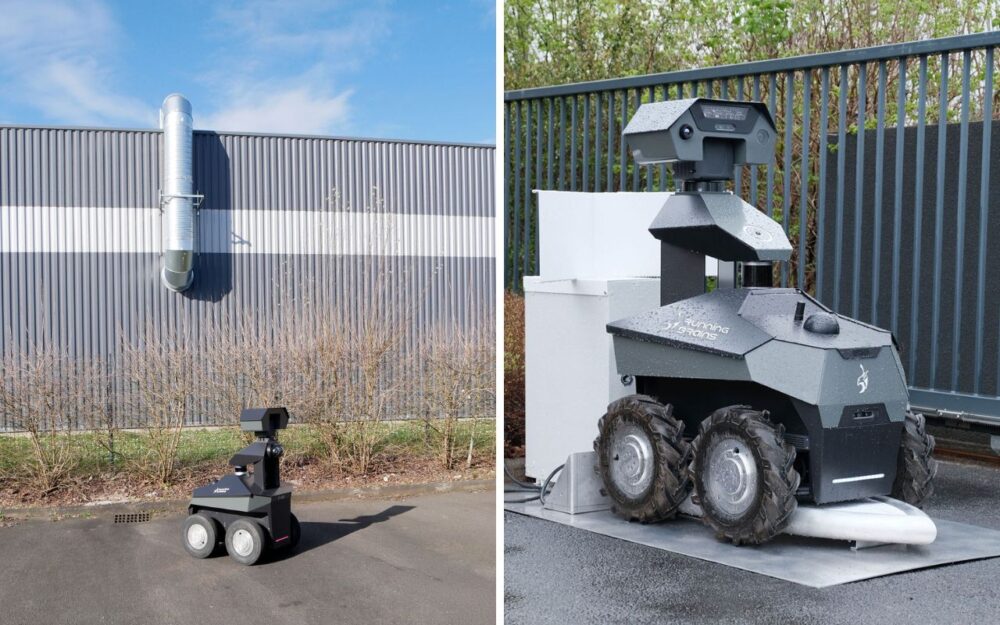
At Running Brains Robotics, we made this choice more than eighteen years ago. Our autonomous security robots are designed, developed and produced in France, in Mérignac, by our teams. The navigation and perception algorithms are developed and continuously improved by our engineers. Our supervision interface, the Running Brains Operations Center (RBOC), is also developed in-house. The data it processes is hosted in France and encrypted end-to-end, for obvious cybersecurity reasons. This is neither a marketing argument nor an activist stance: it is a necessary condition for operators of critical infrastructures to genuinely master what they deploy on their sites.
We are not alone. A new generation of European players is emerging in robotics, in applied AI, in sensors and industrial platforms. Many of them are SMEs still little known, who are patiently building a credible European technological ecosystem.
What Is Still Missing : Demand
What is most lacking today is not innovation. It is demand. European public and private buyers still too often favour solutions from elsewhere, out of habit, out of convenience, or because they appear less risky in the short term. Price is also regularly cited. This is largely a misconception: at equivalent scope, the gaps are often far smaller than imagined, and they fade away once one reasons in terms of total cost, including integration, maintenance, support and supplier dependency. Yet without market outlets, no sovereignty can hold. No ecosystem grows. Technological sovereignty calls for a coherent purchasing logic: at comparable quality, choosing solutions designed on the continent, and sometimes accepting to support a European manufacturer before it has reached the size of its American or Chinese competitors.
Technological sovereignty is not played out solely in the ability to produce robots in France. It also rests on proximity to customers and on an industrial agility that has become strategic. By mastering the entire value chain, from design to software through to after-sales service, French companies can adapt their solutions far more quickly to field needs, tailor functionalities to specific constraints and guarantee responsive support. This proximity also makes it possible to considerably shorten maintenance and support lead times, where certain international players impose long, offshored technical channels. In sensitive sectors such as the security of critical infrastructures, this capacity for adaptation and responsiveness becomes a genuine matter of performance and sovereignty.
A Choice of Society
Behind technological sovereignty lies a choice of society. That of a Europe that is not content to consume technology, but produces it. That of an industry that does not surrender its most strategic know-how. And also that of a security, in the broadest sense (security of sites, of data, of skilled jobs), built on foundations we control.
This choice is not made in grand speeches. It is made in calls for tenders, in R&D budgets, in investment decisions. Contract after contract. It depends, ultimately, on our collective ability to trust our own engineers, our own entrepreneurs, our own manufacturers.
Sovereignty cannot be decreed. It must be built. The question remains whether we truly want to build it.