



As aerospace industries race to decarbonize aircraft and rethink onboard architectures, miniaturization is definitely a strategic driver of innovation. From optical interconnects and embedded sensors to compact avionics and advanced microelectronics, the sector has entered a technological cycle where weight reduction, reliability in extreme environments, and supply-chain sovereignty are deeply interconnected. Ahead of the upcoming Micronora exhibition that focuses on microelectronics, we spoke with Thierry Quillet, Deputy Managing Director at GIFAS, the French Aerospace Industries Association, to discuss the major transformations reshaping aerospace systems and the role European industry can play in this shift.
The GIFAS (the French Aerospace Industries Association) is a professional federation founded in 1908 that brings together 366 companies from the aerospace sector.
Micronora has established itself as the leading trade show for microtechnology and precision. The 2026 edition will be held in Besançon, France, from September 29 to October 2.
In this interview, Thierry Quillet, Deputy Managing Director at GIFAS (the association is one of the parters of the event), stressed the importance of Micronora for the aerospace sector.
How does GIFAS see the evolution of miniaturization in aerospace over the next ten years?
Thierry Quillet: “First of all, miniaturization is a trend found across all industries, but in aerospace it has a particularly important benefit because it contributes directly to reducing onboard weight in aircraft. By lowering aircraft mass, miniaturization helps reduce propulsion requirements and therefore has a positive impact on carbon emissions.
Today, weight reduction efforts focus heavily on aerostructures, onboard equipment and system modularity. This naturally leads to the miniaturization of embedded systems, onboard equipment and connectors.
It also encourages the transition from copper wiring to optical technologies, which require far less shielding protection. All these developments contribute to significant weight savings.”
Is this trend accelerating?
Thierry Quillet: “Yes. It has existed for quite a long time already and can be seen across many high-tech industries. We see it in automotive, datacom and everywhere electronics or microelectronics are involved.
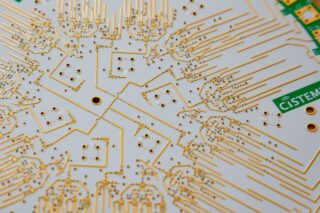
What is accelerating the movement in aerospace is the direct impact aircraft weight has on carbon footprint reduction. Many solutions are still at the project stage, especially in electrical architectures, a field I know particularly well. Technological choices for future aircraft, including the next-generation A320, are not fully finalized yet. Several directions have already been identified: greater use of optics for lightweighting, modular onboard avionics, and the miniaturization of interconnection systems. This will impact equipment design through much more compact boards and printed circuits. The reflection process has already begun and will intensify over the coming years.”
Sensors are also part of this transformation, aren’t they?
Thierry Quillet: “Absolutely. We are seeing a growing shift from hydraulic systems toward all-electric architectures. As a result, aircraft will incorporate far more embedded sensors than before, much like what has already happened in motorsport.
However, increasing the number of sensors means they must be both miniature and capable of operating in the harsh environments typical of aerospace applications. That creates additional technological requirements compared with miniature sensors used today in datacom, telecom or automotive sectors.”
Are sensors currently the most advanced field for miniaturization in aerospace?
Thierry Quillet: “Yes and no. Miniaturized sensors already exist in industry, but many are not compatible with aerospace environments. Aircraft systems face extreme thermal constraints, with repeated cycles ranging from -70°C to above +100°C. Not all existing sensors can withstand these conditions.
That means industrial qualification remains essential, and the suppliers producing sensors for conventional industries may not necessarily be able to deliver the future sensors required for aerospace applications.”
What does GIFAS want to highlight at Micronora this year?
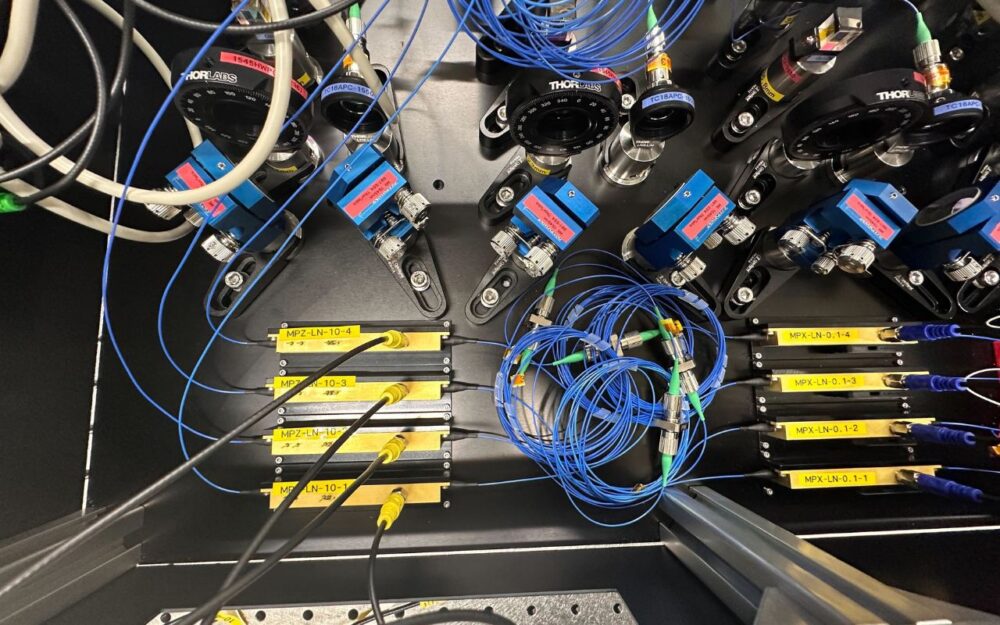
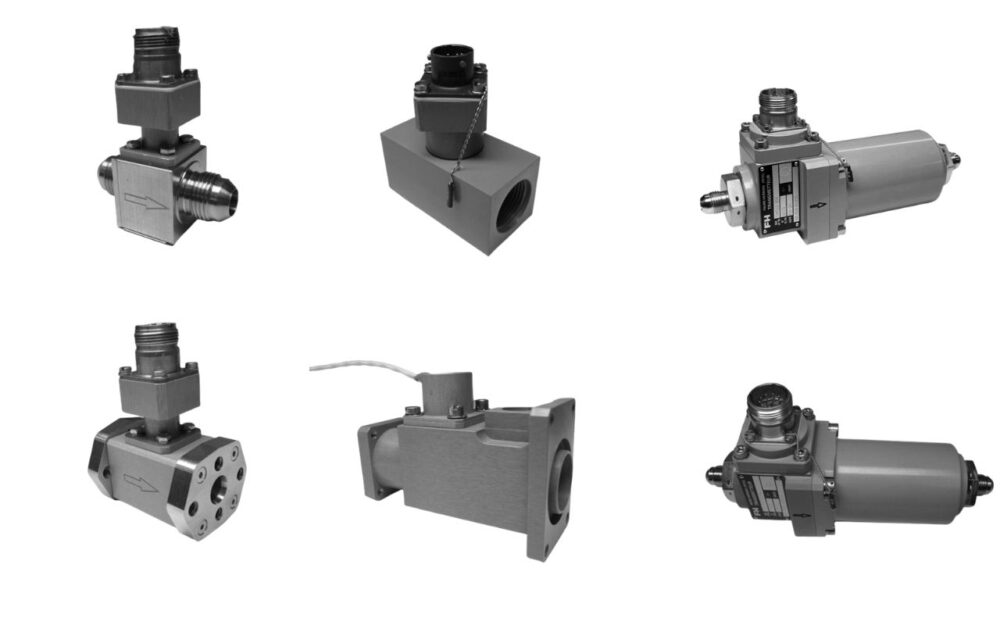
Thierry Quillet: “The objective is to showcase concrete applications of microtechnologies within the aerospace-dedicated Zoom area. There will be components from Radiall, products from Axon’ Cable, which is an excellent example of miniaturized electrical architectures. There will also be components from Faure Herman, whose flowmeters illustrate the use of precision machining and microtechnologies.
The goal is to demonstrate what microtechnologies and microtechniques concretely mean for aerospace: compact components and equipment capable of resisting extreme environments.”
How do you support the aerospace supply chain through these changes?
Thierry Quillet: “We support the industry in addressing the challenges of decarbonized aircraft. First, engines will become more energy-efficient, which will require new technologies and therefore entirely new parts. Engine manufacturers define and qualify these solutions, but the supply chain will need to produce extremely precise components integrating embedded electronics.
Flight-control systems and modular avionics architectures will also evolve significantly. Electrical architectures will increasingly rely on optical technologies. So, the deeper trend is really weight reduction and miniaturization is one of its consequences.
We will also see wider use of composite materials in aerostructures, replacing many aluminum panels currently used today. That will generate new technologies for bonding, fastening and assembly processes, transforming industrial production methods across the sector.”
How does Europe compare with Asia and the United States in these technologies?
Thierry Quillet: “When it comes to miniaturization for harsh environments, Europe is extremely well positioned. Asia leads in high-volume miniaturization for standard industrial or consumer environments. They dominate semiconductors and sensors designed for conventional operating conditions, typically around -10°C to +25°C. But once we move into severe environments, the number of Asian players becomes much smaller.
In aerospace semiconductors, for example, we often continue using older technologies because they have already been qualified for harsh conditions. We do not take risks with denser or more compact technologies until they are fully certified for aerospace applications.
This is true for memory technologies as well. While mainstream industries are already moving toward DDR4 and DDR5, aerospace applications still largely rely on DDR2 or DDR3 technologies. We are only beginning to adopt more advanced solutions because onboard AI and data-processing requirements are increasing.
However, our processing volumes still remain far below those seen in datacom or telecom applications. As a result, the companies leading miniaturization for conventional industrial applications are not necessarily the right suppliers for aerospace and defense environments.”
Are current geopolitical and supply-chain crises already affecting the industry?
Thierry Quillet: “The primary concern is obviously a potential China–Taiwan conflict. Such a scenario could halt all industries dependent on semiconductors. We are conducting extensive risk analyses and evaluating opportunities to develop stronger European capabilities. The first response to these risks has been to build strategic inventories across the supply chain to limit short-term disruption. At the same time, studies are underway to evaluate possible sovereign European alternatives, especially for semiconductors, where the impact would be greatest.
Some initiatives already exist. For example, Radiall has partnered with Asian players such as Foxconn to develop micro-packaging integration solutions compatible with aerospace environments.
Another challenge is exploding demand from sectors such as automotive, datacom, telecom and AI. Asian manufacturing capacity could increasingly prioritize emerging mass-market needs, leaving aerospace applications, whose technological requirements are often less commercially attractive in volume terms, facing allocation constraints. This is a concern we have clearly identified within the supply chain. It requires much closer direct relationships with suppliers to secure long-term access to critical technologies.”
So miniaturization is also becoming a question of industrial sovereignty for Europe?
Thierry Quillet: “Yes, absolutely. If miniaturization includes semiconductor dependency on Asia, then it clearly becomes an issue of French and European sovereignty. We should also bear in mind that aerospace remains a relatively low-volume market compared with automotive or telecom industries. It remains a niche market with relatively small or medium production volumes. Large Asian industrial players are naturally more attracted to mass markets than to highly specialized aerospace applications. That is one of the reasons why Europe still retains strong industrial capabilities in these advanced niche technologies.”
Which new technologies or professions do you see emerging in aerospace microelectronics over the long term?
Thierry Quillet: “I believe we will see far more applications based on optics and electro-optics. This trend has already emerged in industry and automotive because it offers a triple advantage: higher data-transmission speeds, immunity to electromagnetic interference, and significant weight reduction.
Optical fiber is much lighter than copper, and when you consider that modern aircraft carry several tons of cables onboard, the impact becomes substantial. We already reduced weight in the past by introducing aluminum conductors. Switching to optics could produce an even more significant mass reduction.”
Could optics radically transform aerospace in the coming decades?
Thierry Quillet: “Definitely, including optical sensors. For example, optical technologies are already being tested for fuel gauging systems. They improve safety by eliminating electrical signals inside fuel tanks.
But this also creates new industrial challenges, such as ensuring hermetic sealing for optical interfaces in fuel environments.
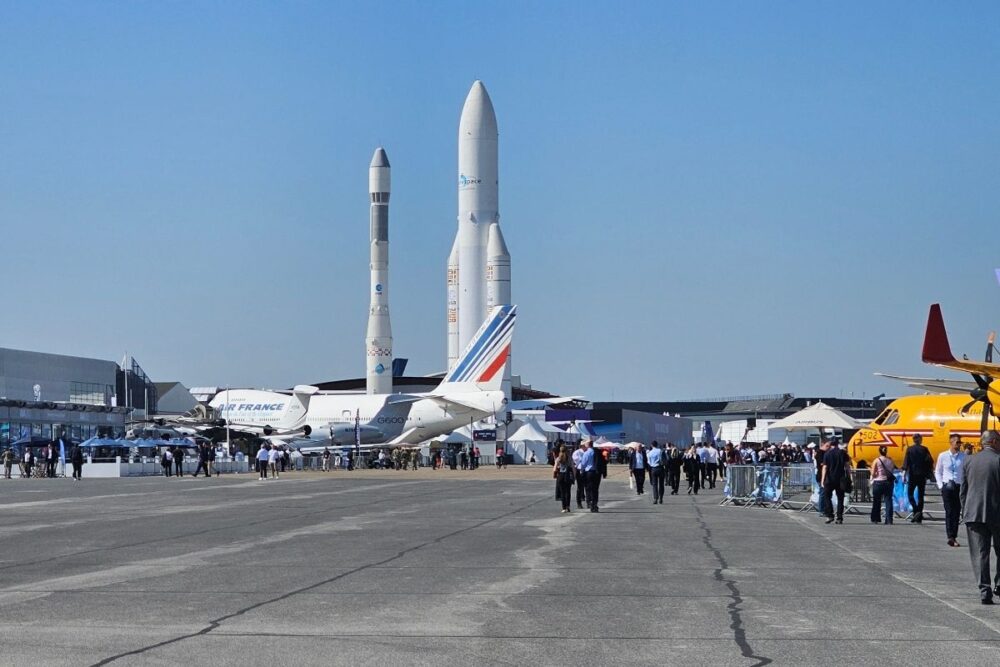
We see the same evolution in space. Ariane 6 already incorporates much more onboard optical technology. The rocket’s stage-separation systems now rely on optical triggering systems for pyrotechnics, whereas previous generations used conventional electrical systems. This is likely to become a major long-term trend across aerospace, defense and space industries.
However, validating these technologies for harsh environments takes time. What works in automotive or datacom applications must still prove its reliability under vibration, dust, extreme temperatures and aerospace operating conditions. Certification alone can take several years, sometimes even a decade.”