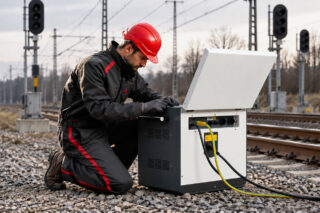



As satellite constellations grow exponentially, the aerospace industry is waking up to the increasing importance of its ground segment. French start-up Skynopy is offering a turnkey service modelled on the same principle as global accommodation platform Airbnb.
With access to space now less of a challenge, the focus is shifting to improving the speed of transmitting data from satellites to decision-makers on Earth, for purposes including defence, intelligence and the environment.
At the center of this drive to improve the ground segment is pioneering French start-up Skynopy. They are offering a unique, scalable, hybrid approach for frictionless high data throughput and low latency.
Founded in 2023 by engineers Pierre Bertrand and Antonin Hirsch, Skynopy likens its turnkey service to that of global accommodation platform Airbnb. They are already teaming up with major players such as Airbus, Amazon Web Services (AWS) and Eutelsat
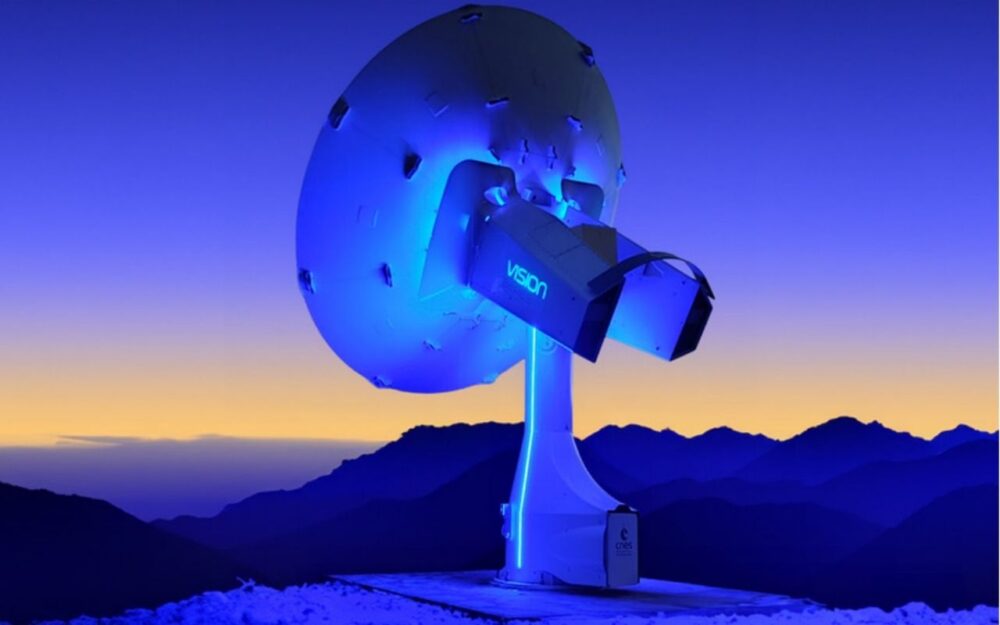
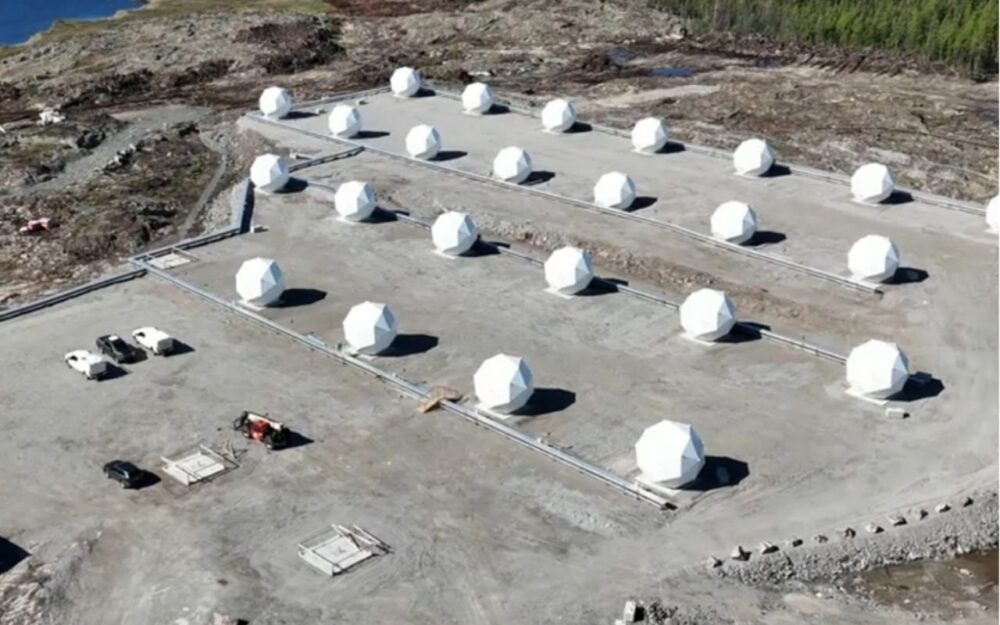
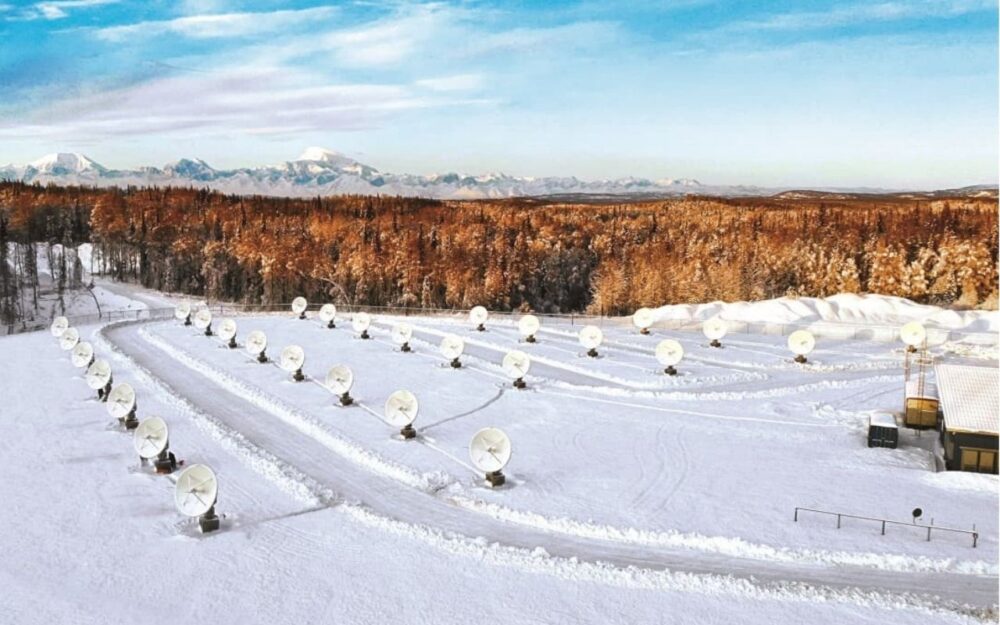
“Skynopy provides what we call ground station-as-a-service (GSaaS),” explains M. Bertrand in an interview with DirectIndustry. “This is based on parabolic antennas measuring five meters – but instead of selling the antennas themselves, we sell access to lots of them.”
The company sells the antenna time that the satellite operators need to download their data. This might be to download images or to use the antenna to send a satellite request.
“The ground segment has become a critical bottleneck for space operations, but this allows our end customers, satellite operators, to improve connectivity by controlling a network that is much bigger than just one antenna.”
A Fully Operational System
Launch costs have fallen, satellite constellations have multiplied and access to data has become more of a problem than access to orbit. Seeing the bottleneck in connectivity and terrestrial infrastructure prompted the pair to create Skynopy and develop its Ground Station Stack technology, Mr. Bertrand explained:
“Ground station infrastructure is no longer just a support function to space communication – it is a vital and strategic layer.”
The space market has indeed been completely disrupted over the past 10 years and is now based on three pillars.
“The launchers – the rockets that send the satellites into orbit; the satellites, sent into space for telecommunication purposes or earth observation, and the ground stations. These all need to work together to have a fully operational system.”

An End-To-End Service
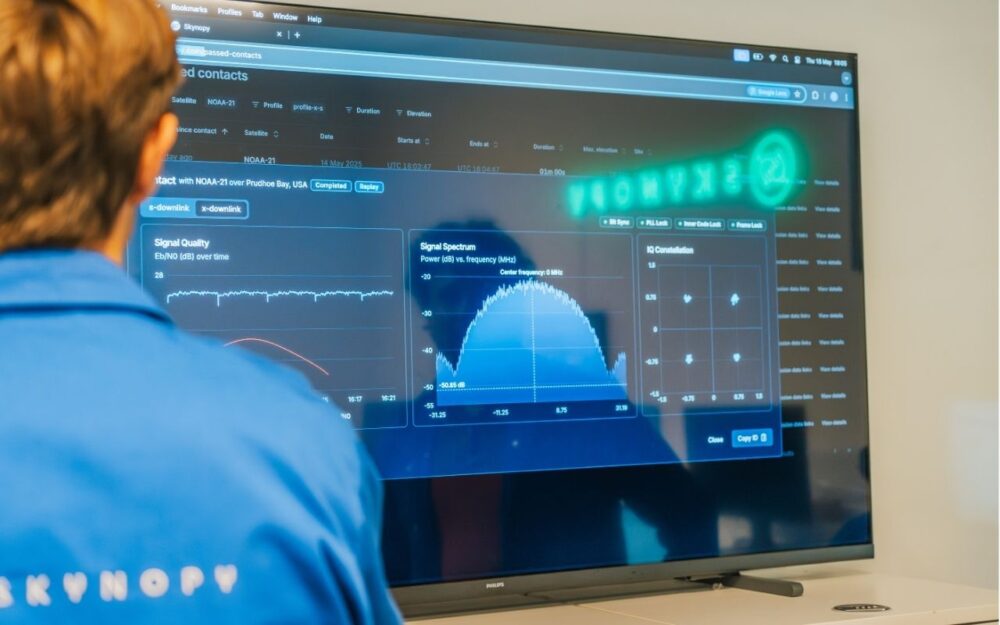
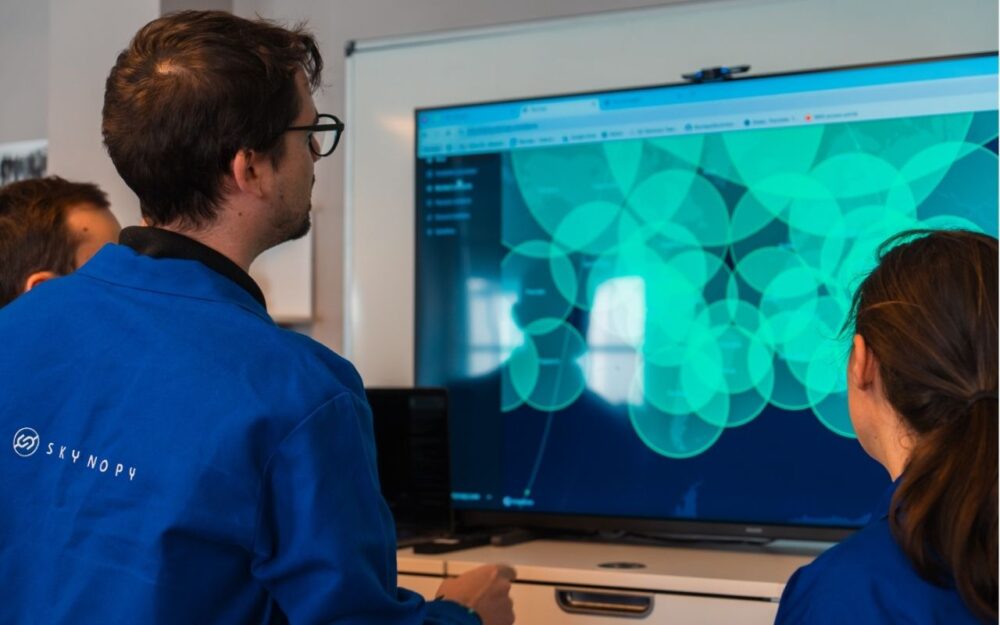
Ground service infrastructure includes parabolic antennas, the software and modems required to digitize the satellite signals and backhaul for gathering data and transferring it to the core network. Skynopy’s scalable approach is hybrid because it encompasses its own global network of sites that aim to utilize radio frequency S, X and Ka-bands, while also leveraging the spare capacity of antennas belonging to other operations.
“This is what enables much faster scaling – if I take the analogy of a hotel, one that wishes to host as many people as possible, we are building our own hotels, but also doing what Airbnb does by making the most of unused space elsewhere.”
The other key aim of Skynopy is to provide a fully integrated, end-to-end service. Its hybrid model, combined with software orchestration and virtualized modem technologies, works to increase the speed of data and double data download volume with each satellite pass. The company has deployed 17 of its own high-throughput operational sites in just 18 months.
“The analogy here is as if you were using Vodafone, but they were not providing a SIM card, simply a map with where the antenna was, and you needed to point your mobile phone towards it to access it.”
In that case, you would need to know the location of the antenna and how to send a signal to the antenna to connect your phone.
“This is basically what is currently happening with satellite operators: they need to know where to download the data and how exactly, and this is the significant cost for these players. Our end-to-end service combines what’s happening on the satellites with downloading the data much more efficiently, creating a more cost-effective and integrated option.”
Reactive and Versatile
The model enables integration in weeks rather than years and Skynopy is already supporting around 10 satellite operators. The company designed and built Ground Station Stack to act as a connector to any type of ground station, to connect with any type of antenna and integrate it within their network.
“So our end customer, satellite operators, can basically control a network that is much bigger than just one antenna or deploying antenna after another antenna. This technology is composed of software orchestration technologies that are very similar to what we’ve seen in the cloud to orchestrate multiple servers – but we don’t orchestrate a server, we orchestrate a ground station.”
They also develop the modems and all of the tools that are used to digitalize the signal and process them.
“And we have invested efforts to make these modems fully software defined. So they are much more resilient – much more reactive and versatile.”
Strategic Infrastructure
In an increasingly volatile world, resilience, speed and versatility are becoming even more crucial to nations and economic unions. Mr. Bertrand welcomes the recent decision by the French government to block the sale of Eutelsat’s passive ground segment assets. He stresses it sends a clear signal. Ground infrastructure is strategic and should no longer be treated as a secondary layer of space systems.
Skynopy is currently working with France’s Defence innovation Agency (AID) on the SkyFortress Innovation Acceleration Project (PAI). They are looking at providing additional capacity and resilience by integrating commercial and military assets.
“We see that at the beginning of a conflict – the Ukraine war, for example – the first space-related assets to be neutralized are ground stations, because they are the most accessible.
“This is why we need a ground station network that can be reactive to secure faster data while also being resilient to attacks.”
A Resilient Network
Airbus Defence and Space recently selected Skynopy to enhance the performance of its Pléiades Neo very-high-resolution (NHR) optical imagery services.
“This contract with Airbus is key for us because it has two satellites that are marvels of technology – high-quality satellites that deliver very-high-resolution (VHR) images to ministries of defence all over the world.”
According to Mr. Bertrand, Ground Station Stack offers resilience. Its software allows its security requirements to be upgraded more frequently and its hardware to be upgraded locally.
“It is much more resilient because you have this level of control. You can be much more reactive to whatever the particular threat is in that exact moment. And what also makes our network resilient is that we can leverage many more stations than if we were just deploying a single station that could be neutralized.”
Skynopy is working with French satellite operator Eutelsat on potentially utilising its spare OneWeb (its low Earth orbit (LEO) broadband service) ground station capacity.
The AKAR project is focusing on a demo of a global Ka-band ground infrastructure and hopes to deploy the first S, X, and Ka-band ground station network delivering real-time, high-throughput connectivity for Earth observation satellites.
“They have hundreds of ground stations all over the world, so this is a unique asset.”
Skynopy was also chosen for SkyConnect Kenya. This strategic project is supported by the French Ministry of Economy through the FASEP Digital Infrastructure program, in partnership with Safran Space and the Kenya Space Agency (KSA).
Near-Real-Time Services
M. Bertrand believes the key to a successful ground segment within the aerospace industry requires bringing together software, operations and infrastructure.
“It’s a complex challenge,” he admits. “But if you approach it holistically, the value created for the entire industry is massive.”
The GSaaS market alone could exceed more than €8 billion by 2030, with annual growth of around 15%. What we need now, he stresses, is a clear political and industrial signal. He believes France and Europe should gain a head start by developing their ground segment at pace.
“I think with the commercial traction and vision that Skynopy has, we are well positioned for scaling to this new space ecosystem. With key partnerships, such as the one with Eutelsat or AWS, we believe that in three years, we’re going to be able to deliver real-time or near-real-time services for satellites to download their data via the largest network of ground stations in the market.”
But he is also very exciting about the new applications this will also bring:
“These might be along the lines of the in-orbit services that are still in the early stages – how you refuel a satellite, how you run operations automatically in orbit, how you can grow microgravity applications. For all of these applications, you have to be closer to real-time access rather than having to wait one or two hours to connect to your satellite.”
Related article