

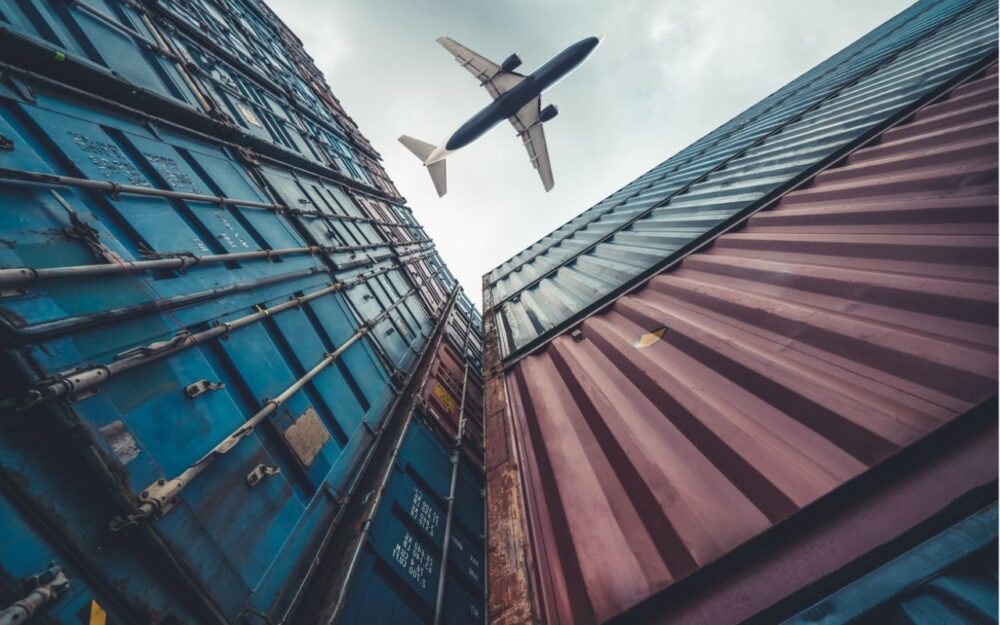

Nexline moves freight across the world — by sea, air, rail, and road, with end-to-end customs and logistics solutions at every step. Its French president, Loïc Benattar, has spent two decades navigating the shifting currents of global trade. We sat down with him to discuss what the EU-India agreement changes for the industry, and why geopolitics has become as central to logistics as shipping rates.
This interview was conducted before last weekend’s American-Israeli strikes on Iran, which are already affecting key trade routes — most notably the strategic Strait of Hormuz.
Is the agreement signed between the European Union and India a straightforward trade deal, or does it mark a genuine strategic turning point?
Loïc Benattar: “We’re talking about 25% of global GDP between India and the European Union. This is something that will significantly strengthen India’s position in European supply chain planning. There is clearly a real strategic convergence and a simplification of administrative procedures in both directions, alongside a dramatic reduction in customs duties between the two regions.
This agreement has far-reaching consequences across a wide range of industries. For example, if you’re a wine exporter, you currently pay 150% in customs duties when selling wine in India. Under this agreement, that will gradually come down to between 15 and 20%, depending on the type of wine. That will give European wines a very significant competitive edge in the Indian market, which is a major one.
India is also one of the European Union’s leading suppliers of pharmaceutical products. This agreement will clearly enable a reduction in customs duties, provide greater visibility for production investment decisions, and allow sourcing managers to genuinely consider India as a viable option.”
You could also be interested in this article
Specifically for your company, what does this represent in terms of opportunity?
Loïc Benattar: “When someone produces goods in one country and needs to ship them to another, we organize the transport. India is, of course, a continent in its own right — each region has its own characteristics, its own language, and its own logistics requirements. So you really have to adapt to the specific needs of each area.
One of the most critical factors when it comes to India is transit time. For maritime shipments from India to the European Union, if the Suez Canal were open, we’d be looking at under 20 days to the Mediterranean and under 30 days to Northern Europe. With the Suez Canal closed, transit times have increased by 50 to 75%.
That puts us in transit time territory comparable to what we see from China. So right now, there is no time advantage shipping from India versus China to the EU. But the moment the Suez Canal reopens, that advantage will become very real.”
Do you think organizing logistics in India will be somewhat more challenging?
Loïc Benattar: “In my previous role, I was President of Asia-Pacific for a French logistics company, so India was naturally a significant part of my remit. I’ve been based in China for 16 years — first in Shanghai, and now in Hong Kong — and over that time I’ve been able to observe how different countries develop at very different speeds.
What’s clear is that I’ve seen China evolve at an extraordinary pace, as have Vietnam and Cambodia. India presents a different set of challenges compared to China. Making infrastructure changes, for instance, requires more consultation and coordination than in China.
That said, in terms of logistics investment, there is a great deal happening, and many things are set to evolve: domestic planning, multimodal offerings, and so on. I firmly believe this agreement will further focus infrastructure providers and shipping lines on improving their multimodal offering, which will help better connect more isolated regions.
Logistics solutions between India and the European Union already exist. But I think this agreement will act as a catalyst to accelerate improvements in logistics conditions. Personally, I see this primarily as an opportunity.”
What logistics adaptations will be essential to support these new trade flows between the EU and India?
Loïc Benattar: “Clearly, the development of multimodal infrastructure within India is key. That means ports and the various logistics hubs across the country. A great deal is already underway. This agreement is important for the next ten years in terms of smoothing out operations, increasing capacity, and, crucially, ensuring that shipping lines, which often own certain ports themselves, make the necessary investments.
Beyond that, the services on offer, available capacities, vessel types, and air freight capabilities will naturally evolve in line with demand. If demand is projected to grow by 10 to 15% over the next three years, the capacity will need to be put in place to match it.
There’s also the question of bonded warehouses and logistics zones, which are critical to develop. And I think the simplification of customs procedures, particularly on the Indian side, which is one of the more ambitious components of this agreement, is equally strategic.”
Do you see a scenario where this disrupts the established trade flows between China and Europe?
Loïc Benattar: “It’s difficult to draw a direct correlation, because India doesn’t produce everything that China produces. From the feedback I receive from clients, China’s industrial base is ahead in many areas, particularly in terms of automation and large-scale manufacturing. That said, India has genuine competitive advantages; labor costs are somewhat lower, for example.
Besides, take textiles. The analysis around production relocation isn’t new — it predates COVID by a good decade. Companies have long been asking where to shift certain manufacturing, and India has consistently been part of the sourcing portfolio of the businesses we work with. So has China. But in reality, it’s countries like Bangladesh, Cambodia, Myanmar, and Vietnam that have captured the largest share of most textile production. So a real distinction needs to be made between the types of products that will be in direct competition with Chinese goods — and those that won’t.”
Do you have a sense of which product categories could be most affected?
Loïc Benattar: “Take pharmaceuticals, for instance. India already held a very significant share of that market, and this agreement will only reinforce it further.
For automotive parts, any impact will take a few years to materialize. But what’s already clear is that the feedback I’m receiving from clients shows a shift in sourcing toward India is already underway.
For other products, we’re just beginning to ask the question. I’ve seen this with furniture, for example. Many furniture categories already attract very low import duties into the European Union, so they’ll be far less affected. Whether it’s zero, two, or three percent coming from China or elsewhere, it simply doesn’t move the needle.
Where the real impact will be felt is in products with high existing duty rates. The gradual reduction of those duties will open up a genuine market and create a very significant competitive advantage over goods imported from the United States, South America, or China.“
You could also be interested in this article
You’ve spent two decades organizing freight transport. Has geopolitics, US unpredictability, trade tensions, tariffs, wars genuinely made your job harder?
Loïc Benattar: “Our industry has changed enormously in recent years. I often use COVID as a reference point. Since then, supply chain directors have earned a seat at the boardroom table. CEOs took the subject directly into their own hands.
Why? Because logistics is now inseparable from geopolitical risk. COVID, US tariffs, all of this demands a logistics partner who is both highly agile and highly reliable across all the trade lanes our clients operate in, and who can react very quickly when a geopolitical shock hits.
The Suez Canal is a perfect example. When it closed overnight, everyone needed to ship at the same time, every vessel was full, and the question was no longer about price — it was: can I even get space? I need my goods by a certain date. What do we do, right now? Shipping lines had to reroute via South Africa, and the ripple effects cascaded across entire supply chains. What matters in those moments is having the knowledge and expertise to give clients what they need to make the right decisions — and, more urgently, to have immediate solutions, a medium-term Plan B, and the ability to support strategic thinking beyond that.
Russia is another example. Sanctions effectively divided rail freight volumes between China and Europe by ten, at a time when that corridor was growing strongly. The answer, as always, is to adapt.
For every problem, a logistics solution has to be found, quickly. That means staying informed, being agile, and above all, communicating constantly with clients about what’s happening.”
But is it harder?
Loïc Benattar: “For my part, I find it genuinely exciting to be in a business that requires constant reinvention — in our day-to-day work, in the logistics solutions we put in place, in how we respond when capacity disappears overnight as it did during COVID, when you’re doing five times the work with no guarantee of the outcome. It demands real understanding, adaptability, the right people, and a commitment to always being available and as informed as possible.
And of course, beyond the EU-India deal, there’s the Mercosur agreement, which is also having a very significant impact. These are macro-level developments with very real micro-level consequences.
In practice, the conversations we’re having with clients come down to concrete questions: What do customs duties actually mean for me? What are the procedural implications? What can I do? When you look at the direct impact on trade with India specifically, the Suez Canal is central. It affects both the attractiveness of Indian-sourced products and the simple question of how long it takes for goods to arrive. So it’s not just about price, production capacity, or quality — logistics is very much part of the equation. Geopolitics has a genuine and direct impact on logistics decisions and sourcing strategies. and our job is to adapt accordingly.”
How are your technological tools evolving to keep pace with all of this?
Loïc Benattar: “One area that has changed enormously in the logistics sector is visibility. Today, as an importer, you might have 50% of your shipments in transit at any given time. With all the geopolitical disruptions and vessel delays, everything used to be tracked manually, and the information you got was often fragmented and not particularly reliable.
Today, we use tools that aggregate data from shipping lines, vessel tracking systems, arrival port information, and departure port feeds. It gives us far greater reliability in shipment visibility for our clients and allows us to manage by exception. In logistics, a certain percentage of things will always go wrong. That was one of our real challenges during COVID, and the technology we’ve put in place, which allows us to cross-reference information from multiple sources, was a critical response to that.
Another key development is the ability to integrate our clients’ forecasts much earlier in the process. This allows us to properly plan capacity with shipping lines, airlines, and other partners, and to optimize end-to-end shipments. When you’re responsible for door-to-door delivery, from the moment goods leave the factory to the moment they’re delivered, you carry real accountability for the entire chain. The goal is to make that chain as reliable as possible.
The third important area is data processing around exceptions (delays, KPI deviations). We now receive KPIs automatically from our various operational systems, whether at origin, at destination, by supplier, by shipping line, or by airline. That feeds into a much more reliable decision-making framework when we’re negotiating for the coming periods. This also helps us identify the right maritime or air partners and the right services to meet our clients’ needs.
This is information that actively guides us toward the right solutions. It has evolved enormously. And of course, having the data is one thing. Knowing how to make sense of it is another entirely. Data analysis is critical, and I know that shipping lines and airlines are investing heavily in it too, precisely to run better analyses, optimize their services, and reduce supply chain disruptions.“
What’s still missing? What tools or capabilities do you wish you had today that you don’t yet?
Loïc Benattar: “I made the deliberate choice to invest heavily in our systems, because we needed to extract maximum value from the information available and maintain full visibility across our door-to-door operations. We use proprietary systems that cost more than off-the-shelf alternatives. But for us, information is everything. Good decisions come from good information.
Beyond that, we’re currently developing internal tools using AI to identify patterns and build algorithms that lead to an even more sophisticated decision-making model — particularly around the evolution of maritime freight rates, which can move very quickly in either direction. We want to go further: to give our clients sharper tools for negotiation, and to support supply chain and executive teams with predictive models grounded in data when they’re making strategic decisions about the year ahead.
That said, it’s worth being clear-eyed about the limits of predictive models. The models of the past three years didn’t predict the Suez Canal closure. The models of 2020 to 2022 didn’t predict container rates hitting $20,000, because nobody predicted COVID.
AI-driven predictive models are a powerful tool for anticipating supply and demand dynamics and price trends. But the reality is that every year brings parameters that no model could have foreseen. Predictive AI is a tool, not an answer in itself.“
You could also be interested in this article