

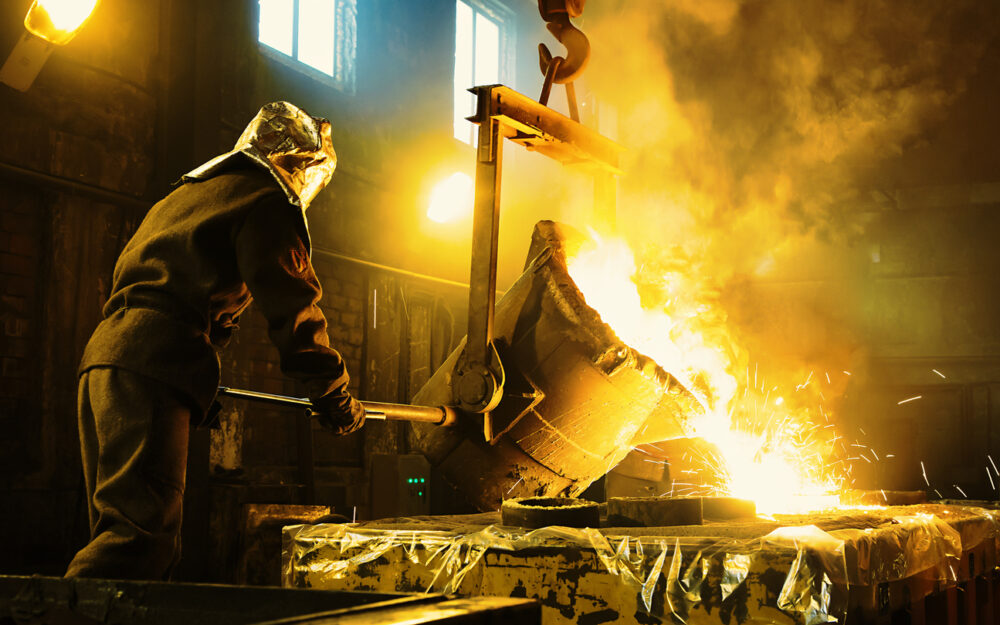

Long associated with high energy consumption and significant carbon emissions, the metals industry is now at a critical turning point, explains Alain Pitte, Process Industries Business Director at ABB.
Faced with increasingly stringent environmental regulations, volatile energy costs and growing customer expectations, the sector must reinvent the way it operates. In this context, the transformation of production processes through electrification, automation and digitalization has become a key enabler for improving industrial competitiveness while delivering higher product quality and reducing environmental impact.
This transformation is all the more strategic because the metals industry sits at the heart of numerous industrial value chains. Key sectors such as automotive, aerospace, renewable energy and electric mobility all depend on increasingly advanced metallic materials. To meet these evolving requirements, producers must become more flexible, more precise and more efficient, while keeping costs under control and reducing their environmental footprint.
Electrification: The Foundation of Low-Carbon Production
Transforming production processes is one of the industry’s greatest challenges. Traditional steelmaking methods—particularly coal-fired blast furnaces—remain among the largest sources of CO₂ emissions in heavy industry. The transition toward electrified production routes, combining direct reduced iron (DRI) technologies with electric arc furnaces (EAF), offers a credible pathway to significantly lower the carbon footprint of steel production.
However, this transition depends on access to reliable, abundant and low-carbon electricity. Since metallurgical facilities typically operate around the clock, ensuring a stable energy supply is becoming a strategic priority for manufacturers.
At the same time, intelligent energy management is emerging as a major performance driver. Advanced energy management systems enable manufacturers to anticipate demand, optimize electricity consumption and adapt production to fluctuations in energy availability. The result is lower operating costs, improved energy efficiency and greater resilience across industrial sites.
Automation Driving Precision and Operational Excellence
Automation is also fundamentally reshaping manufacturing operations. In an industry where product consistency and material quality are paramount, precise process control has become a decisive competitive advantage.
The production of specialty steels illustrates this well. Minor variations in rolling speed, strip tension or processing temperature can significantly affect the final material properties. Automated control systems continuously monitor these parameters in real time, allowing manufacturers to adjust processes dynamically and maintain consistent product quality.
Beyond improving quality, greater process control also reduces scrap, minimizes raw material losses and limits costly rework, ultimately enhancing overall plant efficiency. It also provides manufacturers with greater flexibility to produce highly customized materials or shorter production runs with higher added value.
Digitalization and Artificial Intelligence Unlock New Levels of Performance
Digital technologies are adding a new dimension to industrial optimization. By leveraging operational data generated across production facilities, manufacturers can now manage their operations with unprecedented visibility and precision. Digital platforms provide real-time insights throughout the production chain, supporting better planning, performance monitoring and continuous process improvement.
Artificial intelligence further strengthens these capabilities. Within control rooms, AI can assist operators by analyzing production data, detecting anomalies and recommending corrective actions. These technologies improve process consistency, enhance operational safety and support faster decision-making in complex situations.
AI also plays an increasingly important role in preserving industrial know-how. By centralizing operating procedures, maintenance records and accumulated operational experience, intelligent systems help organizations capture and transfer critical expertise—an increasingly valuable asset as experienced workers retire and workforce renewal accelerates.
Building the Competitive Metals Industry of Tomorrow
As environmental, energy and technological challenges continue to reshape global manufacturing, the metals industry has little choice but to accelerate its transformation. Electrification, automation, digitalization and artificial intelligence are now the cornerstones of a more efficient, flexible and sustainable production model.
In an increasingly competitive global marketplace, manufacturers’ ability to adopt these technologies and fully harness their potential will become a defining factor in long-term success. More than simply technological evolution, smart manufacturing is rapidly becoming an essential condition for the future competitiveness of the metals industry.