


The three fleet management centers for material handling and lifting equipment operated by Toyota Material Handling France (TMH) all apply the Toyota Production System (TPS), a management approach deeply rooted in the DNA of the Japanese group. Our journalist Djamel Khamès visited the Bussy-Saint-Georges site (Seine-et-Marne) to know more about it.¹
Fifty percent of TMH France’s direct sales are dedicated to rental operations, highlighting the importance of the company’s Fleet Management Centers (FMCs). Their efficiency directly determines the availability rate of the machines held in stock. This is where the Toyota Production System (TPS) comes into play.
More Than a Process, a Philosophy
Officially established in 1953, TPS is both an operating system and a management philosophy. Above all, however, it is about adopting the right attitudes every day, explains Denis Bosser, Head of the Toyota Lean Academy at TMH:
“Its objective is both simple and ambitious: to make work simpler and more efficient through everyone’s ingenuity and Kaizen mindset. It also helps develop human capital through problem-solving. To achieve this, eliminating waste, known as ‘muda’, enables us to produce better and faster for our customers while generating tangible gains.”
Few management systems have had such a profound influence worldwide. Today, a large number of companies, particularly in manufacturing, apply its principles under the generic term “lean management.”
Optimizing Flows to Increase Centre Capacity
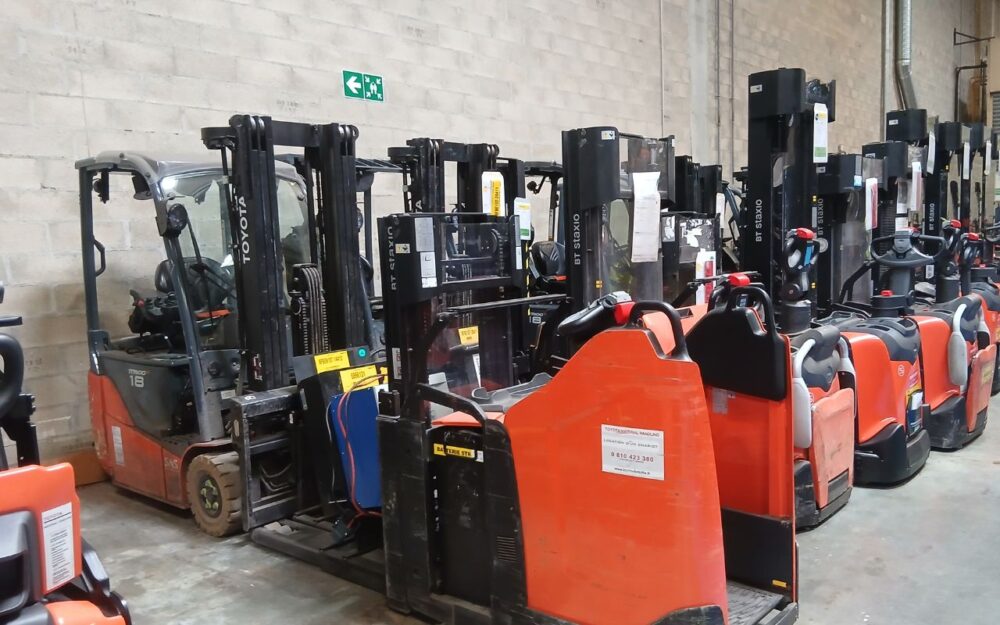
The Fleet Management Center in Bussy-Saint-Georges, operational since 2001, has organized its workflows in a relatively straightforward way.
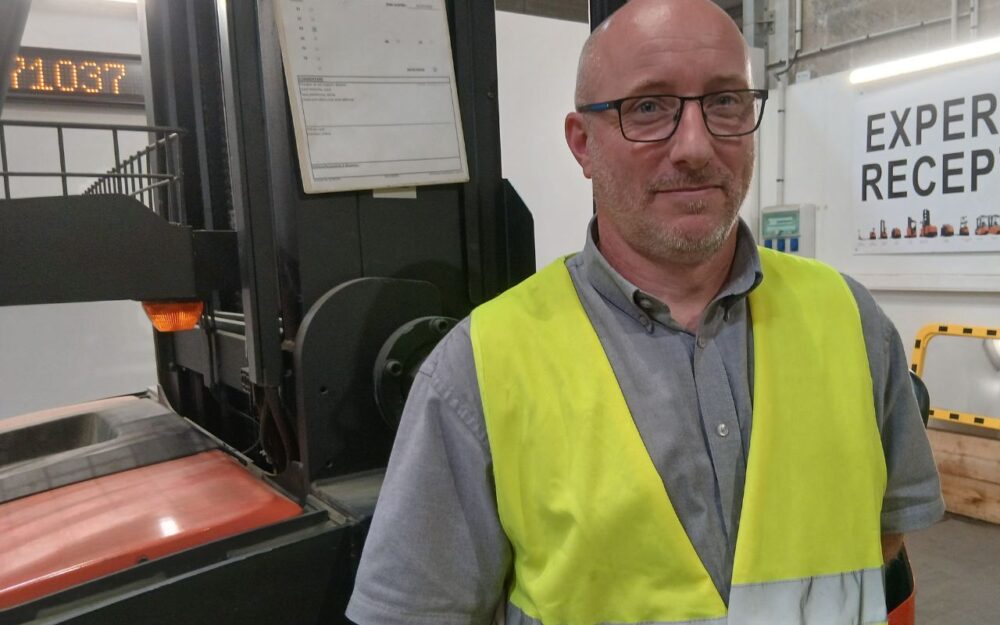
After being used by a customer, a forklift truck returns to the center’s receiving dock, where it is placed in a buffer area until it is inspected by an expert in a workshop equipped with advanced diagnostic tools. Following the inspection, the machine is issued with a detailed report identifying any repairs that may be required. Cyril Lemoine, Manager of the Bussy Technical Center, explains:
“Once the operator responsible for refurbishing the machine has taken charge of it, it follows one of two dedicated repair routes: the short circuit (Quick) or the long circuit. The ultimate objective is to ‘regenerate’ the truck as quickly as possible so that it is ready to be rented out again.”
This process is carried out while adhering to the three guiding principles of “Safety, Quality and Efficiency”, the very foundations of TPS.
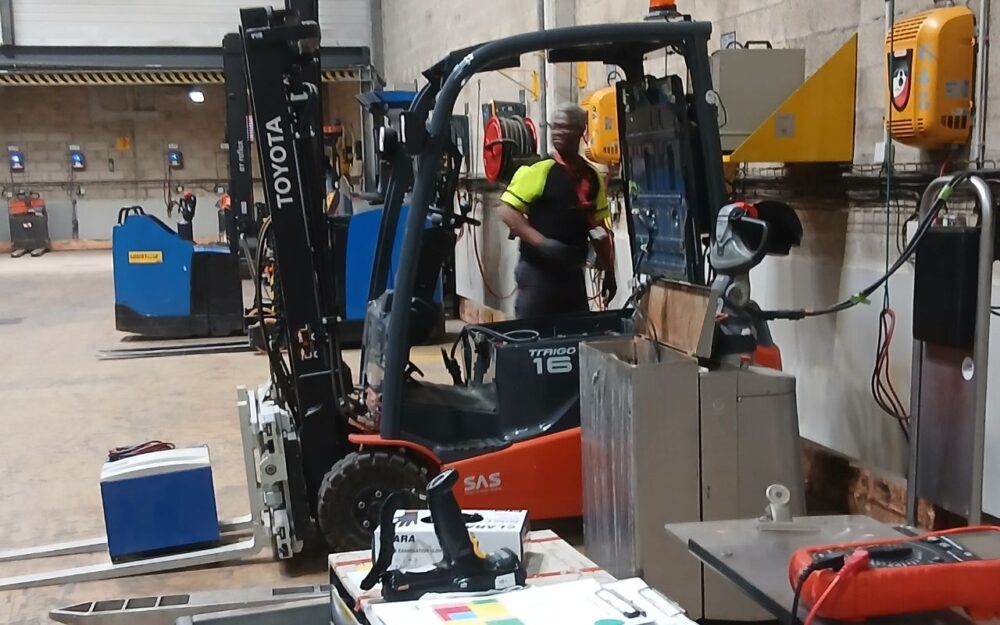
Machines requiring only minor work follow the short circuit. Those with more significant issues are directed through the longer repair route, covering mechanical work, electrical systems, bodywork and painting, before being transferred to a storage area organized according to their intended use: short-term or long-term rental. More than 1,300 machines can be stored at this FMC.
Components that cannot be immediately reused are sent either for refurbishment and future reuse or dismantled so that materials can be sorted before recycling. This commitment has earned the site EcoVadis Gold certification every year for nearly a decade.
TPS at Every Level
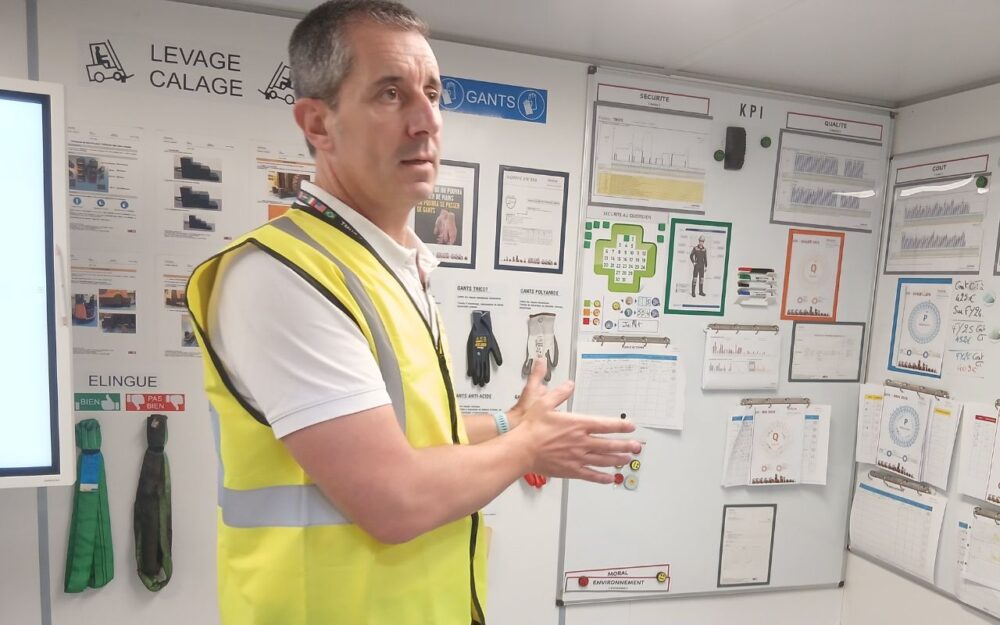
TPS (which includes 5S, standardization, heijunka, just-in-time, kaizen and jidoka) is naturally implemented at every stage of the equipment refurbishment process. Performance indicators covering safety, environment, quality, costs, lead times and employee morale also guide operators’ daily activities.
5S: sort, set in order, shine, standardize and sustain safe and efficient workstations
standardization: clearly defining every task to achieve a high level of performance)
heijunka: levelling and balancing workloads to avoid peaks of stress and periods of inactivity
just-in-time: producing only what is needed, when it is needed
kaizen: continuous improvement of standard conditions
jidoka: detecting errors immediately and correcting them before they spread.
For example, the expert responsible for inspections requested the installation of two large mirrors in the workshop, enabling him to check the operation of a forklift’s front and rear lights without having to walk around the machine. He also suggested adding cameras so that photographs could be taken as visual evidence for customers.
This approach is driven by kaizen, the philosophy of continuous small improvements which, when combined, significantly enhance workstation efficiency. Today, a complete inspection takes just thirty minutes, or a maximum of forty-five minutes.
Elsewhere in the workshop, display boards show information such as “Yesterday’s production rate versus target.” These visual management tools remind employees of objectives and priorities, much like a written reminder.
One of the cornerstones of TPS is the daily stand-up meeting known as “Asaichi.” Every morning, teams gather for around 15 minutes to discuss the previous day’s issues and the day’s operating conditions, following predefined topics designed to encourage continuous improvement.
The commitment of TMH France’s teams was recognized very early across Europe. They were the first to receive the Platinum distinction, the highest level of recognition within the TPS programme.
And what is applied on the workshop floor is equally applied in the adjacent offices. But that is another story.
¹ The two other Fleet Management Centers are located in Dagneux (Ain) and Carquefou (Loire-Atlantique).
You could aso be interested in this story