

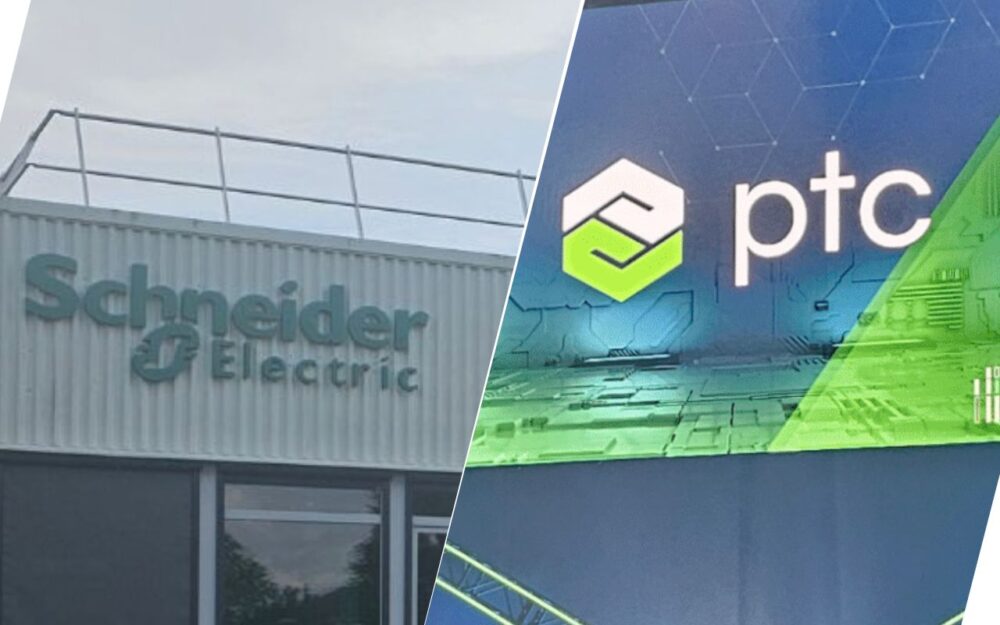

Schneider Electric is set to acquire US industrial software company PTC in a €20 billion ($22.6 billion) all-cash deal. For DirectIndustry, this is more than a major M&A story: it brings together two companies we have been following closely for years, and two sides of the industrial transformation that are increasingly difficult to separate.
On October 5, Schneider Electric announced that it had reached an agreement to acquire PTC for $205 per share in cash, valuing the US software company at approximately $22.6 billion. The transaction is expected to close by the third quarter of 2027, subject to shareholder and regulatory approvals. It will be Schneider Electric’s largest acquisition to date, exceeding its approximately $11 billion acquisition of AVEVA.
At DirectIndustry, we have followed both companies across several stages of the industrial digitalization story. We have seen Schneider Electric move progressively beyond its traditional electrical and automation roots, while PTC has spent years building an increasingly broad software portfolio around product design, product lifecycle management, industrial IoT, augmented reality and field service. Today, those two trajectories are converging.
From Product Design to Industrial Operations
PTC’s software is deeply embedded in the product lifecycle: designing, engineering, manufacturing, servicing and maintaining complex physical products. Schneider, meanwhile, has been building a broader digital ecosystem around industrial operations, combining automation and energy management with software, industrial data and AI through businesses such as AVEVA and Cognite. The acquisition could connect these two worlds much more closely.
Schneider describes the ambition as creating an industry-leading “Software & AI powerhouse” capable of bridging the physical and digital worlds and creating a digital thread across the lifecycle of products and assets.
For PTC CEO Neil Barua, the acquisition represents an opportunity to build on the company’s 40-year history. In a statement, he saud:
“Together with Schneider Electric, we will create one of the industry’s strongest and most differentiated industrial software portfolios, accelerating innovation for customers globally and helping them design faster, build right the first time, operate more efficiently, and continuously improve the next generation of products and systems.”
Two Companies We Have Been Watching Closely
Earlier this year, DirectIndustry visited Schneider Electric’s Le Vaudreuil factory in Normandy, where the company is combining automation, connected systems and AI in a brownfield industrial environment. We have also covered Schneider’s strategy at Hannover Messe, where electrification, automation and AI increasingly appear as parts of the same industrial proposition.
PTC has been on our radar for many years. At its LiveWorx events, we have followed the company’s development of the digital thread connecting engineering, product data, manufacturing and service. Its portfolio has expanded well beyond its historical CAD and PLM activities through technologies such as ThingWorx, Vuforia and ServiceMax.
That history makes today’s announcement particularly interesting from our perspective.
Why AI Makes This Deal Particularly Timely
That deal could become particularly important as AI changes the way manufacturers interact with industrial data. The question is no longer simply whether a factory has collected enough data. Increasingly, the question is whether an AI system can understand what that data represents, where it came from, how it relates to the physical product and what action should follow from it.
PTC brings precisely that product and engineering context. Its software is used by more than 30,000 customers worldwide to design, manage, manufacture and service physical products.
Combined with Schneider’s position in industrial automation, energy management and operational software, this could give the French group a much broader view of the industrial lifecycle, from product engineering to factory operations and field service.
Schneider expects the transaction to generate approximately €250 million in annual cost synergies by year three, as well as around €800 million in revenue synergies, driven by cross-selling, complementary customer bases and new AI-enabled solutions.
But Schneider Electric announced the PTC acquisition just weeks after unveiling a major reorganization of several of its industrial sites in France, aimed at “strengthening its competitiveness.” The plan includes the closure of a factory in the Vienne region and the consolidation of activities at other sites in the Eure, where Schneider has announced a €150 million investment.
What We Will Be Watching
For us at DirectIndustry, the most interesting part of this story starts now. We will be watching how Schneider connects PTC’s product-centric software stack with AVEVA’s operational software and Cognite’s industrial AI and data capabilities.
We will also be watching what happens to the relationship with manufacturers. Because ultimately, the success of this acquisition will not be measured by the number of software products in Schneider’s portfolio. It will be measured by whether industrial companies can actually do things differently: design products faster, reduce engineering complexity, improve production, maintain equipment more efficiently, capture the knowledge of an aging workforce and use AI without losing the industrial context behind the data.
There is also a financial dimension to watch. The transaction will be financed through a combination of equity and new debt, and Schneider’s shares fell sharply following the announcement as investors assessed the scale of the deal.
And finally, there is a broader competitive question. By bringing PTC’s CAD, PLM and product-data capabilities into its existing portfolio of automation, energy, industrial software and AI technologies, Schneider Electric is strengthening its position against major industrial technology ecosystems such as Siemens and Dassault Systèmes. The three groups do not have identical portfolios, but they are increasingly converging around some of the same strategic territory: the digital thread, digital twins, engineering data and AI across the industrial lifecycle. Schneider’s acquisition of PTC could therefore mark a new stage in that competition.