

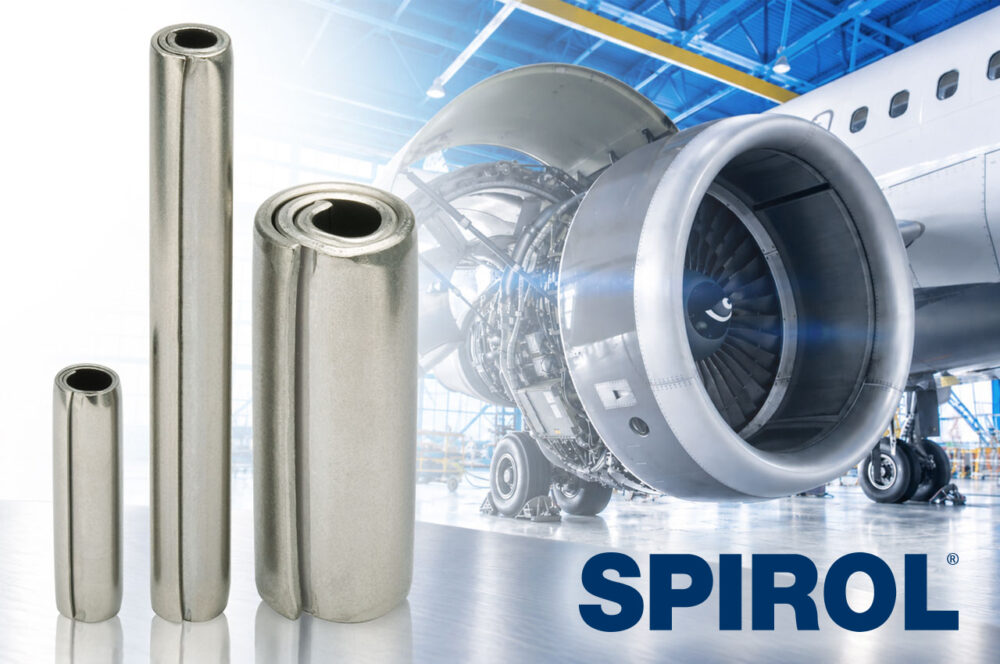

Coiled Spring Pins offer a unique combination of flexibility, strength, and durability that makes them well suited for dynamic assemblies exposed to shock, vibration, and repeated loading. Their lightweight design helps minimise overall assembly weight, while appropriate material selection can further enhance performance and service life in demanding operating conditions.
By Michael Pasko, Applications Engineer at SPIROL
The Coiled Spring Pin was invented by Herman J. Koehl, one of SPIROL’s founders, in 1948 in response to the need for a lightweight, reliable fastener capable of withstanding the intense shock and vibration present in jet engine applications. Drawing on his prior experience in jet engine development, Koehl created a flexible pin with a unique coiled construction that could absorb dynamic forces while securely fastening components.
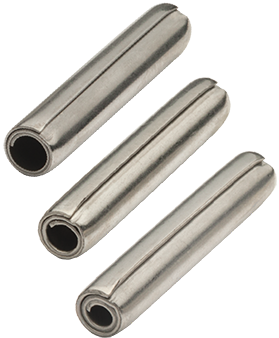
Today, Coiled Spring Pins continue to provide these same fundamental advantages across a wide range of dynamic assemblies. Material selection further expands their capabilities, with 420 martensitic chrome stainless steel providing an excellent combination of strength, fatigue resistance, and corrosion protection.
Strength
SPIROL’s 420 stainless steel Coiled Spring Pins are hardened to values approximating their high carbon steel equivalents and have the same minimum rated shear strength. The hardening process also develops the spring properties and fatigue resistance necessary for dynamic applications.
420 stainless steel also provides good corrosion protection against common atmospheric and environmental conditions without the risk of rapid work hardening associated with 302/304 austenitic stainless steel.
In most cases, 420 chrome stainless steel Coiled Spring Pins can be used as drop-in replacements for high carbon steel pins, provided galvanic potential relative to the host material has been considered.
Corrosion Resistance
Corrosion-resistant Spring Pins are commonly manufactured from stainless steels alloys, which are inherently corrosion resistant, or carbon steel with a sacrificial protective plating or coating. While coatings can provide excellent protection, they are consumed over time. Once depleted, the underlying carbon steel is susceptible to corrosion.
Stainless steel, by comparison, provides long-lasting protection provided free oxygen is available in the environment, allowing the fastener’s protective chromium oxide layer to reform if damaged. 420 chrome stainless steel offers good resistance to many common environments, including normal atmosphere and humidity, steam, fresh water, alcohol, ammonia, alkalis, mild acids, petroleum products, mild detergents, and sterilising solutions.
Although 302/304 austenitic stainless steel provides excellent corrosion protection, it is generally not appropriate when Coiled Pins are subjected to dynamic loads or when strength and fatigue resistance must equal or exceed high carbon steel. 420 martensitic chrome stainless steel provides an exceptional combination of strength and fatigue resistance – in addition to its inherent corrosion resistance.
Fatigue Life
Fatigue life is particularly important because Coiled Spring Pins are often used as dynamic elements within an assembly. Their flexibility after installation enables them to absorb shock and vibration, helping protect host holes and surrounding components from damage.
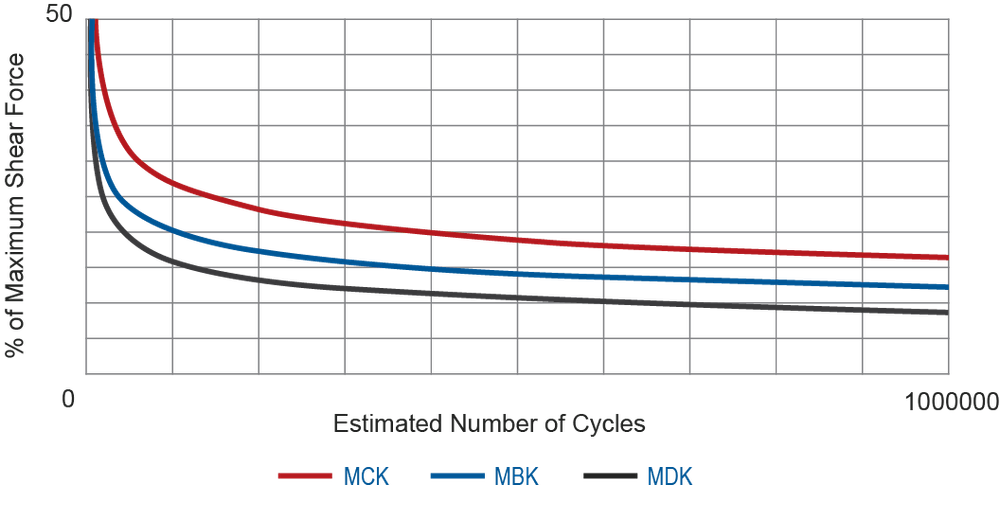
Comparative testing of standard duty Coiled Pins manufactured from high carbon steel, 420 chrome stainless steel, and 300 series austenitic stainless steel demonstrates the strong fatigue performance of 420 chrome stainless steel. Resulting trend lines show its superior fatigue resistance when tested at increasing percentages of assigned minimum double shear strength.
MBK – Standard duty, high carbon steel, plain finish
MCK – Standard duty, 420 chrome stainless steel, plain finish
MDK – Standard duty, 300 series austenitic stainless steel, plain finish
Summary
420 chrome stainless steel Coiled Spring Pins are an excellent choice for applications where high strength, moderate corrosion protection, and superior fatigue life are critical. Additional benefits include:
- Excellent cost-to-performance relationship
- High wear resistance
- Good tensile and creep strength at moderately elevated temperatures
- Oxidation and erosion resistance
- Improved component cleanliness compared with high carbon steel
- Reduced potential for mixed product and debris compared with plated or coated carbon steel