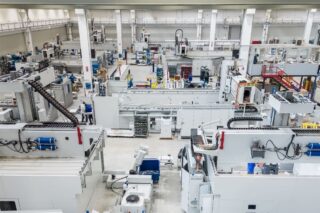



The All Electric Society Factory on Phoenix Contact’s campus in Blomberg, Germany, is more than just a factory. It’s a living proof of concept. Spanning 18,500 square meters, it brings together sector coupling, renewable integration, and direct-current (DC) grids under a single roof, demonstrating what the energy system of the future could look like. We visited the site with Phoenix Contact COO Ulrich Leidecker and Executive Vice President Dr. Martin Wetter to explore the vision and technologies behind the All Electric Society. But the story of this ambitious project actually begins a few steps away, at the All Electric Society Park.
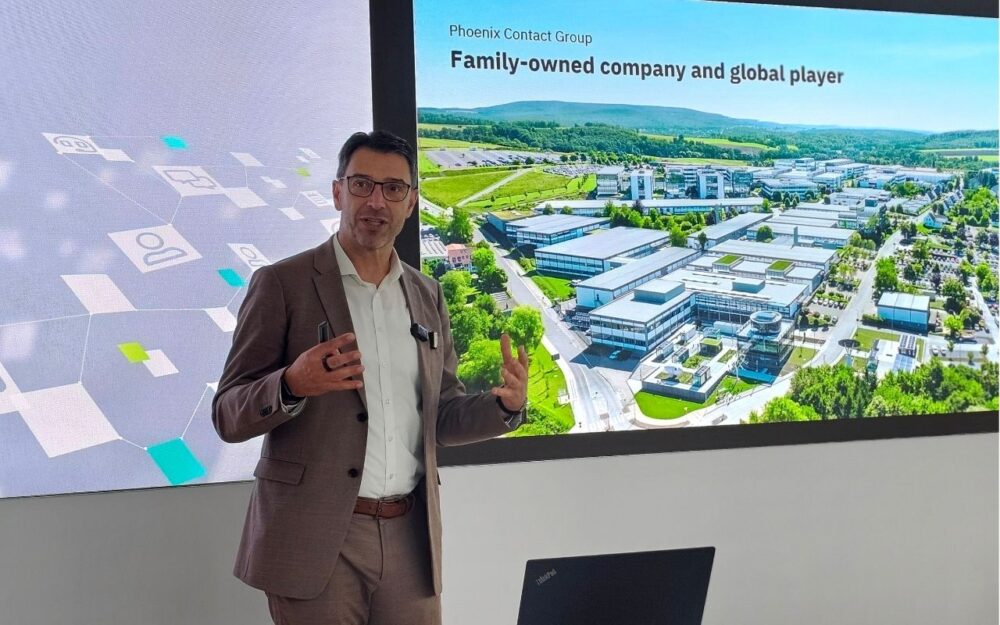
Phoenix Contact celebrated its 100th anniversary in 2023. With 20,000 employees, revenues of €3.3 billion in 2025 (and €3.7 billion projected), and a catalogue of more than 100,000 products spanning connectivity, cabinet efficiency, power reliability, and automation, the family-owned German company has long been a quiet backbone of global industrial electrical infrastructure.
But COO Ulrich Leidecker is clear: the company’s next century will be defined by something bigger than components.
“We need to get rid of fossil energy. We need to put everything on renewables—which also means more storage and conversion solutions—and we need to become much more energy efficient.”
In a few decades, almost everything will run on electricity: transport, industry, heating, and infrastructure. For that transition to succeed, two things must happen simultaneously, he explains.
First, key sectors—energy, industry, infrastructure, and mobility—must be tightly integrated through sector coupling. Second, efficiency must improve at every stage of the energy chain, from generation and distribution to storage and consumption.
The All Electric Society is Phoenix Contact’s response to this challenge: a vision of a fully electrified, climate-neutral system powered entirely by renewable energy.
“The idea of the All Electric Society is to address climate change. We want many players to adopt this vision and work toward an energy system based on renewable sources. Even if it may sound ambitious, we focus on making concrete progress every day.”
Andreas Schreiber, VP Industrial Cabinet solutions adds that this energy revolution already comes with massive demands.
“Almost 2 million new wind turbines will need to be installed worldwide in the coming years and decades. More than 20,000 solar parks must be built and connected, and over 90 million kilometers of new digitized power grids will be required by 2050.”
Leidecker also points to an important milestone that went largely unnoticed. In 2025, for the first time in European Union history, solar and wind generation surpassed fossil fuels in total electricity production.
“And it’s not going back.”
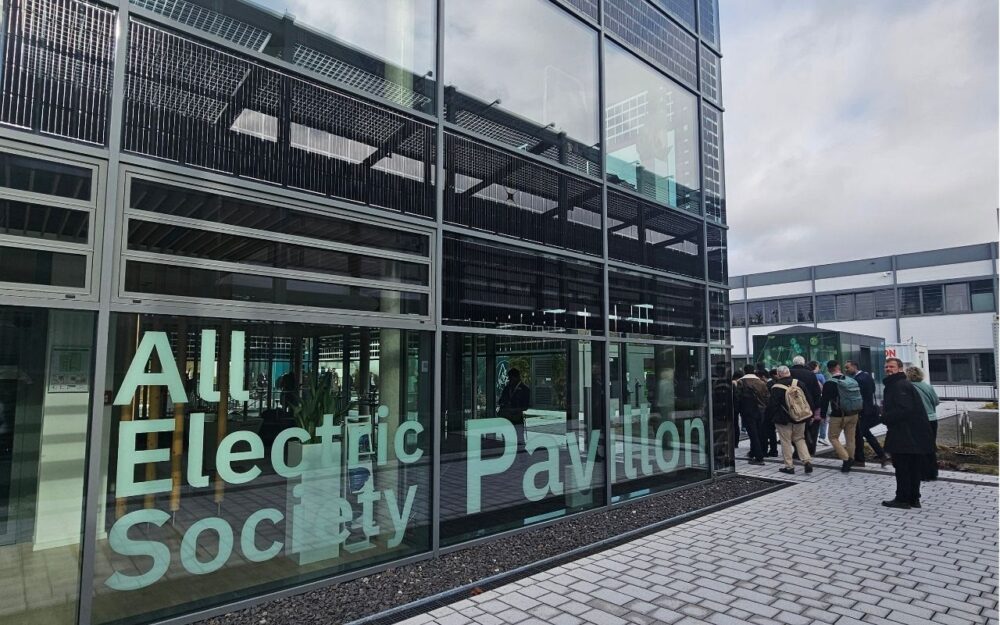
The All Electric Society Park
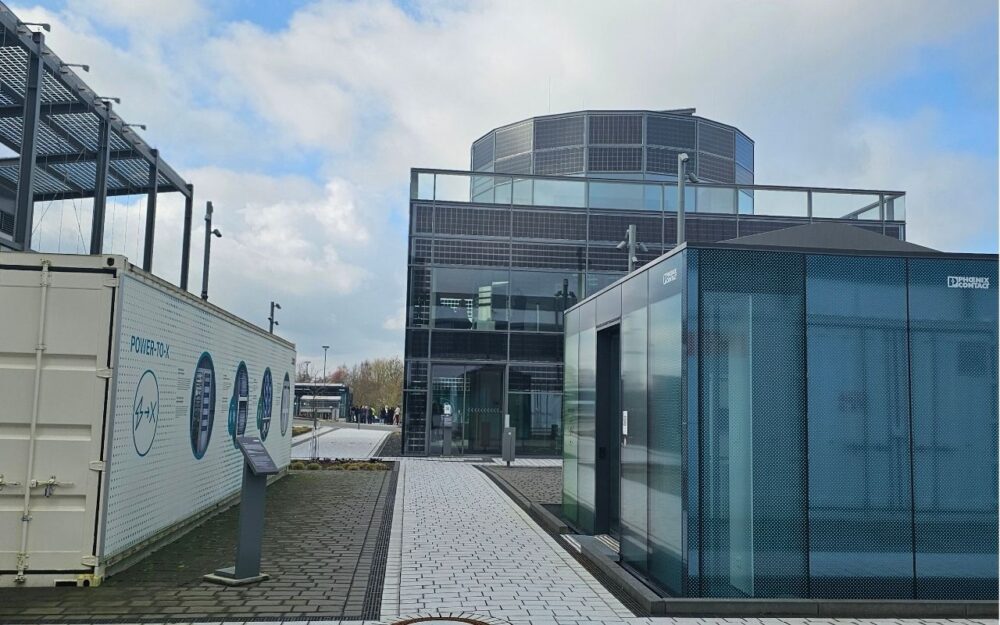
We had the opportunity to visit the All Electric Society Park in Blomberg, near Hanover in Germany. Opened in 2023, the 7,600-square-meter campus showcases Phoenix Contact’s expertise and the technologies already available today to begin the energy transition.
The park integrates a wide range of solutions: power distribution systems, EV charging infrastructure, solar generation, building automation, wind technologies, and battery storage.
“We see ourselves as a technology provider at the center of the energy transformation. The All Electric Society Park demonstrates that sustainable industrial production is both achievable and economically viable.”
During our visit, we chose to focus on three technologies on display: solar, wind, and energy storage.
1/ Solar Worshipper
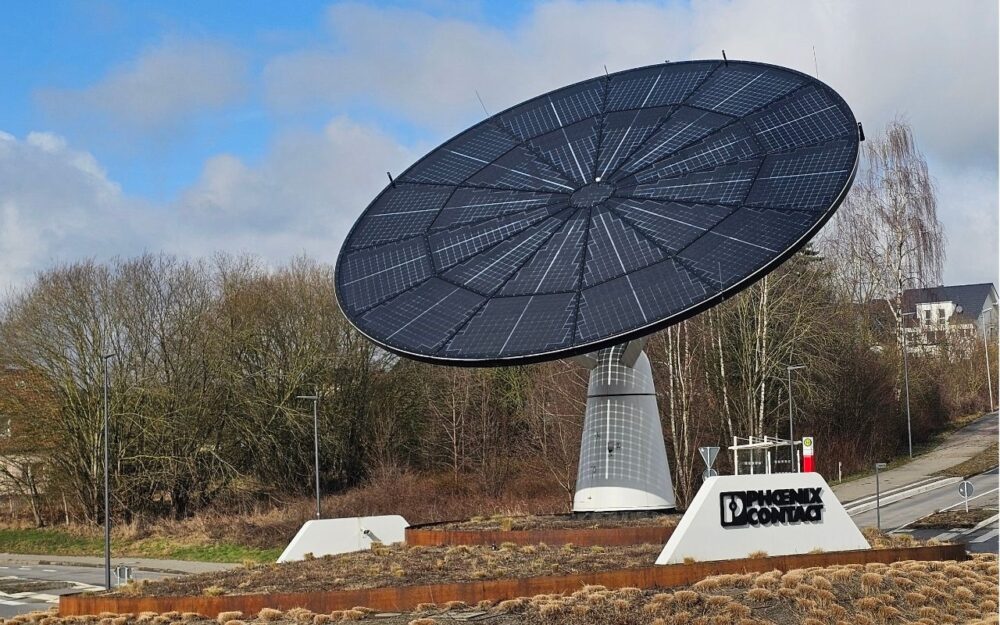
You are immersed in solar energy the moment you arrive. At the entrance of the site stands an imposing solar tracker, affectionately nicknamed the “sun worshipper” by employees.
With a 12-meter diameter and weighing 200 tons, the structure has become a landmark of the campus. Built by Austrian steel construction company Waagner Biro, the tracker consists of 24 bifacial solar modules that follow the sun like a sunflower, capturing both direct sunlight and reflected light. This system can increase energy yield by up to 45%, delivering 16.3 kW of peak power.
Solar energy plays a central role in the park, which also features several technologies designed to maximize solar generation in urban environments.
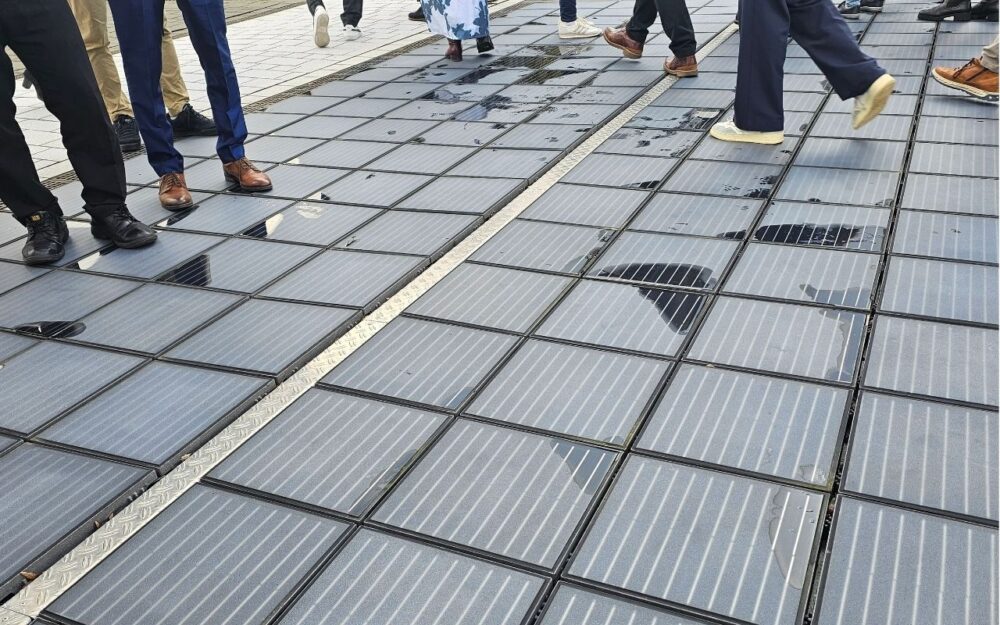
One example is solar paving stones developed by Platio. These panels turn ordinary sidewalks into small power plants, capable of producing around 4.1 kWp simply by converting pedestrian surfaces into solar generators. Price
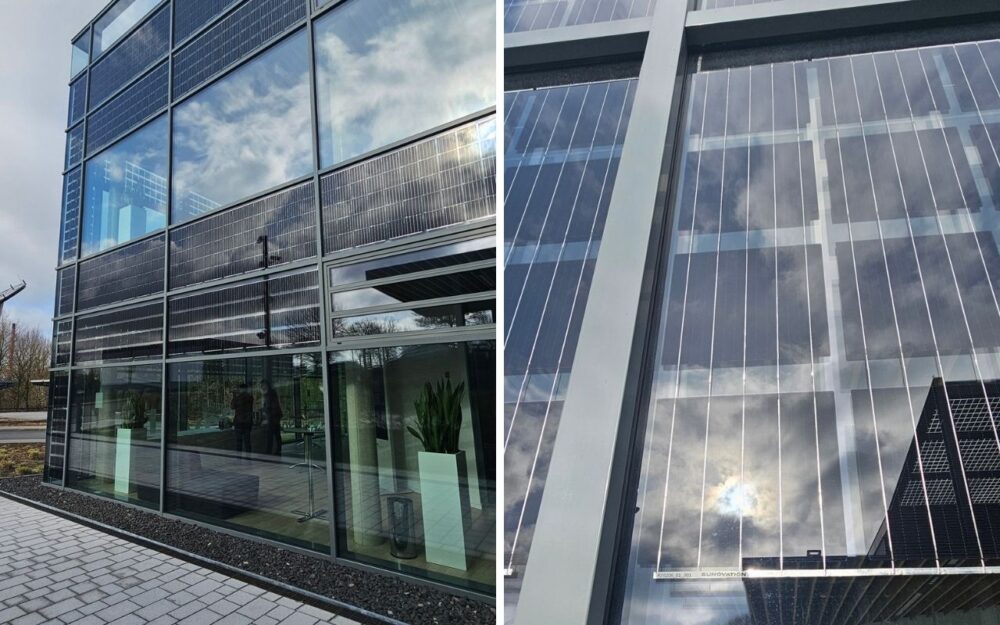
On the main building, 180 building-integrated photovoltaic panels are embedded vertically into the glass façade. They generate approximately 51 kWp.
While rooftop solar is now common, façade-integrated solar remains relatively rare. Yet the potential is significant—particularly for industrial buildings, whose large vertical surfaces could effectively become solar power plants integrated directly into the structure of the building.
2/ Wind Tree
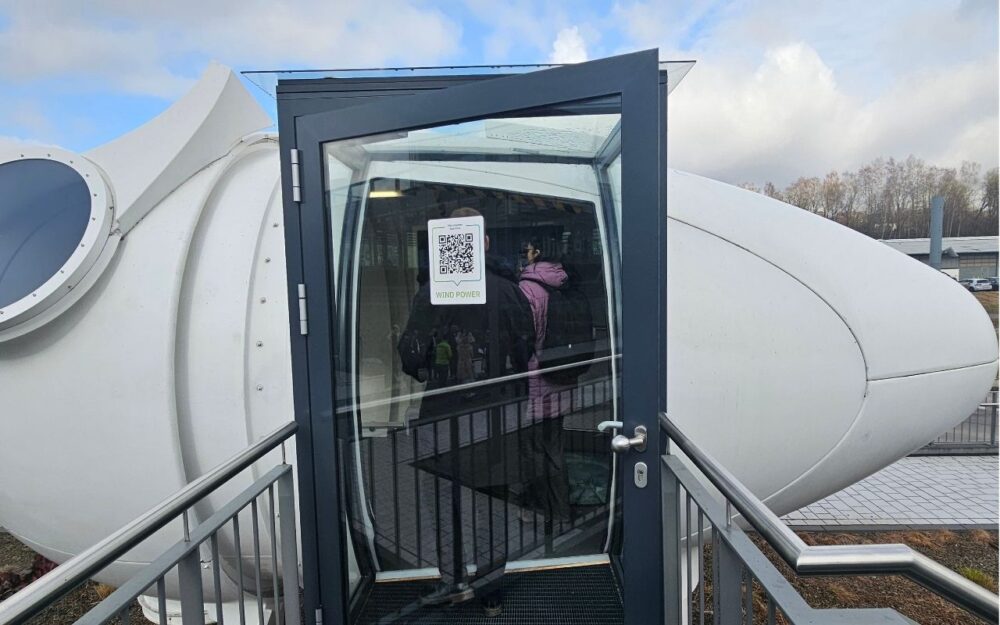
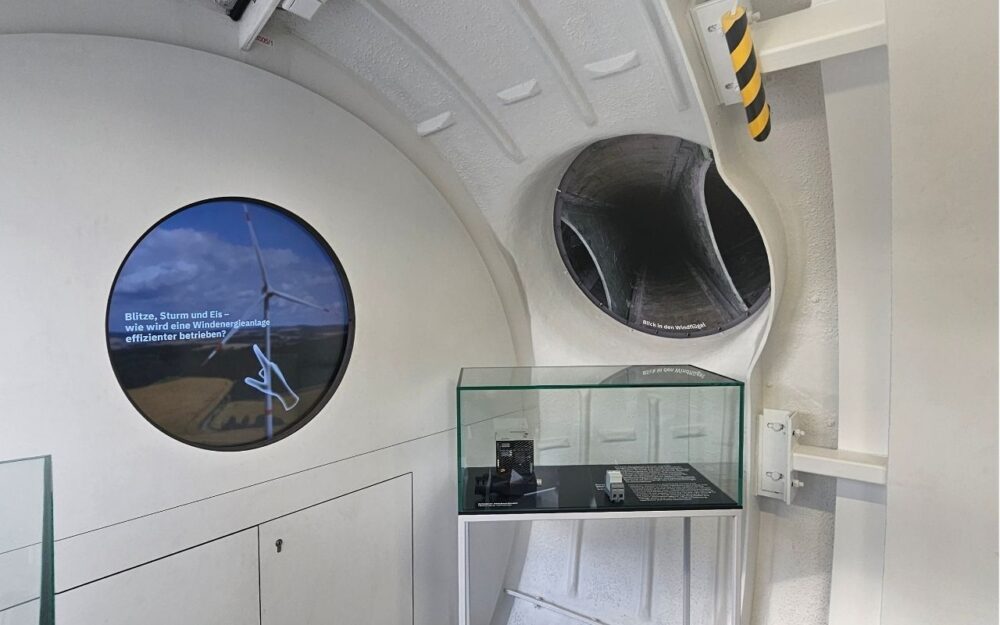
Wind power is represented by another impressive structure: a wind turbine nacelle. Although this one was not mounted atop a tower 60 or 80 meters high—and was not in operation—it provided a rare opportunity to step inside and understand how the core components of a wind turbine are arranged.
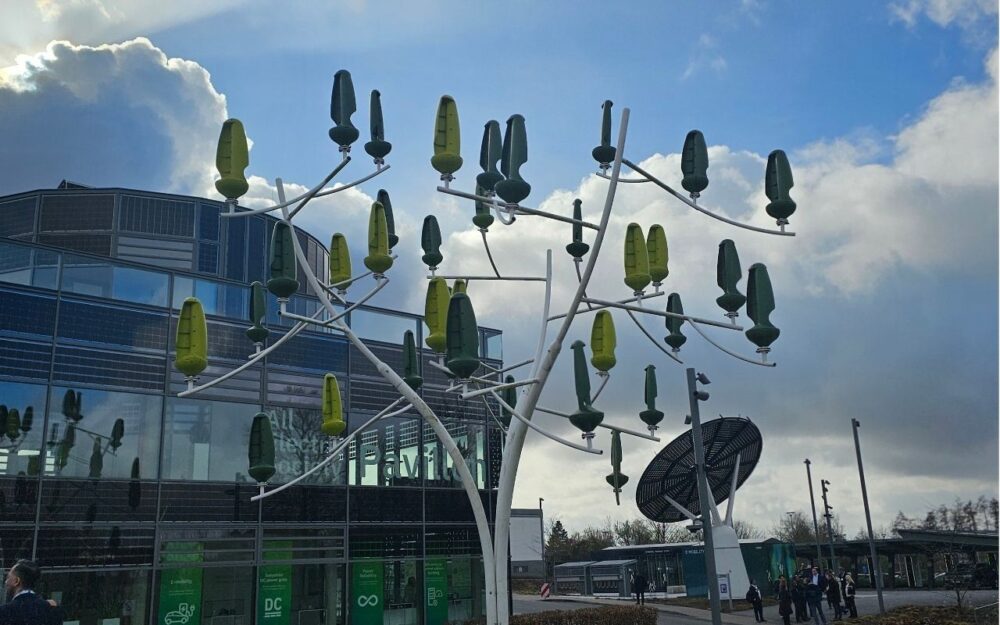
But the installation that caught our attention most was the Wind Tree, perhaps unsurprisingly given that it was developed by French entrepreneurs Jérôme Michaud-Larivière and Luc-Eric Krief.
The structure resembles a stylized tree composed of 36 small vertical “aeroleaf” turbines. Silent and compact, the Wind Tree blends engineering and urban design. It can generate electricity even in low wind conditions, producing up to 10.8 kW—roughly enough to power a two-person household.
Installations like this already exist in cities, including Place de la Concorde in Paris. For Phoenix Contact, the Wind Tree illustrates that renewable generation can also be integrated directly into urban environments.
3/ Seasonal Ice Storage Unit
Generating renewable electricity from solar and wind is one challenge. Storing energy when it is not immediately needed is another. While battery storage systems are well suited for short-term storage, they are less efficient for long-duration energy storage. That is where Phoenix Contact highlights a different approach: thermal energy storage using ice.
Beneath the park, about 2.5 meters underground, a large concrete tank contains 100,000 liters of water. The system works by exploiting the latent heat released during the phase change between water and ice. When water freezes, goes from 0° liquid to 0° solid, it releases a significant amount of heat without changing temperature. Roughly 0.1 kWh of energy per liter of water can be extracted during this phase transition.
Martin Wetter, Executive Vice President of Innovation adds:
“If we take the same amount of energy and put it into water at 0°C, how warm would the water become? About 80°C—nearly boiling. That shows how much energy can be extracted from water simply by freezing it into ice. And that’s exactly what we use for our heating system.”
In winter, heat pumps draw this energy from the water tank, gradually freezing it while using the extracted heat to warm nearby buildings to around 35°C. By the end of the heating season, the reservoir is largely frozen. This frozen mass then becomes useful again in summer: the stored ice can cool buildings very efficiently during hot months, reducing the need for conventional air-conditioning.
In other words, the system acts as a seasonal thermal battery, storing energy in winter and helping provide cooling in summer. Leidecker underlines the broader principle at stake:
“If we want a more efficient energy system, we need to combine electrical energy and heat energy. The link between the two is where the real efficiency gains live.”
The All Electric Society Factory
The efficiency gains discussed in the park can be seen in action just a few meters away, inside the All Electric Society Factory. This Phoenix Contact facility spans 18,500 square meters, employs around 400 people, and required a €35 million investment. Here, operators build control cabinets. And this is also where the technologies showcased in the park, including the ice storage system, are implemented in a real industrial building.
The facility is capable of producing a positive energy balance thanks to a direct current (DC) electrical grid. According to the company, DC could play a major role in the electrification of industry.
Direct Current: The Backbone of the All Electric Society
For more than a century, alternating current (AC) has dominated industrial electrification. AC travels efficiently over long distances and its frequency makes grid stabilization relatively straightforward. But at the scale of buildings or industrial facilities, Phoenix Contact believes DC can offer significant advantages. So, in the All Electric Society Factory, direct current forms the backbone of the energy system.
“DC is smart and efficient,” says Ulrich Leidecker. “You need less installation, you have higher efficiency in usage and consumption, and you have fewer conversion losses. Anywhere we use renewable energy, we need DC.”
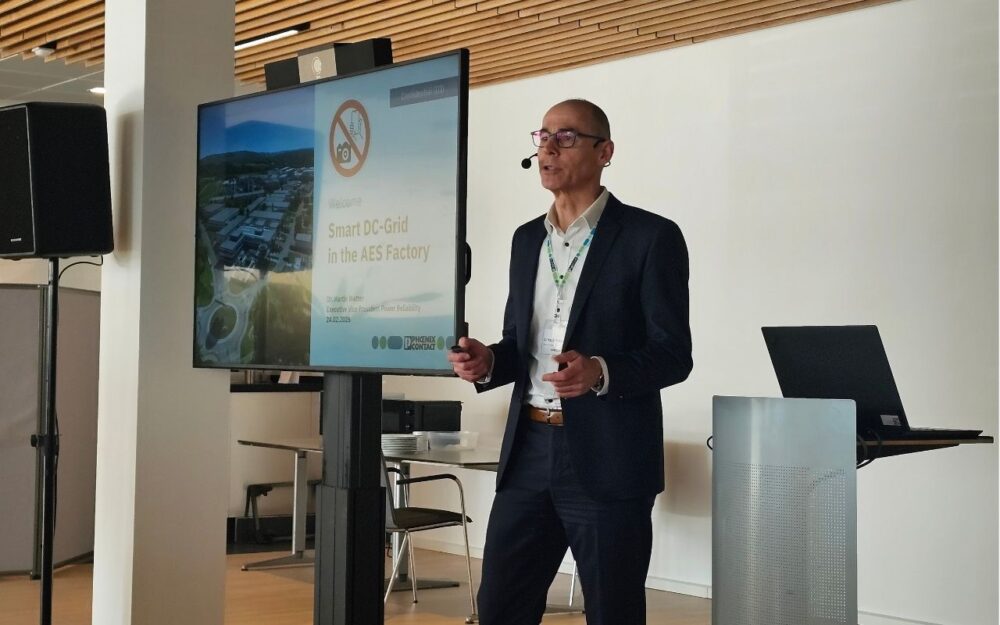
For Martin Wetter, Executive Vice President of Innovation, the advantages are particularly clear at the scale of a building.
“The first is sustainability. Solar panels, many generators, and battery storage systems naturally produce direct current. Integrating them into a DC grid reduces the number of conversion steps required, which lowers energy losses and simplifies the system.”
The second advantage is energy efficiency. In a DC environment, regenerative energy can be reused immediately across the facility.
For example, in intralogistics systems, lifting goods consumes electricity while lowering them generates it. In a DC network, both flows can occur on the same bus at the same time. The result is significant peak load reduction. Where a conventional logistics center might require 100 kW of supply capacity, an equivalent DC system could operate with only 30 to 40 kW.
“We are not talking about ten or twenty percent lower,” Wetter explains. “We are talking about sixty or seventy percent. That’s a huge advantage.”
This could mean a near energy equilibrium.
Another benefit is grid stability. A well-designed DC microgrid can buffer a facility from fluctuations in the public AC grid—an important advantage in regions where grid quality is inconsistent.
There are also material efficiency gains. Because DC voltage remains constant rather than sinusoidal, conductors operate closer to their maximum capacity at all times. This means less copper for the same level of power delivery.
Finally, there is flexibility. Without frequency constraints, DC systems are largely software-defined, making them easier to adapt, optimize, and expand over time.
Inside the DC Grid of AES Factory
The architecture of the factory’s energy system is layered and bidirectional. A 30 kV public AC supply feeds the building’s conventional infrastructure: lighting, building management systems, and production machinery on the ground floor. A 2.5 MW photovoltaic installation across the campus rooftops primarily feeds this AC layer.
The new element is a 650-volt DC bus, supplied by a bidirectional AC/DC converter. This DC bus connects several key components: a dedicated 110 kWp rooftop photovoltaic system, connected directly through a DC/DC converter, a 300 kWh battery storage system built using second-life batteries, bidirectional electric vehicle charging stations, DC-powered lighting systems and a growing range of DC-compatible production equipment, including a robot.
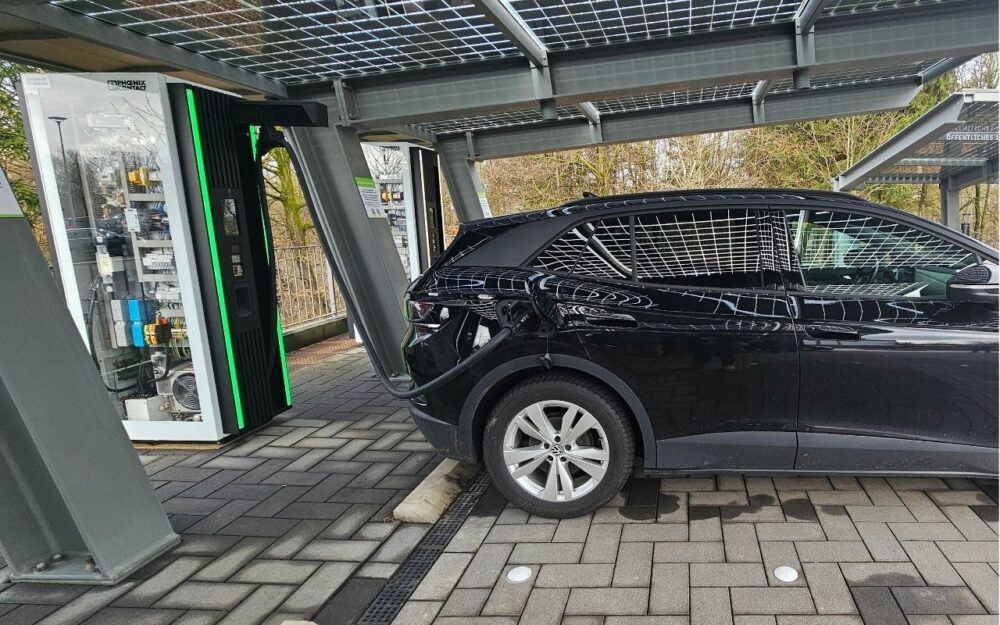
The bidirectional EV charging stations are particularly illustrative of the broader vision. Company vehicles parked on site can feed electricity back into the building’s grid, creating a practical example of mobility-to-infrastructure energy coupling.
The Control Challenge
However, operating a DC microgrid presents a challenge that AC engineers rarely face: there is no frequency to regulate the system. In an AC grid, frequency acts as a universal signal. If it drops below 50 Hz, generation must increase; if it rises, generation must decrease. The mechanism is simple and largely self-regulating.
“That’s also one of the reasons why AC won the war of currents,” Wetter notes.
In a DC system, voltage plays that regulatory role. Therefore, Phoenix Contact has implemented a rule-based voltage control system on its PLCnext control platform, following specifications from the Open Direct Current Alliance (ODCA)—a German organization working with international standardization bodies. These specifications define voltage ranges, operating bands, and behavioral rules for connected devices when voltage deviates from target levels.
Above this basic control layer sits a master DC grid controller. This software intelligence layer is capable of optimizing power flows in real time. The system can, for example, adjust EV charging speeds depending on time of day. It can also schedule battery charging around solar production peaks and align production loads with available renewable energy.
“You can implement almost anything you want through software,” Wetter explains. “It’s extremely flexible.”
The Safety Challenge
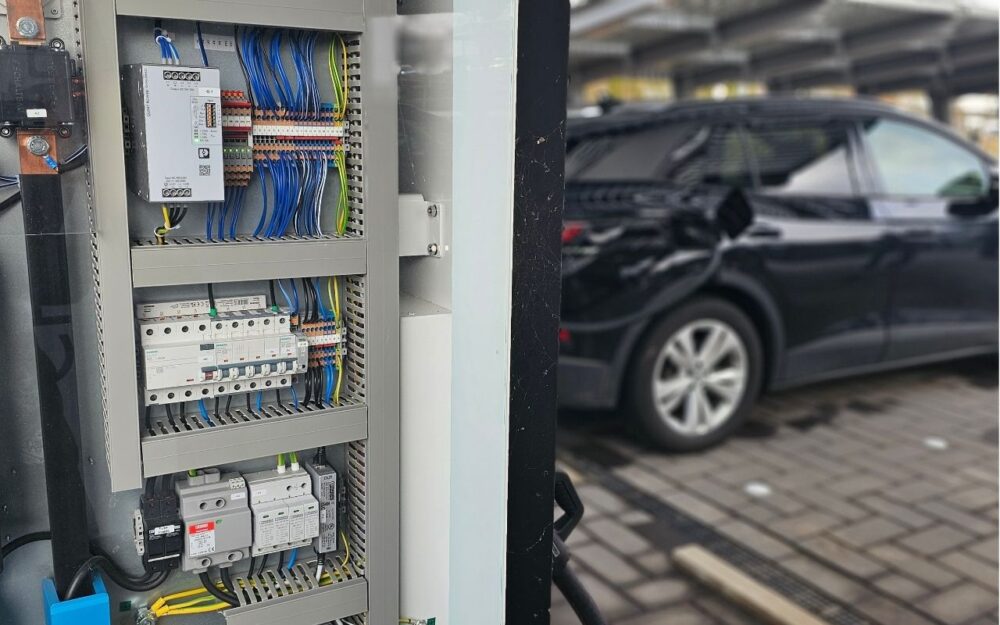
Operating at 650 volts DC also introduces specific safety challenges. DC arcs are harder to extinguish than AC arcs, requiring dedicated protective designs.
Phoenix Contact thus conducted extensive testing with cabinet manufacturers to validate glass-fronted switchgear capable of withstanding internal arc events at 650 V DC. The result is a certified range of equipment that ensures both safety and visibility, which is important for a site designed to demonstrate the technology to customers.
The Road Ahead
The company is already preparing the next step: integrating hydrogen systems, including power-to-hydrogen and hydrogen-to-fuel-cell technologies. The infrastructure has been planned within the building, even if the systems are not yet operational.
The transition will not happen overnight. Leidecker acknowledges the challenges, particularly the slow pace of hydrogen deployment.
“I don’t want to wait another ten years,” he says.
But he remains confident. The renewable tipping point in Europe has already been reached, the technologies for distributed DC systems exist, and their economic benefits, from reduced peak loads to energy-positive buildings, are already demonstrable. What is sure is that the All Electric Society Factory quietly demonstrates what the future of industrial energy could look like.
One final observation: during our visit, we spoke extensively about the future of industry without mentioning artificial intelligence even once. A rarity worth noting. At a time when so many conversations about industrial innovation revolve around AI, it was refreshing to explore another dimension of the future!