


At a press preview event ahead of Hannover Messe 2026, Cybus and TeamViewer unveiled their “Zero-Error Assembly Line”. This joint demonstration challenges the conventional approach to quality control by making mistakes structurally impossible.
In modern manufacturing, a single misplaced fastener or incorrect torque setting can trigger a cascade of costly consequences. This can mean product recalls, delivery delays, warranty claims, and reputational damage. As product diversity grows and skilled labor becomes harder to find, manufacturers face mounting pressure to guarantee quality at every step of the assembly process. And not just inspect for it afterward.
At a preview event ahead of Hannover Messe 2026, German industrial software company Cybus and enterprise connectivity platform TeamViewer unveiled a joint demonstration that challenges the conventional approach to quality control. Their “Zero-Error Assembly Line” does not aim to catch mistakes more efficiently. It aims to make them structurally impossible.
The Problem with Traditional Quality Control
Most manufacturers rely on inspection-based quality assurance. Workers complete assembly steps, and errors are identified downstream — sometimes only after a defective product has already been shipped. This model is increasingly untenable. Product variants are multiplying. New hires need weeks or months to reach full competency. And manual processes remain inherently vulnerable to human error regardless of experience level.
The standard response has been to add more checks: more sensors, more audits, more layers of oversight. But each additional layer introduces complexity, cost, and friction without addressing the root cause — the gap between what workers know and what they need to do, at exactly the right moment.
You could also be interested in this article
An Integrated Architecture, Not a Stack of Tools
The Cybus-TeamViewer approach is built around a fundamentally different premise: errors should be prevented at the source through seamless data integration and real-time operator guidance, rather than filtered out after the fact.
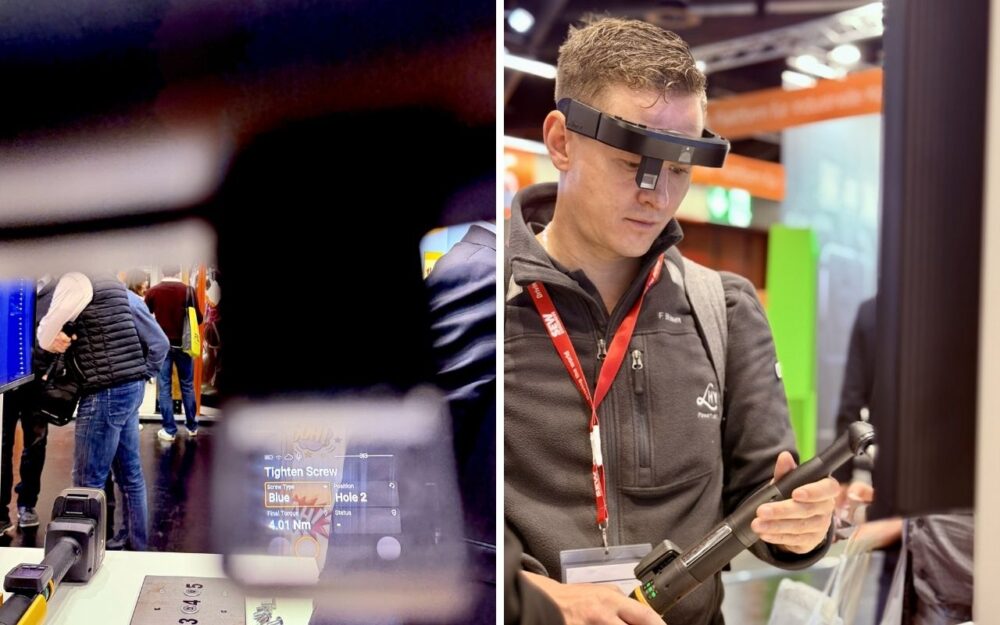
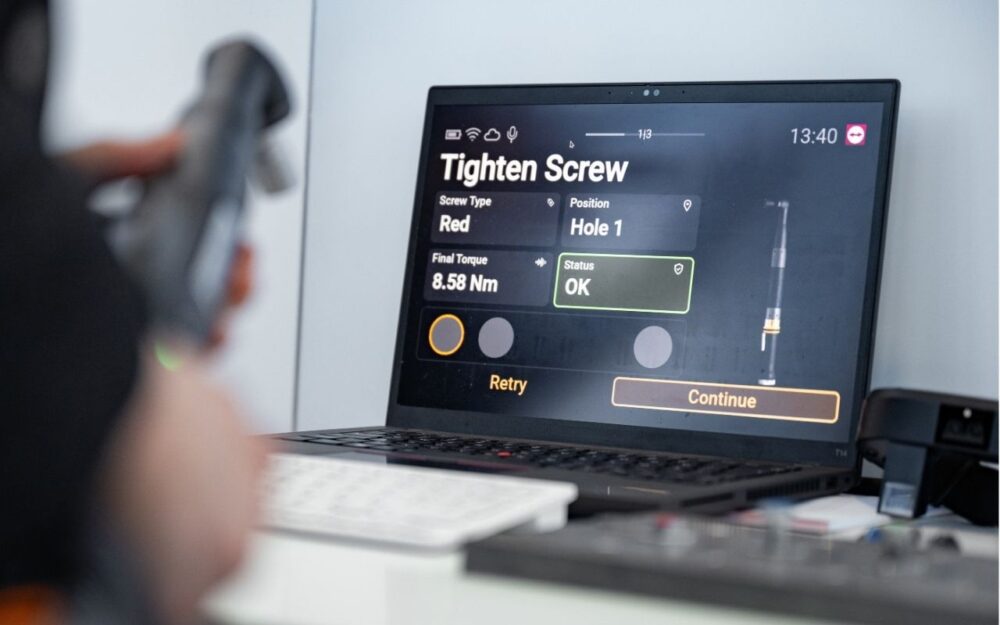
At the core of the system is Cybus Connectware, an industrial data integration and orchestration platform. It connects to MES (Manufacturing Execution Systems) and production equipment, then automatically pushes critical process parameters — such as torque and angle values for tightening operations — directly to the appropriate smart tools. Crucially, this works in offline mode as well, to ensure operational continuity even in environments where connectivity may be intermittent.
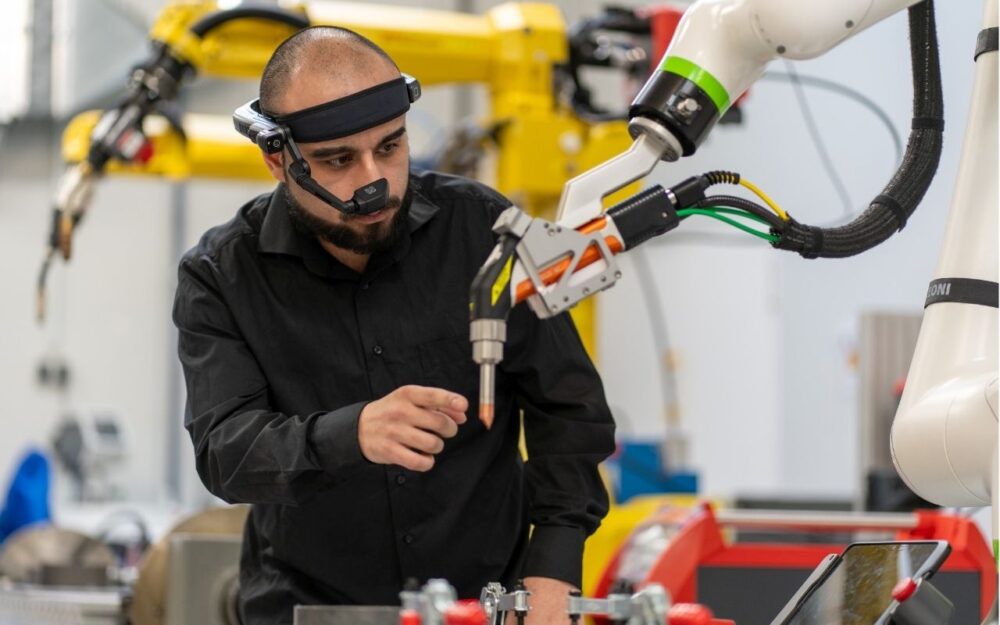
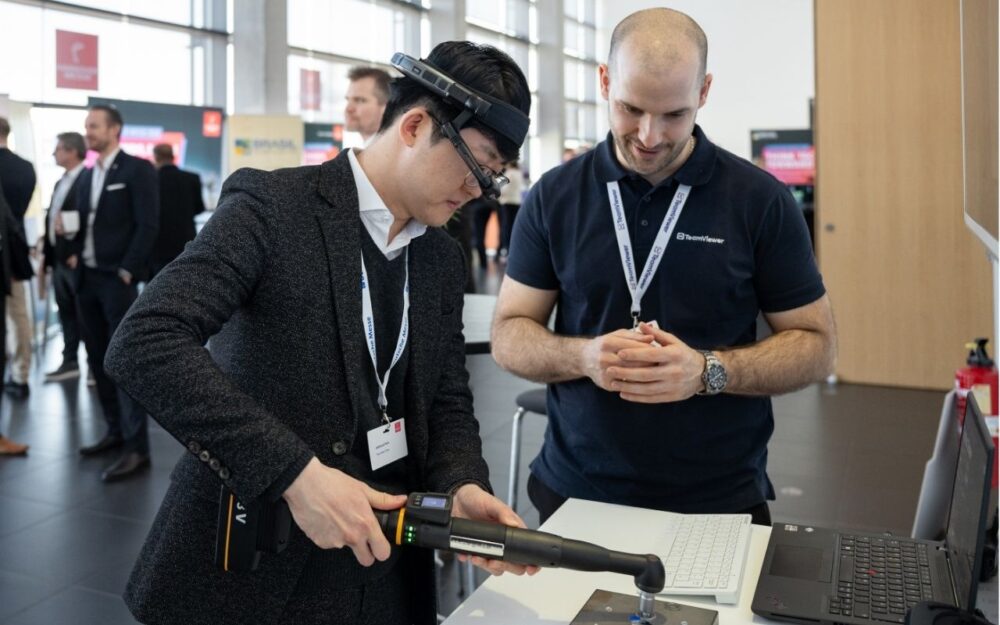
The operator-facing layer is handled by TeamViewer Frontline, an augmented reality platform delivered through smart glasses and wearable devices. Workers receive step-by-step visual instructions projected directly into their field of view, hands free, in real time — with each instruction dynamically informed by the live data flowing from Cybus Connectware.
Together, the two platforms form an end-to-end digital thread from enterprise information systems down to the physical assembly station.
Zero Error in Practice: A Locking Logic That Prevents Non-Conformance
During the demonstration, TeamViewer Frontline guided the operator through each assembly step while Cybus Connectware continuously monitored torque and angle readings in real time. If a value fell outside the acceptable range, an integrated locking logic prevented the workpiece from advancing to the next station.
This is the critical distinction: the system does not alert workers to a potential problem and hope they act correctly. It creates a physical and digital barrier that makes it impossible for a non-conforming part to move forward in the production flow.
“We don’t reduce errors through additional controls — we make them technically impossible,” said Peter Sorowka, CEO of Cybus. “The key lies in seamless data integration, not in adding isolated tools.”
Mei Dent, Chief Product & Technology Officer at TeamViewer, framed it in terms of the broader factory ecosystem:
“Augmented reality reaches its full potential when it is fully integrated into the digital ecosystem of a smart factory. The combination of TeamViewer Frontline and Cybus Connectware creates that continuity and acts as a digital shield for operators and the business.”
Measurable Operational Benefits
The implications extend well beyond error prevention. A fully integrated zero-error architecture delivers several compounding advantages. For example, new workers can reach full operational competence significantly faster when guided step by step through complex assembly procedures in real time, reducing reliance on tribal knowledge.
It also guarantees a full digital traceability. Indeed, every production step is logged automatically. This creates an auditable record that supports regulatory compliance, warranty management, and continuous improvement initiatives.
In terms of IT/OT security, the controlled, offline-capable data architecture reduces the attack surface and ensures that operational technology is not dependent on constant cloud connectivity.
Besides, because the system is built on a unified platform rather than a patchwork of siloed tools, it can be replicated across multiple production sites without reinventing the integration layer each time.
The full demonstration will be live at Hannover Messe, taking place in Hanover, Germany, from April 20th to April 24th, 2026.
You could also be interested in this article