

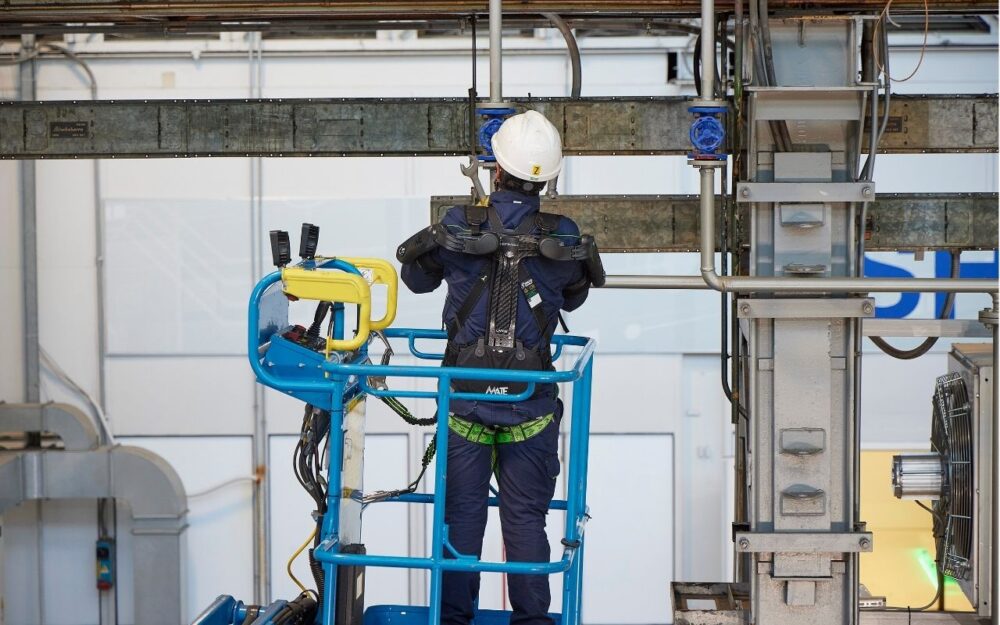

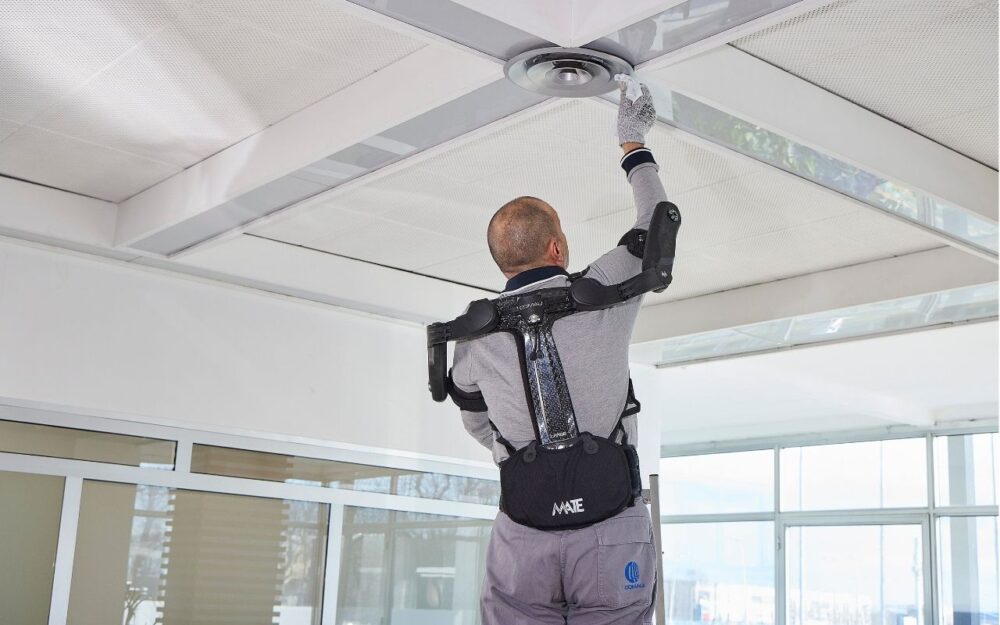
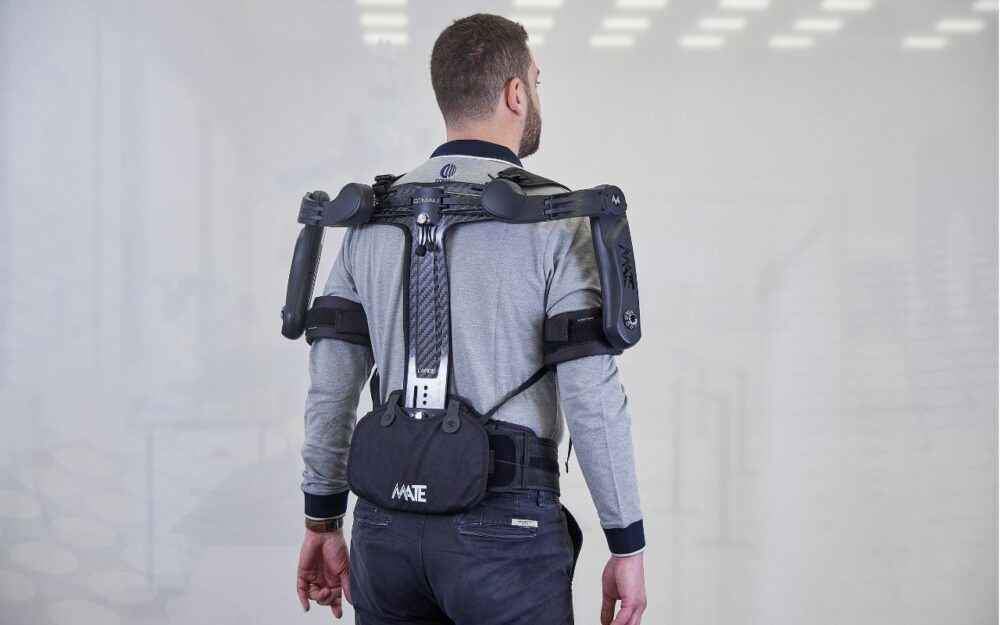
Comau has unveiled this week MATE-XT GO, a new wearable exoskeleton engineered to support workers’ arms and shoulders during repetitive or overhead tasks. Weighing less than 3 kg and designed for intuitive use, the device can be donned in just 30 seconds and removed in 10. This means it can ensure seamless integration into daily operations without disrupting workflow.
MATE-XT GO is certified as a Category II Personal Protective Equipment (PPE), and is ready for deployment in regulated professional environments.
In a press release, Marco Manavello, Chief Industrials Operations Officer at Comau commented:
“This achievement marks an important step forward in our human-centric automation vision. (…). The result is a wearable solution that can reduce fatigue and perceived effort by up to 50%, support workers in physically demanding tasks and help companies systematically improve ergonomics at scale. Its affordability and ease of maintenance open new opportunities for adoption across a broader range of sectors.”
A Lighter, More Accessible Exoskeleton for Large-Scale Adoption
Building on the success of the Italian-made MATE family (read our previous article), already adopted by more than 3,000 companies worldwide, MATE-XT GO delivers enhanced assistance in a lighter, more ergonomic format. Its fully passive design minimizes maintenance requirements and lowers total cost of ownership.
It is economically accessible not only for large industrial players but also for SMEs, craftsmen and specialized trades, across manufacturing, construction, logistics, agriculture and emerging industries.
Developed in close collaboration with IUVO—Comau’s majority-owned company and former spin-off of the Scuola Superiore Sant’Anna—the new exoskeleton combines Comau’s industrial automation expertise with advanced know-how in wearable technologies and human biomechanics.
Measurable Ergonomic Impact
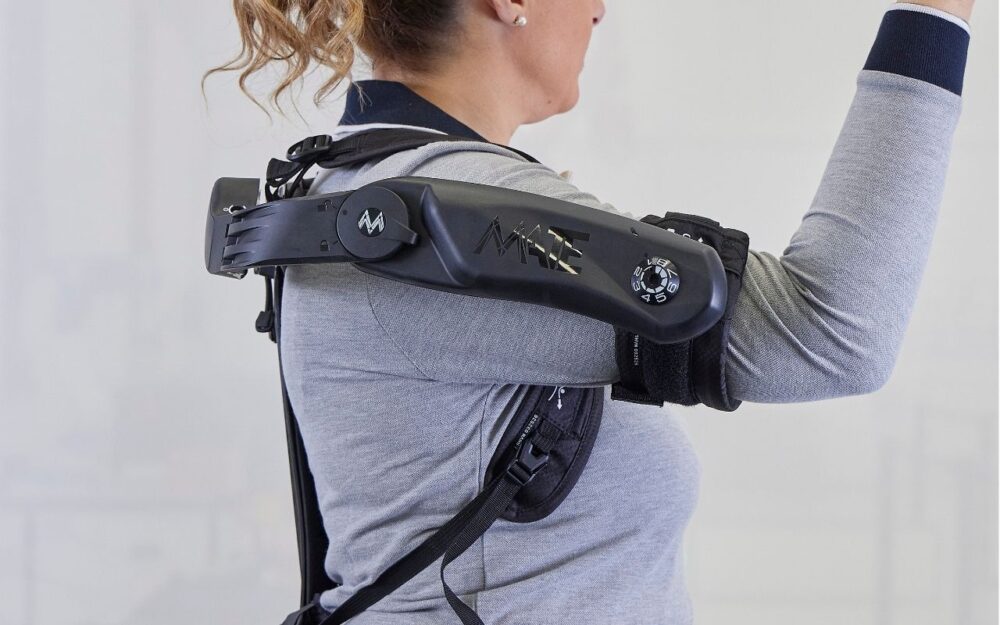
From a performance standpoint, MATE-XT GO offers 8 adjustable assistance levels for both arms, following the physiological movement of the shoulder. This ensures adaptive support tailored to the specific task and worker needs.
Key benefits include:
- Quantifiable ergonomic improvements
- Reduced shoulder muscle activity and perceived exertion
- Enhanced precision, quality and operational performance, with workers reporting improved work quality
The Growing Industrial Exoskeleton Market
The launch of MATE-XT GO aligns with strong growth in the global exoskeleton market. According to multiple industry projections, such as the ones by ABI Research, the global exoskeleton market is estimated at around USD 0.8–1.4 billion in 2024–2025 and is expected to grow strongly in the coming decade. Some forecasts range up to USD 2–19 billion+ by the early 2030s.
Industrial and commercial applications make up a major share of this growth, as companies adopt wearable robotics to reduce musculoskeletal disorders and improve safety and productivity.
Other notable industrial exoskeleton brands include:
- Ekso Bionics : this U.S.-based company is developing powered exoskeletons for both industrial augmentation and medical mobility support.
- Ottobock : this global leader in prosthetics and orthotics, offers an expanding range of wearable support and ergonomic solutions.
- exoIQ : this company is specializing in lightweight, assistive exoskeletons designed to enhance worker endurance and improve workplace ergonomics across various industrial applications.
Expanding Horizons: Medical and Mobility Exoskeletons
The medical exoskeleton market is also expanding rapidly, driven by rehabilitation needs and chronic conditions. Several forecasts show the medical segment growing from hundreds of millions in value today to well over USD 1 billion by the early-to-mid 2030s.
A good example of medical innovation is Japet Medical’s motorized exoskeleton designed to help adults suffering from chronic low back pain. It is now available for public trials in France after more than 2,000 professional deployments nationwide.
Another noteworthy development comes from Hypershell, a Chinese startup that produces AI‑powered outdoor exoskeletons aimed primarily at hiking, travel and general mobility. Their Hypershell X Series assists users during long walks and climbs by reducing physical exertion. The company claims up to around 20 % less effort walking and up to 39 % during cycling and more strenuous activity thanks to its adaptive motorized support.