

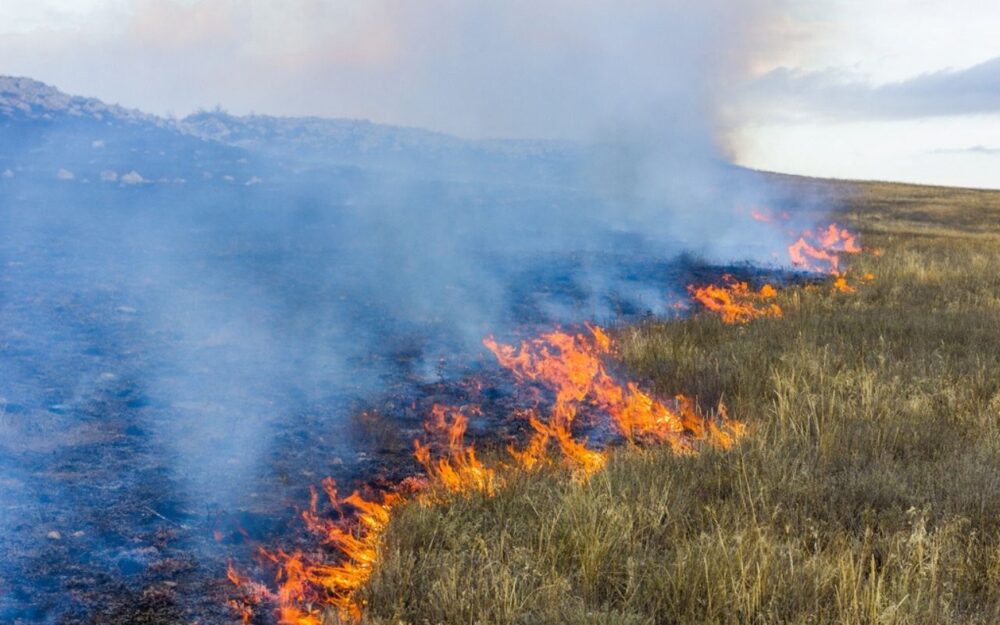

The summer of 2026 may, unfortunately, well be the coolest summer our planet will experience for decades to come. And as global warming accelerates, natural disasters such as the wildfires seen across the world this summer are likely to become increasingly devastating. What does this mean for industrial companies? And how can they better integrate these climate risks into their strategies? Our journalist Abigail Saltmarsh spoke with Théophile Bellouard, VP Altitude at AXA Climate, who argues that businesses can no longer focus solely on making their own infrastructure more resilient. They also need to better map and understand the production basins they depend on…and the risks threatening them.
Extreme heat, raging wildfires and prolonged low levels of rainfall have seen record-breaking climate conditions across Europe this summer. Elsewhere in the world, 2026 has witnessed heatwaves, earthquakes, and torrential rainfall, including, of course, the recent devastating floods in Nepal and Tibet.
Climate change has become a reality and while the calls for political leaders to hasten action to reduce carbon emissions continue, there is now also growing recognition that we need to accept the impacts of global temperature rises and take action to mitigate, prepare and adapt.
From an industry perspective, climate-related disasters result in the short and long-term costs of severely impaired productivity and massive disruption to supply chains. Causing major shockwaves from community level up to global commerce, this has given rise to an understanding that different methods of planning, smarter decision-making and much more flexibility and agility are now required.

Taking the Initiative
According to the European Environment Agency, the effects of worsening climate conditions could cut EU GDP by 7% by the end of the century, with estimated losses of EUR 2.4 trillion from 2031 to 2050 if warming permanently surpasses 1.5°C.
Insurance experts estimate that in 2024, global economic losses linked to climate- related events reached $320 billion. Yet, they say, only 6.5% of companies currently regard their supply chains as a priority material risk. And only 1 in 5 of them has a serious adaptation plan in place.
Théophile Bellouard, VP Altitude, AXA Climate believes that it is no longer enough for businesses to take steps to make their own sites, infrastructure and critical systems, more resilient. Now they must also look to the production basins on which they depend.
Altitude, a business unit within AXA Climate, provides its clients with software to support climate risk management and with its new Commodities feature, it aims to address this shift from site-level resilience to sector-level resilience:
“The mission we have in the product is to make our clients more autonomous in the way they measure their climate risk and the way they make decisions on climate risk to become more resilient. We do a lot of modelling to help them understand what they need to measure and what they can do with those measurements. Of course, it’s important to measure the risks on direct operations, on manufacturing sites, but we also know that a lot of climate risk comes from suppliers and from the supply chain.”
Tracking Back
Initially, he explains, a business would look at its suppliers and their facilities and manufacturing plants, which is easy to map. But when they start to look further back – to tier two, tier three and tier four, tracking can become difficult.
“But this is part of our expertise. We have agronomists and other experts who know how to look at climate vulnerability and climate exposure of agricultural raw materials. And we know how to expand those capabilities from agricultural raw materials to minerals and other commodities.”
He says this feature is already live for more than 80 commodities on the platform:
“And our experts know what their vulnerabilities are. They know if we need to look at heat waves, droughts, winds or temperatures, be it extreme heat or cold. The platform helps to make all of this much more understandable.”
Global Exposure
Events such as the wildfires seen in France, Spain and Italy this year, for example, can halt production or deliveries for specific parts of a supply chain. But when considering impact from a commodities angle too, especially when you are looking at major basins of production, the software shows how a wildfire, flood or drought in one country or continent might impact the price of commodities elsewhere.
“So even if your suppliers are not impacted, you could be impacted because of the shortages and the impact on prices. So you actually need to make sure you know what the exposure of your commodities is globally. You want to make sure that you are resilient, that you are diversified, that all your suppliers are not purchasing the commodities in the same place.”
Moving forward, he continues, the main challenge will be going from measuring the risk and the evolution of the risk to making adaptation an accepted business practice.
“Climate change is having real impact on jobs and on communities, but there are some companies that are well aware of that and are already taking action. We have clients, for example, who are making fabric and selling clothes in France, and they know their cotton suppliers in Turkey very well. They also know that over the next decades, Turkey will face more droughts and it will become more difficult to grow cotton there. But they want to help their suppliers to adapt and so they are acting now and they are willing to pay a bit more for their cotton now. This ensures their farmers have enough to invest in resilience and adaptation – changing practice and accepting to have smaller yields – if that is what it takes to still have cottons with high quality, high standards and the best labels in the next 10 years.”
For him, these are the kinds of initiatives that are about maintaining work and maintaining production in order to save jobs and save communities.