


An overhead crane can pass a visual inspection and still fail under load. Load testing is the controlled proof that a crane actually holds its rated capacity, and it is required at specific points in the equipment’s life. Here is what a load test proves, how it is performed, and when your facility needs one.
An overhead crane inspection tells you the condition of the equipment. A load test tells you what the crane can actually do under weight. Those are two different questions, and for a facility running lifting equipment, both need clear answers. A crane can look sound, pass a visual check, and still hide a weakness that only appears when a real load stresses the whole system. Load testing exists to find that weakness on purpose, in a controlled way, before it finds you during production.
What a Load Test Actually Proves
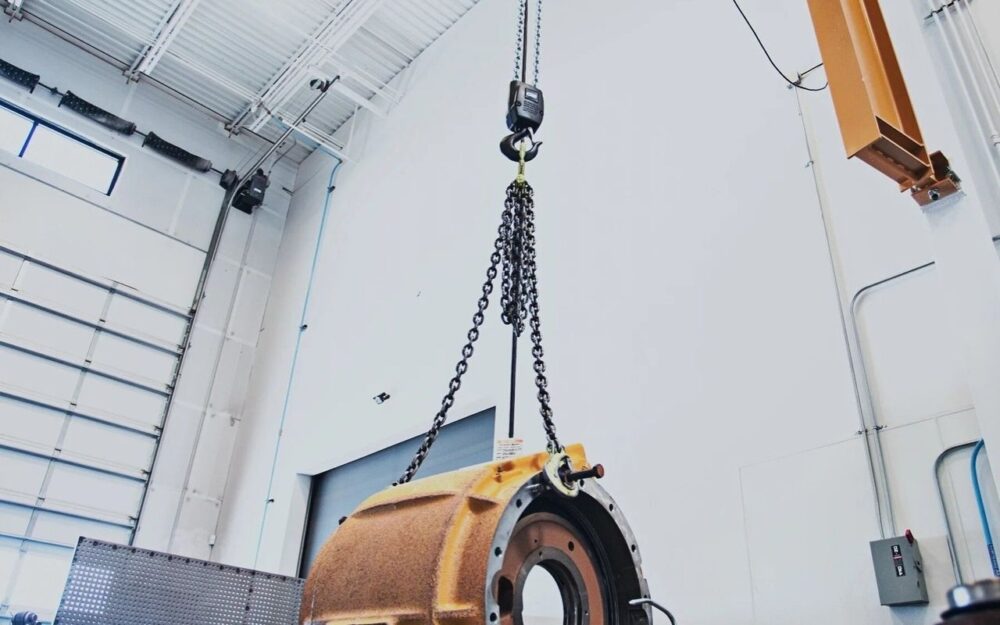
A load test is not simply lifting something heavy once. It is a controlled procedure that applies a known load to stress the entire load path at the same time: the hook, the wire rope or chain, the hoist, the trolley, the bridge, and the runway. The goal is to confirm three things at once:
- The structure and mechanisms carry the rated load without deformation or failure.
- The brakes hold the load without drifting.
- The crane travels, hoists, and stops safely while loaded.
Because the test applies stress deliberately and under supervision, any weakness reveals itself during the test rather than during a live lift over a worker. That is the core safety logic: a proof load is a test you would rather fail on the test floor than in service.
Static and Dynamic Testing
A complete load test usually has two parts. A static test applies a proof load and holds it without movement to confirm the structure and the brakes hold. A dynamic test then runs the crane through hoisting, trolley travel, and bridge travel while loaded, confirming that brakes, controls, and limit switches all function under real conditions. Certified, known test weights are used so the load is genuinely what it claims to be, and large-capacity cranes can be tested on site.
The Proof Load: How Much Weight
For new and altered cranes, the governing standard is OSHA 29 CFR 1910.179, which requires that a test load not exceed 125 percent of rated capacity, unless the manufacturer specifies otherwise, before the crane enters service. Consensus standards such as ASME B30.2 provide the same framework, and lighter percentages are common after repairs. The important point for a facility is that the number is defined, not arbitrary: a test above 125 percent risks overstressing the equipment, so the proof load is a controlled figure rather than a free overload.
When You Need a Load Test
A load test is called for at specific moments, not on a loose schedule:
- Before a newly installed crane goes into service for the first time.
- After a crane has been modified or altered in a way that affects its capacity.
- After repairs to load-bearing components such as the hoist, girder, or runway.
- On a periodic basis where a facility’s own program or local regulation requires it.
The common thread is change. Any time a crane is new, altered, or repaired, a visual inspection alone cannot confirm it is safe to lift its rated load. Only a test can.
Documentation Closes the Loop
A load test is only as useful as its record. A proper report notes the load applied, the functions verified, and confirmation that the crane passed, and it belongs in the compliance file. Pairing routine inspection with documented overhead crane load testing gives a facility both halves of the picture: condition and proven capacity. Together, they are what stand behind every safe lift.