

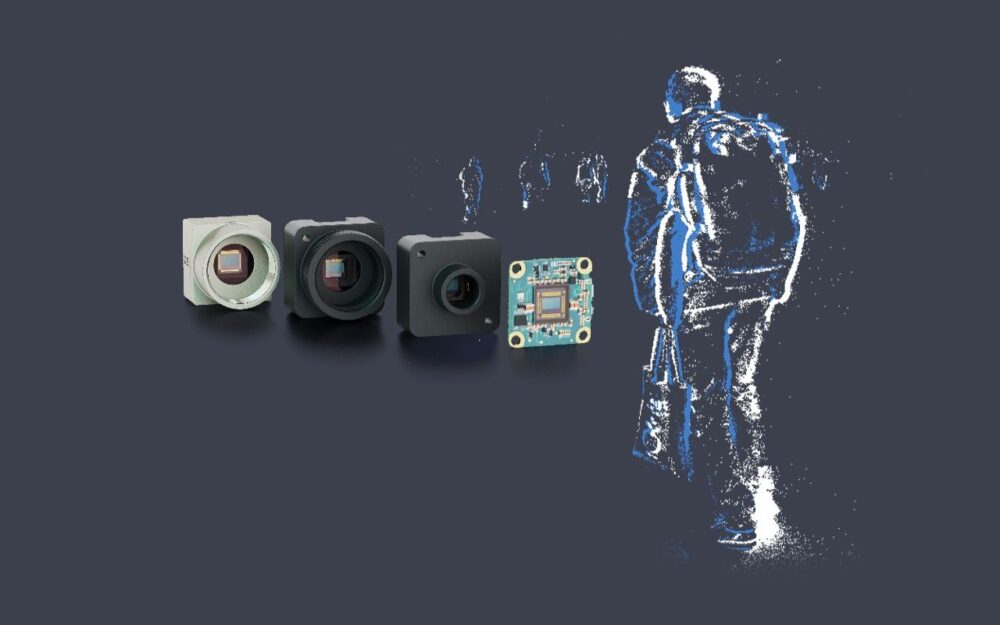

Fast and highly dynamic processes place growing demands on optical measurement systems. Conventional image‑based cameras face limitations such as motion blur and excessive data volumes. In this article, Silke von Gemmingen, Communication Specialist Corporate & Product at IDS explaines that event-based vision offers a fundamentally different approach that delivers precise measurement data where classical methods reach their limits.
By Silke von Gemmingen, Communication Specialist Corporate & Product at IDS
Anyone capturing fast movements quickly reaches the limits of conventional image processing. Motion blur affects accuracy, while high frame rates generate large volumes of data. Storage and processing requirements increase disproportionately to the actual gain in information. With the uEye EVS, IDS Imaging Development Systems follows a fundamentally different approach.
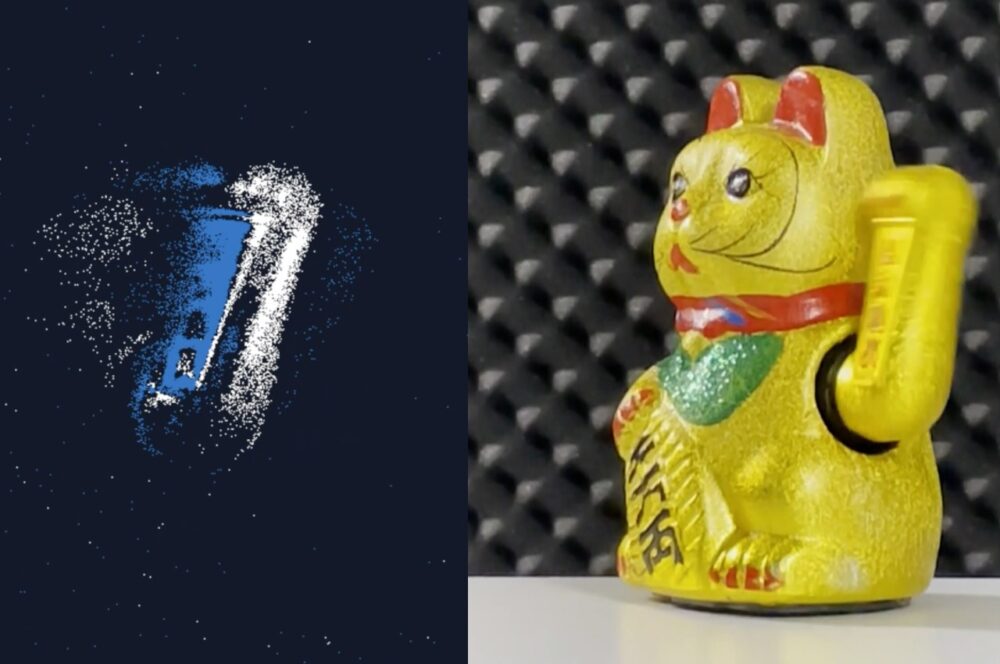
The key innovation does not lie in higher frame rates, but in the underlying principle. The uEye EVS works event‑based. Instead of generating image sequences, it registers only relevant changes within a scene at each individual sensor pixel. These changes are transferred as independent events in real time, while static image data is omitted. This results in high temporal accuracy combined with a significantly reduced data volume.
Microseconds instead of milliseconds
At the core of the camera is the event‑based vision sensor IMX636, developed by Sony and Prophesee. Unlike conventional image sensors, it does not read out full images at fixed intervals. Each pixel reacts independently to changes in light intensity. The resulting temporal resolution is below 100 microseconds, corresponding to an image‑based frame rate of well over 10,000 frames per second – without motion blur and without unnecessary data overhead.
This allows highly dynamic processes to be captured in real time. Rapid movements, high frequency oscillations, vibrations or fast‑changing processes can be recorded directly as motion, rather than reconstructed later from image sequences. Even small objects remain detectable at extreme speeds.
For Jürgen Hejna, Product Manager 2D Machine Vision, IDS Imaging Development Systems:
“Event-based cameras achieve a remarkable temporal resolution down to microseconds, making them ideal for highly dynamic scenes. The best prerequisites for capturing fast object movements without the loss of information that is unavoidable with image-based sensors.”
Less data, more efficient evaluation
Another key aspect of event‑based vision is efficiency. Because the uEye EVS transmits only events, it generates up to 1000 times less data than image‑based systems. Static areas in the scene produce no data at all.
This feature is particularly important for continuous monitoring, long-term measurements or the detection of fast-moving objects in an otherwise static environment. As a result, memory requirements, computational load and latencies are reduced, enabling stable real‑time analysis even on systems with limited computing resources.
Event-based imaging – higher speed, less data
Reliable results under challenging lighting
Event‑based sensor technology also offers a extremely high dynamic range. The uEye EVS operates reliably in difficult lighting conditions, including very low light environments. Thanks to the sensor architecture, contrast changes can still be detected where conventional image sensors reach their limits.
This makes the technology suitable for enclosed systems, selective illumination concepts and optically demanding environments where lighting conditions vary widely, for example in laboratory applications.
Two models – tailored to different needs
The uEye EVS camera line is available in two hardware variants:
- The uEye XCP‑E is a compact, fully enclosed industrial camera designed for applications requiring robust mechanics, standard optics and reliable connectivity.
- The uEye XLS‑E provides the same event‑based vision technology in an ultra‑slim board‑level design, so small that it fits directly into the lens holder. With minimal heat generation, it is suited for tightly integrated or thermally sensitive systems.
A new approach to capturing motion
The uEye EVS is not a conventional image sensor camera. It is based on event‑based vision and designed for detecting extremely fast processes efficiently. Therefore, it does not replace image‑based cameras. Instead, it complements existing imaging approaches, particularly wherever fast motion, precise timing and efficient data handling are required. This opens up additional possibilities across a wide range of applications, from dynamic analysis and industrial quality assurance to robotics and autonomous systems, including laboratory and metrology environments.
How-to simply get started with event-based cameras