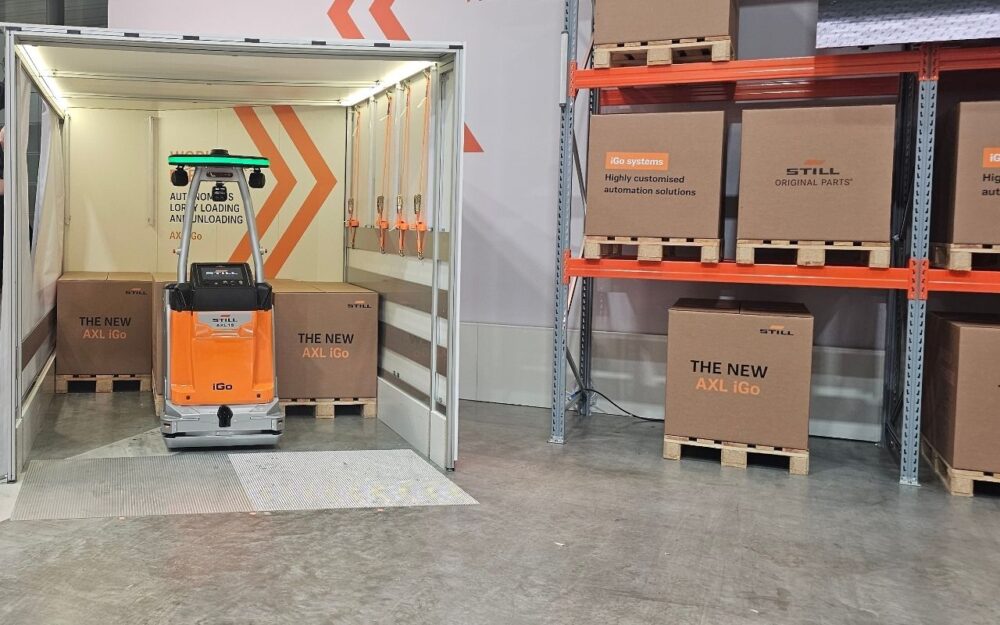


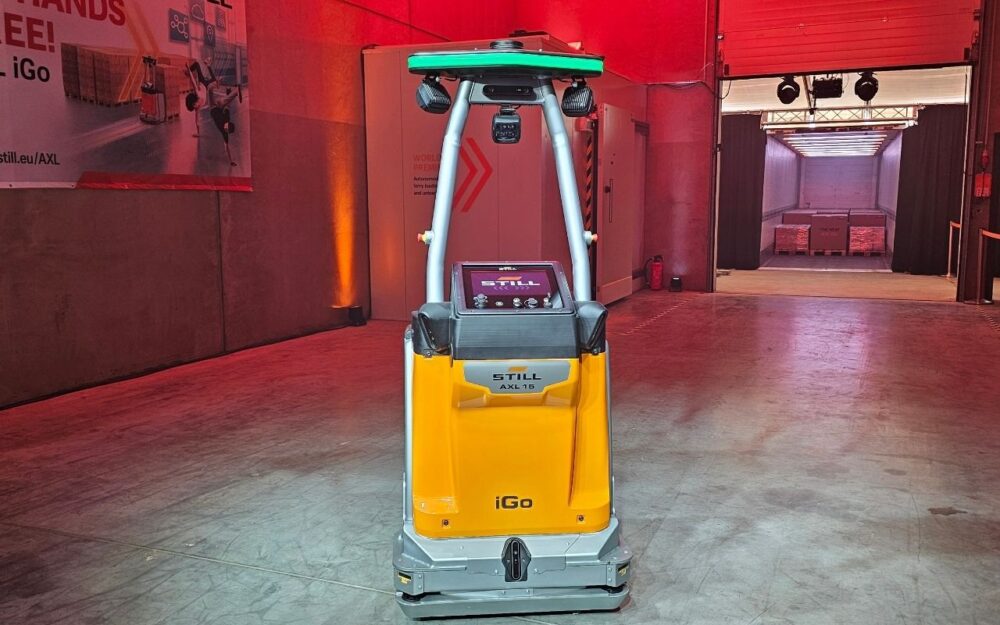

With the launch of the AXL 15 iGo, STILL brings automation to one of intralogistics’ most complex and least automated areas: the loading dock. We had the opportunity to discover this new autonomous pallet truck yesterday in an exclusive press session, ahead of its public debut at LogiMAT 2026 in Stuttgart. The Hamburg-based intralogistics specialist is closing what it calls the last major gap in warehouse automation: the handling of incoming and outgoing goods at the truck loading ramp, now fully autonomous and without the need for stationary safety infrastructure.
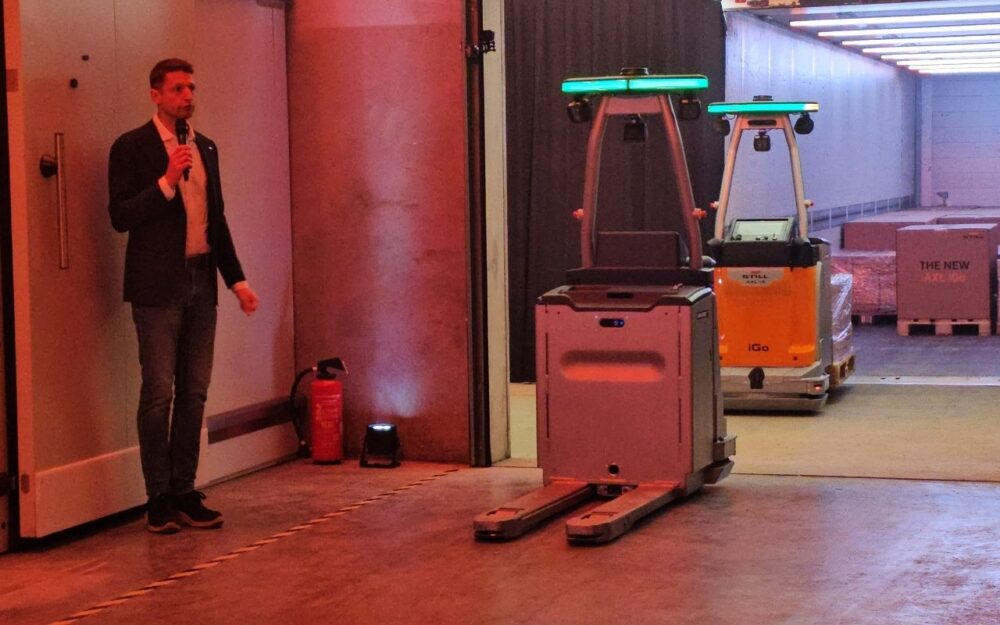
In modern warehouses, automation has become the norm. From high-bay storage to internal transport, robots and automated systems now handle a growing share of operations. Yet one critical process has long resisted this transformation: loading and unloading trucks at the dock, Florian Heydenreich, Executive Vice President Sales & Services at STILL explained during a press conference yesterday in Stuttgart:
“Throughout the industry, we have automated almost all processes. but there has always been one blind spot. This blind spot is now no longer a blind spot.”
At LogiMAT 2026, the Hamburg-based intralogistics specialist unveiled the AXL 15 iGo, a low lift pallet truck designed to autonomously load and unload trailers, without requiring any fixed safety infrastructure at the dock. But we had the opportunity to see it before.
A Complex and Stubborn Bottleneck
The dock area remains one of the most challenging environments in logistics. Unlike structured warehouse zones, it combines tight spaces, human-machine interaction and constant variability.
“Dock areas are busy and unstructured environments, where machines and people work together in very tight spaces,” explains Simone Dilling, team member in charge of the development of the AXL iGo. “You have heat in summer, cold in winter, night work, and constantly changing situations inside the trailer.”
Operational pressure only adds to the complexity. In many facilities, dedicated staff is no longer available.
“Dedicated loading staff is often missing, so employees from other areas have to step in,” Dilling adds.
For companies, the impact is significant. According to Jasper Van Gool, Account Manager Automated & Integrated Solutions at STILL, this process represents a substantial share of operational costs:
“Up to 20% of warehouse costs can be attributed to loading and unloading processes.”
Automation Goes Mainstream
The push to automate the dock comes at a time when automation itself is undergoing a broader shift.
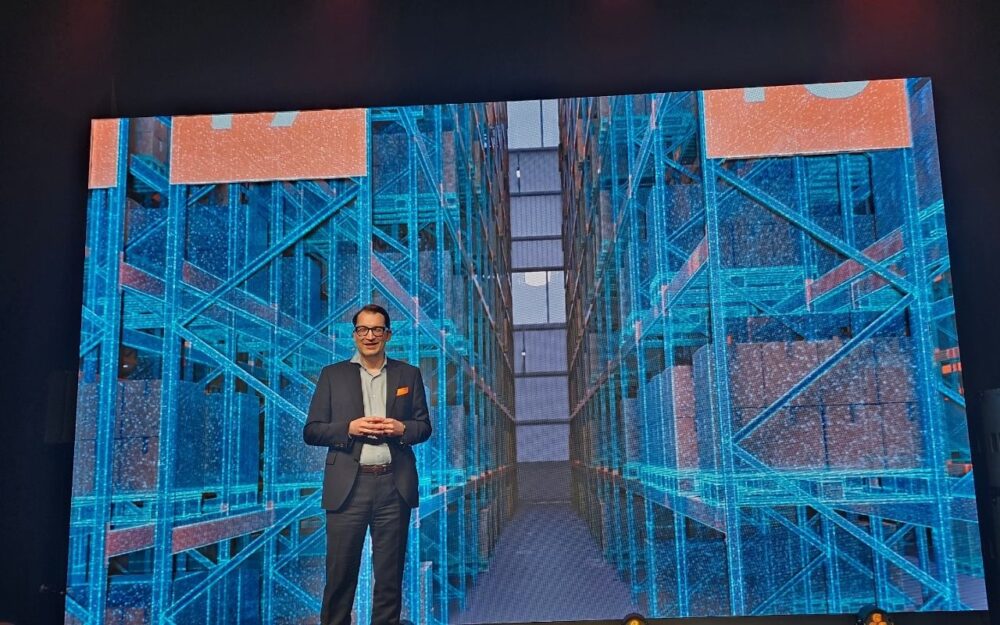
“Automation is not an exclusive playing field for a selected few customer segments,” says Heydenreich. “It is not limited to greenfield projects with perfect conditions, nor dependent on the budgets of large corporations.”
Instead, it is becoming a necessity. Companies are facing labor shortages, rising costs and increasing volatility across supply chains.
“We are all experiencing a shift. Automation is clearly becoming mainstream,” he adds.
AXL 15 iGo: a Vehicle-based Solution
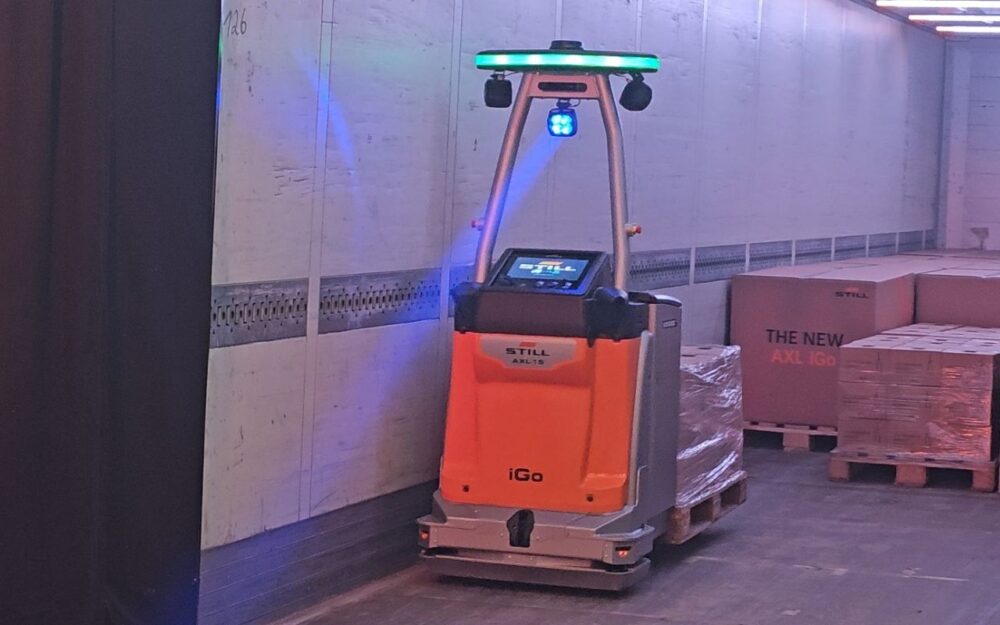
The AXL 15 iGo addresses this challenge with a fully autonomous, vehicle-based approach. Unlike other systems, it does not require any stationary safety equipment. All sensing, navigation, and safety functions are integrated into the pallet truck itself.
Technically, the vehicle combines:
- 3D visual SLAM technology for navigation outside the trailer, detecting obstacles and unexpected trailer movement.
- LiDAR-based localisation inside the trailer for centimetre-precise positioning.
- Integrated 3D pallet recognition to safely handle slightly misaligned or poorly positioned pallets.
- LiDAR safety scanners, cameras, and visual/acoustic warning signals to detect and protect people and obstacles even in confined spaces.
The vehicle (which can be both an AMR and an AGV depending on the task) is designed for single-level pallet handling. At this stage, it can handle one layer of pallets per trailer, not multiple pallets stacked on top of each other.
According to the company, two AXL 15 iGo trucks working together can autonomously load up to 30 EPAL pallets into a trailer in approximately 35 minutes, delivering a performance comparable to human operators but with consistent precision.
“It performs like a human operator, but with much greater consistency,” says Dilling. “We studied how humans work inside trailers and replicated that behavior in the vehicle, allowing precise placement even in complex or tight layouts.”
For customers, this consistency is critical, especially in time-sensitive logistics operations. Indeed, goods have to move quickly, within tight time windows, and without damage.
The AXL 15 iGo integrates seamlessly into existing warehouses. No additional dock space or safety installations are needed. This means normal operations can continue alongside autonomous processes. Operators can control and monitor the fleet via a browser interface accessible on laptops, tablets, or smartphones.
Automation For Every Warehouse
STILL positions the AXL 15 iGo as part of a broader strategy to deliver accessible, scalable automation across industries.
“Automation is not an exclusive playing field for a selected few customer segments,” says Florian Heydenreich. “It has to be accessible to almost every industry and every application. With this launch, we are taking a decisive step in the automated transformation of intralogistics.”
The solution is suitable for industries with high pallet turnover and standardized loading units, including 3PL service providers, retail, food logistics, and manufacturing. With a load capacity of up to 1,500 kg and a speed of up to 2 m/s, the AXL 15 iGo meets industrial requirements. Fleet integration is supported via the standard VDA 5050 interface, a fleet manager, and open APIs to warehouse management systems.
Safety at the Core
Safety remains a central concern in dock operations, where human interaction is unavoidable.
“At the dock, people from different backgrounds often have to interact under pressure, sometimes without a common language, which increases the risk of errors and accidents,” Dilling points out.
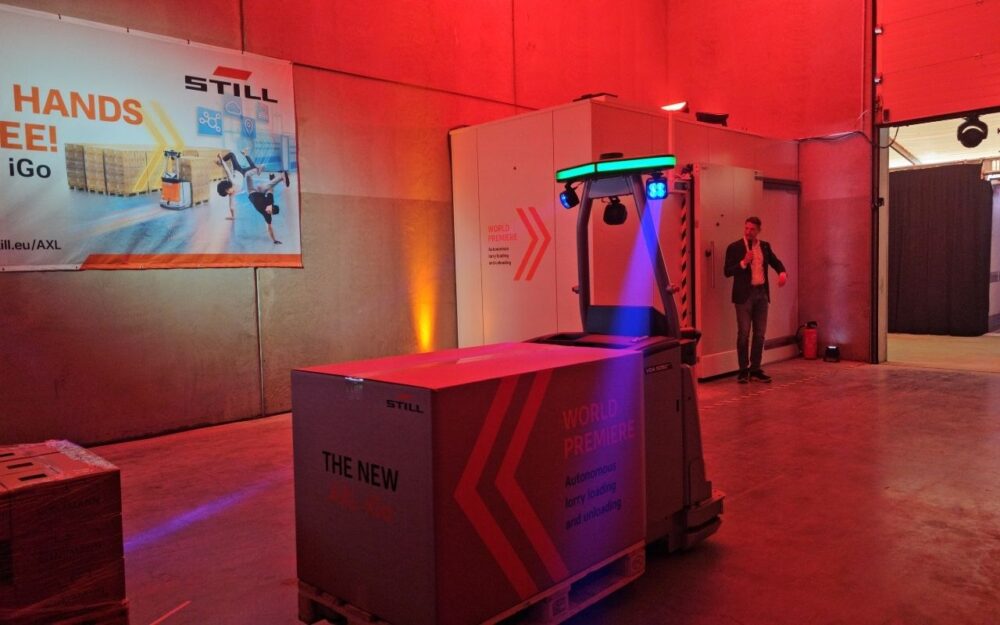
The system is therefore designed to operate under the assumption that people may be present at any time.
“Safety is the number one priority. The system always assumes that someone could be nearby,” she says. “If something unexpected happens, the vehicle can slow down or stop immediately.”
Real-world Validation in Retail Logistics
Early adopters are already testing the system in real-world operations. Jo Janssens, Technical Director of Colruyt Group, a family-owned retailer in Belgium, explains:
“We operate a highly intensive supply chain, with more than a thousand transports per day that need to be loaded and unloaded. Automating this process was the natural next step — and it has become a real catalyst in our automation journey.”
Colruyt has deployed over 20 autonomous vehicles in its distribution centers and is planning further expansion. The AXL 15 iGo is now running in a real-life environment and provides a dual function, performing both horizontal transport and trailer loading/unloading, while mimicking human behavior for precise pallet placement.
“The system allows us to maintain efficiency and cost control, while ensuring safety in interactions between people and machines,” Janssens adds. “We see its potential not only in retail but across other industries as well.”
As automation continues to expand across intralogistics, the ability to seamlessly connect warehouse operations with inbound and outbound transport could mark a decisive step forward.
The AXL 15 iGo can be seen on STILL’s booth at LogiMAT 2026 (Hall 10, Stands B40 and B41).