


With Diam Bouchage, the humble cork is becoming a high-precision oenological instrument. During a press conference held in Paris last week, the world’s second-largest cork producer, based in Céret in southern France, unveiled two new technologies designed to transform the way wines age in bottle: LiOX VT, which drastically reduces oxygen intake, and Moove, an on-demand permeability service allowing winemakers to tailor oxygen transfer with unprecedented precision.
Producing 2 billion corks every year across three production sites and selling them in 85 countries, French mid-sized company Diam Bouchage has become one of the global heavyweights of the cork industry since its creation in 2003. With €210 million in annual revenue and 750 employees, the company is betting on constant innovation in a wine industry weakened by declining consumption, climate change and shifting consumer habits.
As CEO Eric Feunteun puts it:
“In a struggling wine market, innovation is our reason for being, and our way forward. To strengthen Diam’s position across all markets, we decided to launch four innovations a year.”
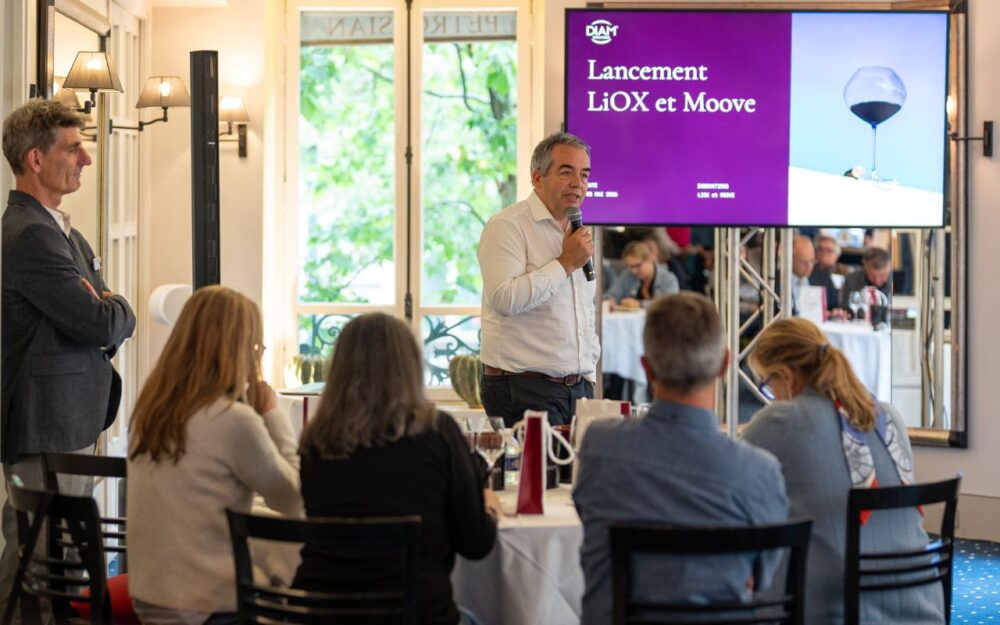
To showcase two of those innovations, the company invited around fifteen journalists to the elegant private salons of Petrossian in Paris. Because wine is serious business. Every year, 18 billion still wine bottles and 3.5 billion sparkling wine bottles are produced worldwide. And behind every one of those bottles, one invisible actor continues to shape the wine’s destiny: the cork. That is precisely where Diam believes innovation still matters.
The Cork, Wine’s Invisible Conductor
If cork has remained indispensable since Antiquity, it is because of its unique cellular structure, capable of maintaining elasticity for decades while remaining watertight. But this natural material also has its flaws. Every cork behaves differently, oxygen transfer can vary significantly, and there is always the risk of TCA contamination, the dreaded “cork taint.”
Diam claims to have changed the game twenty-two years ago by developing a supercritical CO2 cleaning process, explains François Margot, Diam’s Marketing and Sales Director:
“We remove more than 150 undesirable molecules, transforming a naturally heterogeneous material into a homogeneous cork, both in terms of sensory neutrality and oxygen management.”
To achieve this consistency, the company granulates the cork, removes woody particles, then reconstructs the material using more than 95% cork combined with either bio-based or petro-based binders.
The stakes are high because once wine is bottled, the cork becomes the main factor governing its evolution, Margot says:
“Before bottling, winemakers can intervene however they want. After bottling, everything depends on how much oxygen the cork allows through.”
Oxygen, the Invisible Thread Shaping Wine
Wine ageing relies on an extremely fragile balance. Too little oxygen and reductive aromas appear, producing sulphurous notes. Too much oxygen and the wine moves towards premature oxidation. Margot insists:
“It’s somewhere in between, when oxygen intake is perfectly balanced, that harmony is achieved.”
Diam identifies two key phases in this process: OIR, or Oxygen Initial Release, corresponding to the oxygen released by the cork during the first months after bottling, and OTR, the Oxygen Transmission Rate over the years. It is precisely around those two parameters that Diam has developed its latest technologies.
LiOX VT, the Cork Designed to Protect Sensitive Wines
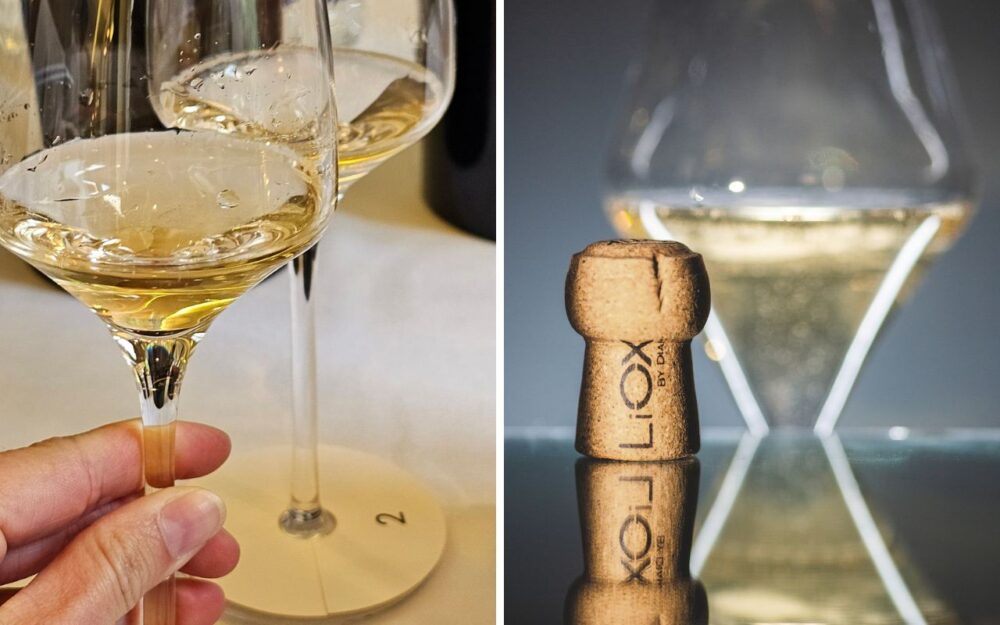
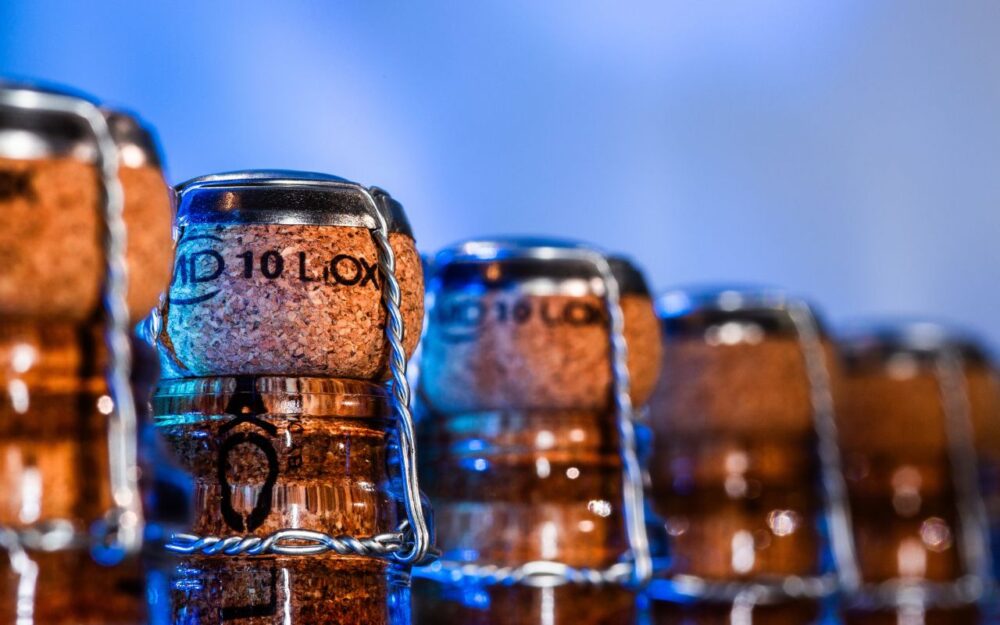
The first innovation unveiled during the event was LiOX, a cork technology acting directly on the crucial OIR phase during the first six months of a wine’s life in bottle. After proving successful with Champagne and sparkling wine producers, the technology is now being extended to still wines under the name LiOX VT (vins tranquilles in French)
The concept is straightforward: replace part of the oxygen naturally trapped inside the cork cells with CO2, which is neutral for wine. Nicolas Galy, Diam’s R&D engineer and one of the minds behind the innovation explained:
“We use supercritical CO2 at pressures reaching 100 bars. The ambient air leaves the cork cells and CO2 replaces it. As a result, far less oxygen enters the bottle during corking. Oxygen intake can be reduced by half during the first 200 days after bottling.”
During a comparative tasting held at the press conference, we sampled two identical Champagnes sealed with a classic Diam cork and a LiOX cork containing half the oxygen intake (1.1 mg versus 2.1 mg). After only six months, the aromatic differences were already noticeable.
The technology specifically targets oxidation-sensitive wines such as white Burgundies, low-sulphite wines, alcohol-free wines and highly aromatic profiles seeking freshness and mineral tension.
Moove, or How to Choose a Wine’s Aromatic Future
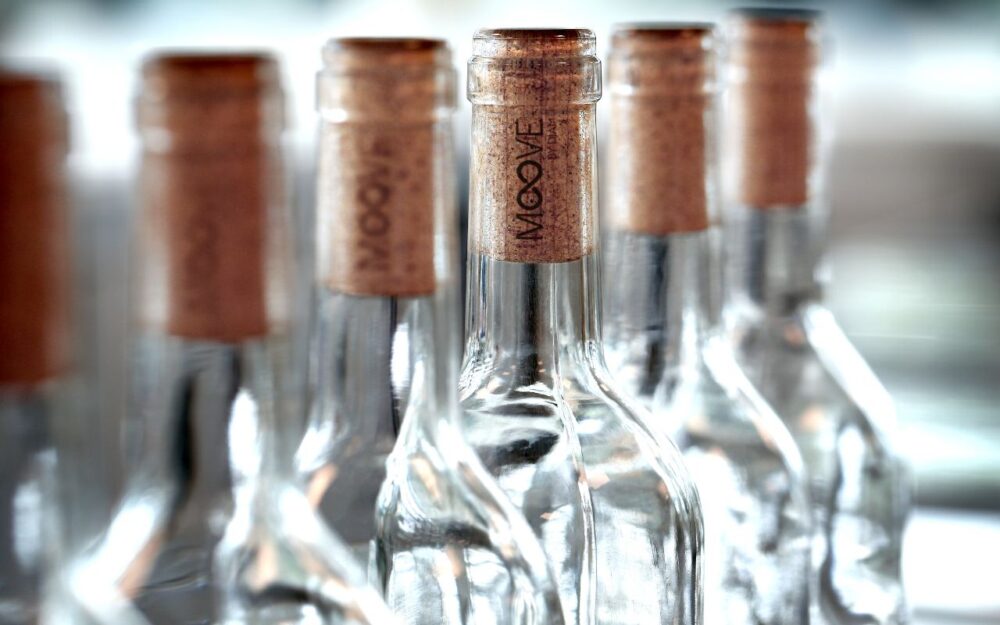
Diam’s second innovation pushes oxygen management even further. Called Moove, the technology is in fact a new service allowing winemakers to select the exact permeability level of their corks depending on the wine style they seek. The cork is no longer just a closure. It becomes an aromatic steering tool, Nicolas Galy says:
“The revolution here is that we can offer highly targeted, high-precision permeability on demand.”
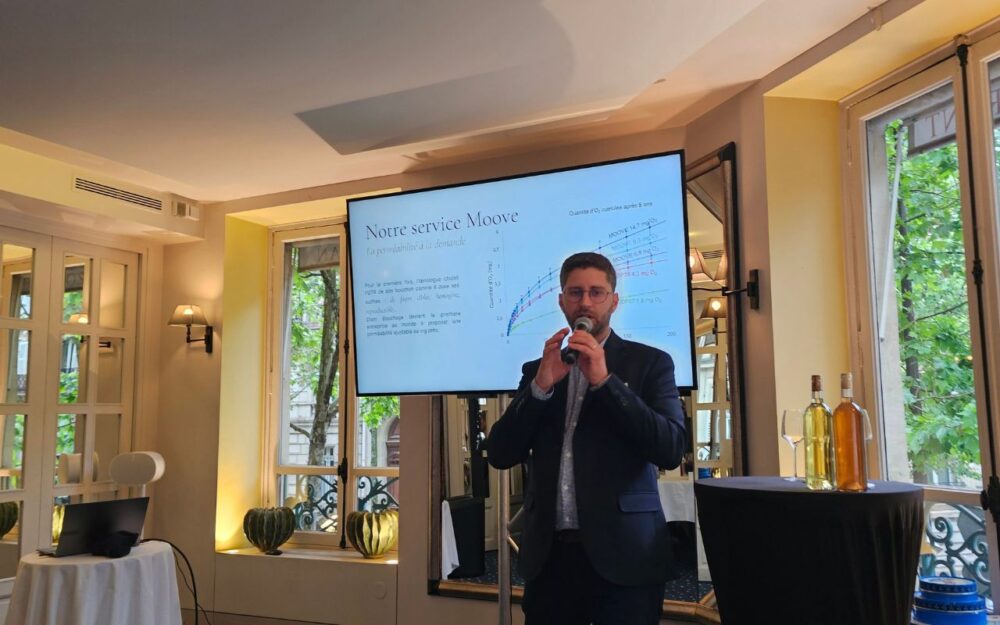
In practical terms, Diam corks can now allow anywhere from 0.3 milligrams of oxygen per year to more than 4 milligrams, which is an unprecedented range in the industry. To deliberately increase oxygen transfer, Diam developed a patented process creating “preferential channels” inside the cork.
“By multiplying these channels, we multiply the oxygen entry points,” Galy explains.
The objective is not to oxidise wines, but to give producers a way to shape their aromatic evolution depending on the closure selected. Some corks may favour freshness and mineral tension in white wines, while others may encourage roundness and mature fruit expression in reds. Christophe Loisel, head of the R&D department summarises:
“With a very tight cork, wines tend towards minerality. With a more permeable cork, they move towards richness and sweetness.”
Diam already envisions these corks being used on Bordeaux reds, Rioja wines, Bandol wines and certain Italian wines requiring greater aromatic openness.
Innovating in One of Wine’s Most Traditional Sectors
Technological innovation around cork may sound paradoxical in a wine world deeply attached to tradition. Yet Diam believes the future of cork depends precisely on its ability to evolve. In a fast-changing wine market, the cork industry now faces new challenges: declining cork resources, environmental pressure, the rise of screwcaps and changing drinking habits, especially around low- and no-alcohol wines. Plastic corks, however, appear to be losing ground rapidly, CEO Eric Feunteun stated:
“A few years ago, plastic corks represented up to three billion units. Today we are well below one billion.”
Screwcaps continue to grow thanks to their consistency, although rising aluminium costs could reshape the market again.
To adapt, Diam is also investing in aesthetics and sustainability. Its new “Collection” range reproduces the appearance of traditional natural cork thanks to a thin cork veneer while maintaining Diam’s technological performance.
The company is also developing corks containing bio-based binders and working on reducing its CO2 emissions, already down 25% over the past five years.
Diam is also expanding into spirits with closures designed to prevent colour alteration in white spirits and stoppers incorporating by-products from whisky distillation.
Behind all these innovations lies a broader philosophy: the cork is no longer just a bottle closure. It is becoming a genuine tool for shaping taste, the final oenological act, and perhaps even a new stylistic signature for winemakers.
You could also be interested in this story on another French precious produc