



This article is a practical guide outlining the key steps for implementing industrial AI in mid-sized manufacturing companies. It explains how to assess readiness, run pilot projects, manage data effectively, and scale systems that deliver real results.
Industrial AI sounds big. In practice, it shows up in very specific places. A camera catching defects your inspectors miss, or a vibration signal warning you that a bearing will fail next week. Or a scheduler reworking the plan after a machine goes down, without waiting for someone to rebuild it in Excel. That’s the level this works at.
No one installs “AI” and fixes a factory overnight. You layer it into what already exists, like maintenance routines, quality checks, and production planning. The impact is measurable when it’s done properly.
McKinsey puts predictive maintenance at 10–40% lower maintenance costs and up to 50% less downtime.
The World Economic Forum has documented consistent double-digit gains in productivity and lead times across factories that scale these systems.
This article walks through what it actually takes to implement industrial AI in a mid-sized manufacturing environment, where to start, what to fix before you touch a model, and how to scale something beyond a pilot without it falling apart.
Assessing Readiness for AI Implementation
Most teams get this backwards. They start looking at vendors before they understand their own floor.
That’s where things break.
The plants that actually see results do the boring work first: mapping processes, identifying bottlenecks, and figuring out where data is unreliable.
Gavin Yi, CEO & Founder of Yijin Solution, works with manufacturers optimizing precision workflows and production systems, where small variations in process can compound into larger quality issues. He explains,
“When teams start looking at AI, they often assume the problem sits in the machine or the model. What we see more often is inconsistency earlier in the process, tolerances interpreted differently across shifts, or data that looks clean in the system but doesn’t match what’s happening on the floor.
If that foundation isn’t consistent, the model ends up learning patterns that aren’t stable. It might still produce outputs, but those outputs won’t hold up under real production conditions, and that’s usually when operators stop trusting it.”
You don’t need a framework to start. You need clarity in three areas.
Technology
- Are your critical machines even connected?
- Do you trust your data, or are tag names inconsistent and sensors drifting?
- Is there a clean path between OT and IT, or are systems still isolated?
If your data isn’t usable, nothing on top of it will be.
People
- Who actually owns the data? Not in theory—day to day.
- Can maintenance, quality, and operations sit together and agree on what a defect means?
- Will supervisors trust a model enough to act on it?
If the answer is no, the issue isn’t technical.
Funding and governance
- Who decides if a pilot continues or stops?
- What counts as success?
- Who signs off when something changes on the line?
Without that, pilots drag. Or worse, they succeed but never scale. One exercise tends to expose most issues. Pick one product line. Follow it end to end. Track every data handoff. Build a clean tag dictionary. Write down what your best operators know but have never documented.
If you can’t measure cycle time per station, or your defect codes overlap, fix that first.
Building a Roadmap for AI Integration
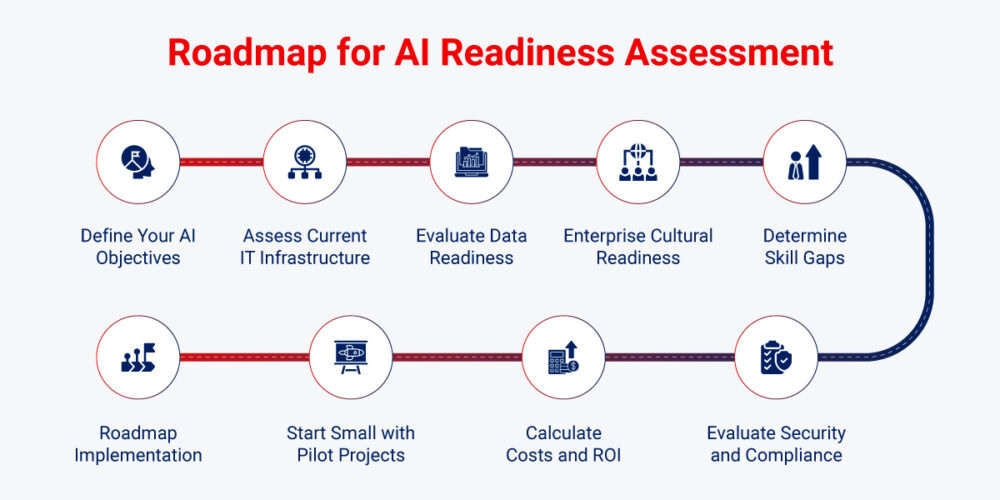
Treat this like a capital program. Not an experiment. The structure matters more than the tools. A workable roadmap looks like this:
Discover
Pick 2–3 problems that actually hurt, like downtime, scrap, and energy spikes. Define what “better” looks like. Identify what data you’re missing.
Pilot
One line. One use case. 60–90 days. Pick clear metrics and a rollback plan.
Industrialize
If it works, make it repeatable. Add change control. Training. Integration with MES or ERP. This is where most pilots die because they weren’t operationalized.
Scale
Copy what worked. Standardize data and interfaces. Build internal playbooks so you’re not reinventing the process each time.
Evolve
Only after the basics run reliably. Then you look at closed-loop control or more advanced optimization.
Most importantly, set goals that can’t be argued.
“Reduce downtime” isn’t a goal.
“Reduce unplanned downtime on Press Line 3 by 20% within two quarters, validated by CMMS logs”, that is.
Tie it to an owner. Review it weekly. Decide and act.
Wade O’Shea, Founder of BusCharter.com.au, runs large-scale transport operations where schedules need to adjust constantly in response to delays, cancellations, and changing conditions. He says,
“Planning systems always look effective when everything runs as expected. The real pressure shows up when vehicles run late, routes shift, or drivers become unavailable at short notice. What matters at that point isn’t how optimized the original plan was, but how quickly the system can adjust without creating confusion for the people executing it. If the response isn’t clear or reliable, teams fall back to manual workarounds.”
Investing in the Right Technologies and Skills
The shortlist doesn’t change much across plants.
- Predictive maintenance
- Vision systems
- Predictive quality
- Scheduling optimization
- Energy management
- Basic copilots for troubleshooting
Architecture
Architecture decisions are usually the easy part. Edge handles latency and control on the floor. Cloud handles training, history, and coordination across sites. Most teams land on a hybrid setup fairly quickly, and it works.
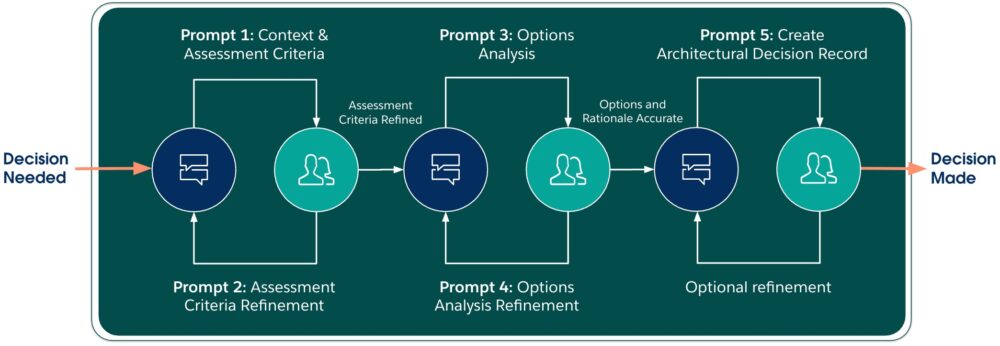
Where things get harder is everything around it.
Workforce Adoption
Adoption depends on the people running the line. Operators already understand the process better than any model, and if they don’t trust what they’re seeing, they won’t act on it.
In some cases, they ignore alerts altogether, which makes the system look ineffective even when it isn’t.

Nick Wiese, Regional Vice President at Alpha Heating & Air, manages field teams where technicians make real-time decisions based on system recommendations and on-site conditions. He notes,
“The issue usually comes down to trust. If a technician gets a recommendation that doesn’t match what they’re seeing in the field, even once or twice, they start relying on their own judgment again. After that, the system becomes something they check occasionally, not something they depend on. It’s not about whether the data is right, it’s about whether it holds up consistently enough for someone to act on it without second-guessing.”
That’s usually where implementations stall.
Upskilling
Upskilling works when it’s tied to real tasks.
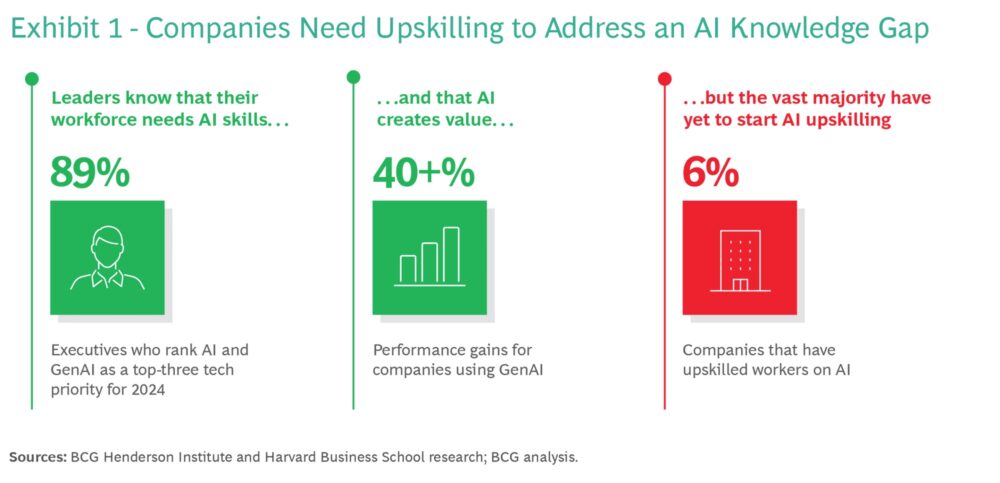
Technicians need to understand what an alert actually means and when it matters. Quality teams need consistency in how defects are labeled, the model starts drifting. Engineers need enough depth to recognize when outputs stop lining up with reality and dig into why.
Supervisors matter more than most teams expect, because they’re the ones making the call in real time, whether to trust the system or override it.
Vendors
Vendor selection comes into play once that foundation is in place. The priority isn’t the most advanced model, but whether the vendor understands your process.
It’s worth being direct about how easily you can access your data, how updates are handled, and what it actually costs to run beyond the pilot.
If those answers are unclear, the problems tend to show up later, when it’s harder to change direction.
Data Management and Security Considerations
Most teams try to collect everything. That usually makes things worse. Start with the signals that actually explain outcomes.
Jeff Zhou, CEO of Fig Loans, oversees high-volume decision systems where outcomes depend on how consistently data is captured and interpreted. He explains,
“The assumption is usually that more data leads to better decisions. In practice, the issue is whether the data is consistent enough to support those decisions. If inputs are defined differently across systems or over time, models start picking up patterns that don’t translate into real outcomes. The focus has to be on whether the data reflects something stable and actionable, not just whether there’s more of it.”
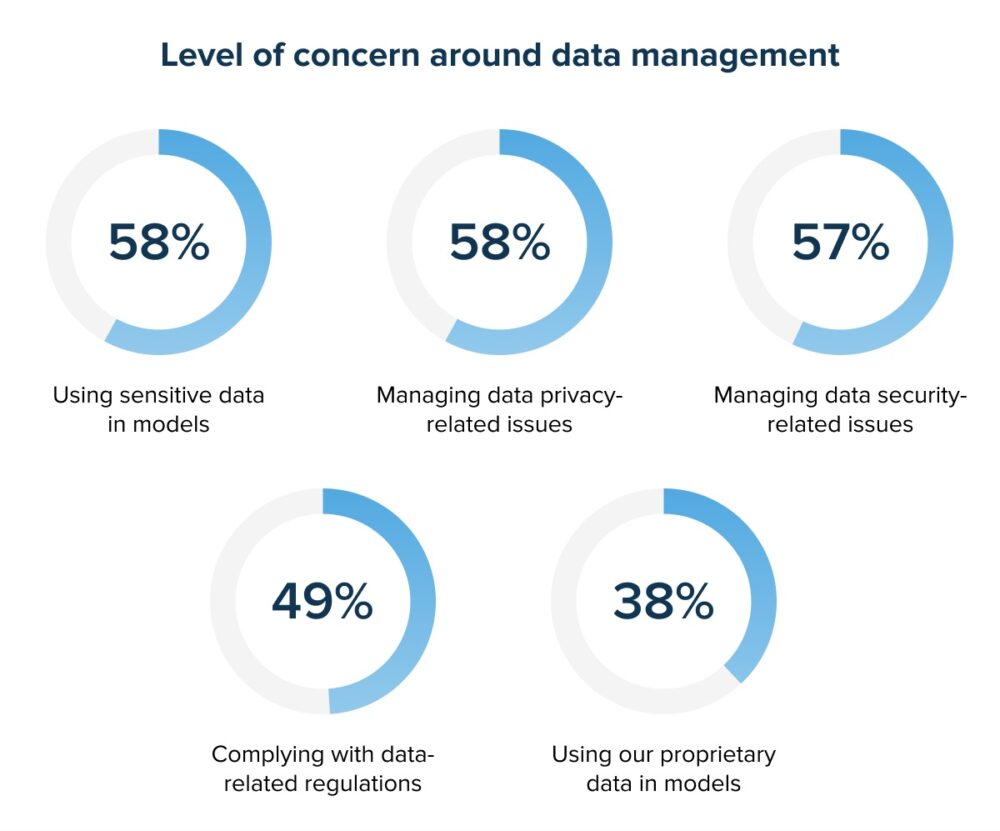
Standardize naming. Units. Time sync.
If one system logs in minutes and another in seconds, you’ll spend more time fixing data than using it.
Manufacturing data is increasingly targeted. And once systems connect, the attack surface expands.
The basics still apply:
- Role-based access
- Network segmentation
- Encryption
- Vendor checks.
Use established frameworks like IEC/ISA 62443, ISO 27001, NIST AI RMF, and NIST SP 800-82. They exist for a reason.
If cameras or personal data are involved, GDPR comes into play.
Monitoring and Evaluating AI Performance
If you don’t measure it, don’t scale it. Define KPIs before anything goes live.
- Operations metrics: downtime, OEE, yield, scrap.
- Model metrics: precision, false alarms, and drift.
Make monitoring routine.
- Set thresholds.
- Trigger alerts.
- Have clear actions tied to those alerts.
And review it weekly, with operations, maintenance, and data in the same room.
Future Trends in Industrial AI
The shift is already happening. From recommendations… to actions. Systems won’t just suggest changes. They’ll adjust setpoints within defined limits.
You’ll see more multimodal systems combining sensor data, images, and maintenance notes to get to root causes faster. Foundation models tailored to industrial data will reduce the amount of labeling needed. Digital twins will get more realistic. More useful.
Taking the First Step
The plants that benefit from this aren’t waiting for it. They’re building flexible data architectures now. Standardizing. Keeping things modular. So when better models come in, they can plug them in without starting over.
Disciplined deployments, focused, measurable, repeatable, are what drive real gains. Not big, unfocused transformations.