




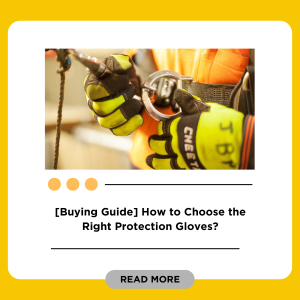
![[Buying Guide] How to Choose the Right Protection Gloves?](/wp-content/uploads/sites/3/Gloves-1-1000x625.jpg)

Your hands are among the most exposed parts of the body on a worksite — handling sharp objects, heavy loads, chemicals, heat, cold, or slippery surfaces. Choosing the right protective gloves is not just about compliance: it’s about ensuring that protection matches the hazards, while preserving comfort, dexterity, and durability for daily use. This guide helps you identify the right type of glove for each situation.
Gloves are protective equipment whose purpose is to cover and protect the operator’s hands. Gloves have a wide variety of industrial applications: handling, thermal protection, protection against the cold, dielectric and chemical materials, cuts, etc.
Frequently Asked Questions
HOW TO CHOOSE PROTECTIVE GLOVES?
Identify the hazards your hands will face — mechanical (cuts, abrasion, puncture), chemical, thermal (heat or cold), electric or contact with liquids. Select gloves certified for the relevant risks, and choose materials appropriate to the task. Prioritize the correct size and fit to ensure safety and dexterity; ensure comfort and suitability for duration and environment of use.
WHAT ARE THE DIFFERENT TYPES OF PROTECTION GLOVES?
Common types include: • Mechanical‑protection gloves (resistant to abrasion, cuts, tearing, perforation) — for general handling, metalwork, etc. • Chemical‑protection gloves — for handling solvents, oils, acids, chemicals. • Thermal‑protection gloves (heat or cold) — for work with high or low temperatures. • Electrical‑insulating gloves — for work on or near live electrical systems. • Light‑duty gloves (e.g. cotton or textile) — for low‑risk tasks or as liner under heavier gloves.
WHICH MATERIAL SHOULD I CHOOSE FOR MY PROTECTION GLOVES?
The choice of material depends on the risk: • For chemical resistance: nitrile, PVC, neoprene, butyl rubber, depending on chemicals. • For mechanical risks (cuts, abrasion): leather, reinforced textile (Kevlar/HPPE), metal‑mesh for cut‑resistant tasks. • For heat or flame: leather, aluminized or heat‑resistant fabrics. • For cold or waterproof needs: insulated, waterproof gloves (e.g. neoprene, insulated rubber, specialized cold‑resistant materials). For precision tasks, use thinner materials (nitrile, PVC) to preserve dexterity; for heavy‑duty or hazardous tasks, prefer thicker, more protective materials.
WHEN SHOULD YOU USE POWDERED GLOVES?
Powdered gloves — often latex, vinyl or nitrile — are suitable for short‑duration, low‑risk tasks needing hygiene, ease of donning/doffing or frequent glove changes (e.g. laboratory work, medical, handling non‑hazardous items). They are less suitable for heavy‑duty, chemical or high‑risk work, because powder may pose contamination or allergy issues, and their thin material offers limited mechanical or chemical protection.
SHOULD I CHOOSE DISPOSABLE OR REUSABLE GLOVES?
Disposable gloves provide convenience, hygiene and dexterity for light tasks, short contact, or where frequent change is needed (e.g. medical, food, light maintenance). For tasks with higher mechanical, chemical or thermal risk — or repeated use — reusable gloves are preferable, as they offer stronger protection and durability. Always assess risks, contact type/duration and required protection when deciding.
WHAT ARE THE DIFFERENT CLASSES OF PROTECTION GLOVES?
In the European PPE classification, gloves are divided into three categories according to risk level: Category I for minimal risks (simple tasks, low exposure), Category II for intermediate risks (common industrial tasks — mechanical, thermal, etc.), and Category III for major risks (chemical hazards, serious health threats). Gloves must meet relevant standards (e.g. EN 388, EN 374, EN 407, EN 511) depending on hazard type and required protection level.
Protective Gloves – Quick Comparison
| Glove Type / Material | Main Strengths | Hazards Addressed | Typical Use / Environment |
|---|---|---|---|
| Nitrile / PVC coated textile | Chemical & oil resistance, good grip, flexible | Oils, solvents, liquids | Maintenance, labs, automotive, workshops |
| Leather / Split-leather | Durable, abrasion & light heat resistance | Abrasive surfaces, sparks, rough handling | Construction, welding, heavy-duty handling |
| Cut-resistant textiles (HPPE, Kevlar) | High cut/tear resistance, good dexterity | Sharp edges, metal, glass | Metalworking, glass handling, precision tasks |
| Thermal / Heat-resistant | Protects against high temperatures & flames | Heat, fire, hot materials | Foundry, welding, metalwork |
| Insulated / Cold-resistant | Thermal insulation, waterproof, comfortable in cold | Cold, wet environments | Cold storage, outdoor winter work, refrigeration |
| Disposable (Latex / Nitrile / Vinyl) | Hygienic, dexterous, easy to change | Low-risk tasks, contamination | Medical, food, laboratory, light maintenance |
Checklist: Key Considerations Before Buying Gloves
- Identify hazards: mechanical, chemical, thermal, electrical, liquids.
- Verify relevant standards/certifications: EN 388, EN 374, EN 407, EN 511.
- Select material suited to risk: nitrile, PVC, leather, HPPE/Kevlar, thermal/insulating fabrics.
- Ensure proper sizing and fit for safety and dexterity.
- Balance protection and dexterity according to task precision and risk level.
- Consider comfort and ergonomics for prolonged wear: breathability, flexibility, grip, insulation.
- Decide between disposable vs reusable gloves based on frequency of use, hygiene and protection needs.
- Inspect and replace gloves regularly; discard damaged or worn gloves.
What Experts Told Us
We reached out to leading professionals in protective gear, sports equipment, and wearable technology to get their insights on how innovation is shaping performance, safety, and user experience in gloves. Here’s what they had to share:
— Mostyn Thomas, General Manager at D3O
— Christian Hilber, Product Manager at Reusch Goalkeeping
— Keith McMillen †, CEO of BeBop Sensors


![Image [BUYING GUIDE] How to Choose the Right Industrial Robot?](/wp-content/uploads/sites/3/Industrial-Robot-320x213.jpg)

![Image [Buying Guide] How to Choose the Right Safety Shoes?](/wp-content/uploads/sites/3/Safety-Shoes-320x213.jpg)


![Image [Buying Guide] How to Choose the Right AMR?](/wp-content/uploads/sites/3/AMR-320x213.jpg)