




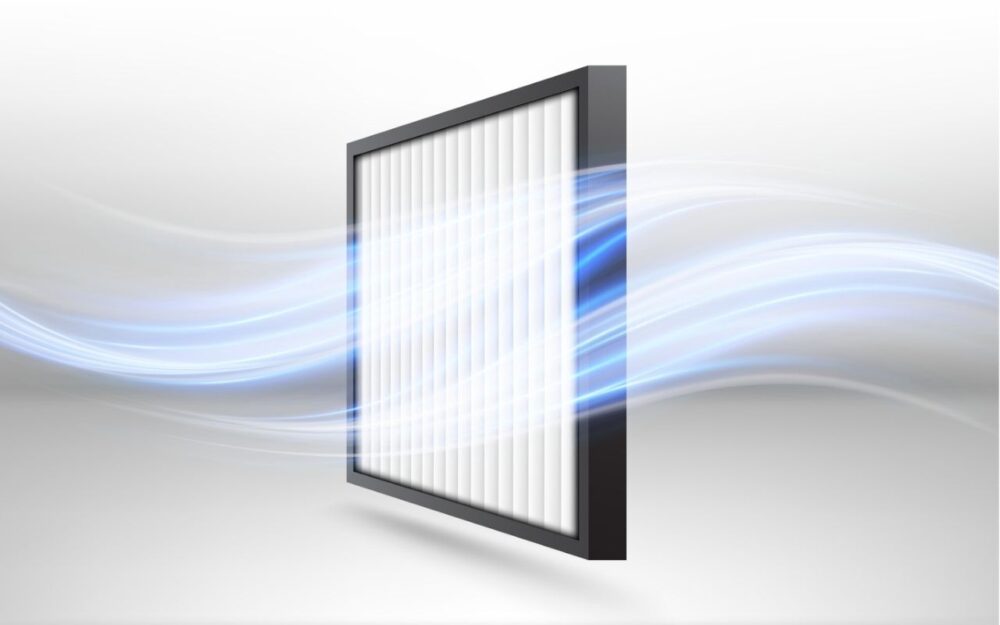

Green air filtration is a process that involves replacing older equipment with high-performance components to achieve greater energy efficiency. This enables industries to significantly reduce their carbon footprints. As pressure mounts to future-proof operations, leaders must utilize the latest tools and practices to drive transformative change. Fortunately, modern inventions, from plant-derived filters to advanced technologies, reshape how organizations address resource consumption, workplace safety and environmental responsibility.
The Environmental Footprint of Traditional Filtration Systems
Traditional industrial air filtration systems were once a mainstay of manufacturing and heavy processes. They would usually depend on synthetic materials like fiberglass, polyester and nonrecyclable polymers. Throughout the decades, they have contributed significantly to various environmental burdens, from ample emissions to resource depletion and substantial waste at the end-of-life cycle.
Although the equipment has demonstrated high performance in capturing particulate matter and chemical pollutants, it requires a significant amount of energy — comparable to that needed by dust collectors and electrostatic scrubbers — for large-scale production. This considerable electricity consumption has dramatically increased facilities’ energy budgets and greenhouse gases.
But sustainable materials are now at the forefront of cutting-edge industrial air filtration. Modern systems often utilize cellulose fibers, bioplastics and recycled synthetic fibers instead of petroleum-derived media.
Setting the Standard for Eco-Efficient Filtration
Bioplastics, for example, are derived from plant sources and are highly recyclable. Polylactic acid, a commonly used bioplastic, emits up to 70% fewer greenhouse gases in landfills compared to conventional plastics. Under the right conditions, they are also biodegradable, which means they alleviate pressure on the environment and waste streams.
However there are challenges. The primary one lies in the performance of these materials. Although some are similar to traditional filtration systems, others exhibit less capability and durability. Yet, the environmental trade-off is lower resource use, improved air quality and easier end-of-life processing.
Another area of interest is the recycling and regeneration of polymeric membranes, which engineers have employed in water treatment. These materials have potential applications in air filtration technologies, particularly where membrane-based capture of ultrafine particles is required. With adaptation in industrial filtration systems, a more circular approach from membrane science will be essential to minimizing waste.
Overall, these developments are critical given the concerns around public health and the economic implications of air pollution. For instance, research shows that aerosols can contribute to a 66% increase in societal costs associated with greenhouse gas emissions.
Engineering for Efficiency With Smart Filtration Systems
Intelligent Control
Advanced filter media and integrated smart technologies are now a cornerstone of high-efficiency air filtration systems. The combination maximizes performance and reduces environmental impact by deploying IoT sensors for monitoring continuous airflow, filter loading and pollutants.
Industrial operators can use real-time data for predictive maintenance and prompt filter replacements. For Audwin Cash, CEO of GPS Air, this reduces downtime, improves energy efficiency and lowers costs, and also:
“Cleaner air and fewer headaches. With smarter systems, you reduce strain on equipment, cut maintenance costs, and get longer life from your infrastructure. You’re saving power and protecting your investment.”
Electrostatic Air Filtration
Beyond intelligent control, filtration methods are evolving. Among the most promising trends is electrostatic air filtration, in which systems capture particles using a high-voltage electric field instead of pushing air through dense media.
For Eugene Tomilin, CTO and co-founder at S.Lab,
“Because the air faces almost zero resistance, these systems operate with extremely low energy use and no consumable filter materials.”
For demanding applications, Tomlin says,
“a hybrid system can be used: UV for disinfection, ozone for deep sterilization and activated carbon to safely remove residual ozone.”
In particulate control, wet scrubbers can eliminate up to 99% of particulate matter from gas under the right conditions. Conversely, dry scrubbers do not achieve adequate capture rates, despite their greater energy efficiency and lower water use.
Quantifying the Total Impact
Industrial operators can also evaluate the sustainability of air filtration systems by conducting a life cycle assessment (LCA) and a total cost of ownership (TCO) analysis. These tools deliver crucial insights into long-term economic and environmental outcomes for decision-makers.
LCA examines the full impact of filter production, operation and disposal, including raw material and energy consumption. The TCO is a methodology that measures the cost of deploying, maintenance and discarding throughout each equipment’s lifespan.
According to Chris Hunter, Director of Customer Relations at ServiceTitan,
“True sustainable filtration balances air quality, energy use, and system longevity to minimize costs and environmental footprint. Connecting overall sustainability with filtration efficiency may seem nonobvious, but it’s essential.”
Quantifying these variables enables organizations to improve both their operational performance and environmental stewardship, moving past compliance to genuine sustainability leadership.
Market Adoption and Regulatory Drivers
Experts already anticipate that the global industrial filtration market will reach $65.08 billion by 2033, propelled by a compound annual growth rate (CAGR) of 5.2%. Rising demand for cleaner production, meeting stringent regulatory requirements, and the need for high-quality industrial outputs are key drivers.
In the U.S., trends show that the heating, ventilation and air conditioning (HVAC) industrial filtration market will increase from $513.1 million in 2024 to $652.6 million in 2030. The surge is fueled by a greater demand for HVAC solutions within expanding manufacturing hubs in the Midwest and South. Advanced HEPA and electrostatic filters are positioning the sector for a 4.2% CAGR.
Regulatory drivers include updated mandates by the U.S. Environmental Protection Agency and the European Union’s Green Deal, which set stringent emissions and energy use requirements in industrial environments.
U.S. manufacturers are hesitant to adopt equipment upgrades due to high costs and compliance demands. Yet, the Asia-Pacific market has emerged as a leader in green filtration technology. In this region, the green industrial air filtration market is expected to reach $2.94 billion by 2033, growing at a CAGR of 7.03%.
Overcoming Barriers for Implementation
But this will not go without challenges. Indeed, integrating new filtration technology into legacy systems often necessitates modifications that can result in costly downtime for businesses with tight production schedules. Lapses in maintenance or mismatched systems could also cause other inefficiencies that have the opposite effect on energy consumption and emissions.
The process also requires upskilling staff, ensuring system compatibility and applying rigorous maintenance, which could exacerbate an already complicated deployment. Research shows that organizations commonly cite financial constraints as a barrier to green innovations, especially since initial costs are often high while returns on investment are uncertain.
Poor technical knowledge and awareness of these systems and ambiguous regulatory guidelines are additional problems. Addressing these challenges requires a comprehensive financial strategy and continuous collaboration with technology experts.
What’s Next for Industrial Air Quality Solutions?
Smart, sustainable and fiscally-intelligent innovations will dictate the future of industrial air quality solutions. Predictive maintenance, driven by artificial intelligence and IoT, will help industrial sites anticipate the need for filter replacements and service systems before failures occur.
According to a study, predictive systems have demonstrated at least 95% accuracy and reduced false alarms by 90.25%. Advanced techniques, such as classification tree analysis and Bayesian networks, deliver maintenance cost savings of up to 27.05% compared to traditional methods. These results highlight the financial and economic value of implementing predictive tools.
Carbon credit frameworks are also expanding in industrial settings. These may comprise environmental and performance benchmarks for air filtration. Systems with lower emissions can contribute to carbon offset programs, aligning with decarbonization efforts and increased reporting requirements. The solutions encourage industries to comply with laws and actively support climate goals.
In any case, even if it is challenging, the adoption of green materials, cutting-edge technologies, and circularity enables business leaders to significantly reduce emissions and energy consumption.
Related Article





![Image [Best of 2025] Power Moves in the Energy World](/wp-content/uploads/sites/3/energy-320x213.jpg)